 What a Service Call Actually Covers in La Mirada
A real look at what a garage door service call checks in La Mirada, tied to the 1960s-70s housing stock and mild coastal-inland climate here.
What a Technician Checks First in La Mirada
Most La Mirada homes went up in the 1960s and 70s. Here's what a technician checks first on a service call, and why the age of the door matters more than the symptom.
Local detail
What Is Going On
When a call comes in, the homeowner usually describes a symptom: the door is loud, it won't open all the way, it slams the last six inches. None of that tells a technician much on its own, because the same noise can come from three different parts depending on the door's age. In La Mirada, that age question has a pretty narrow answer. Local housing stock mostly dates to the 1960s and 70s, which means a lot of original garage hardware is still out there, or it's been replaced once with parts that match a 1960s rough opening rather than anything built to current door sizes. A technician who knows this starts by asking when the house was built, not just what the door is doing. If the answer lands in that 1960s-70s window, the first check isn't the opener. It's whether the track and spring setup is even original to the house, because a lot of homes in this area never had a full system replacement, just patched repairs over fifty-plus years.
The area
Where People Go Wrong
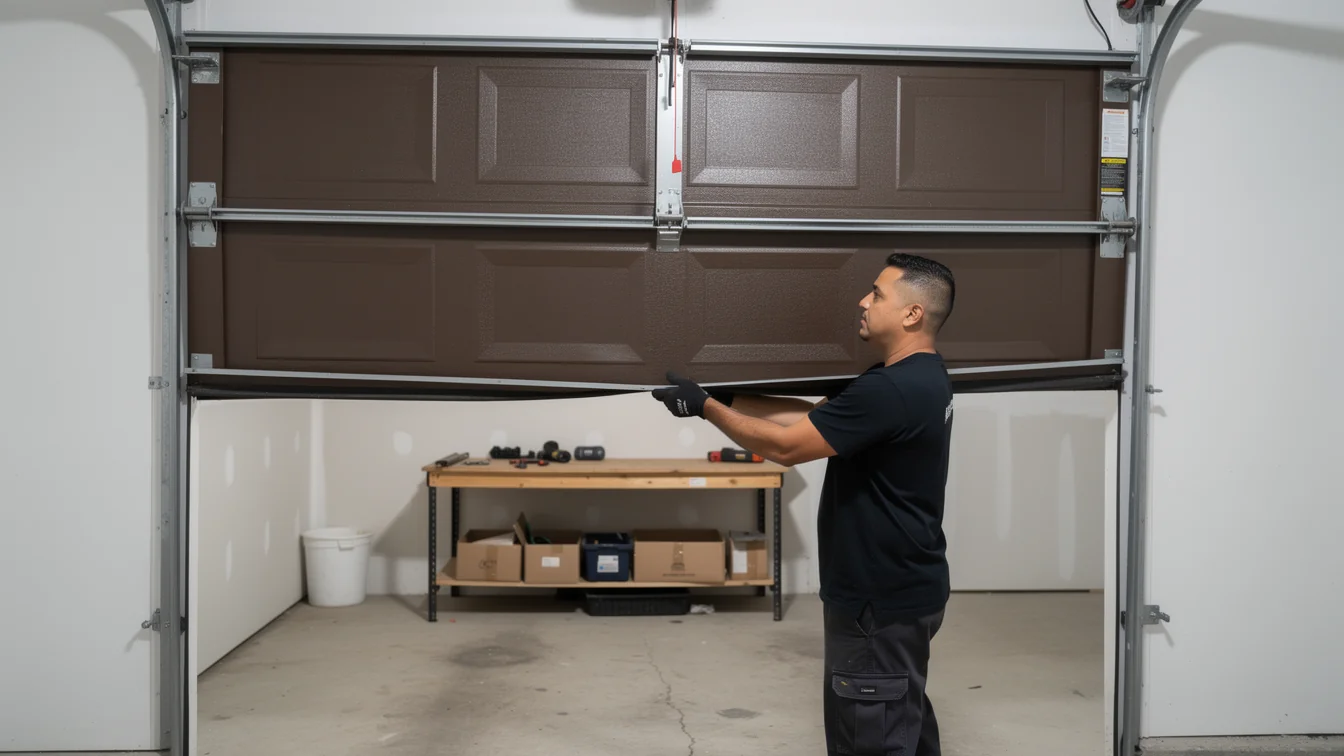
The most common mistake is treating the opener as the problem when the real issue is upstream of it. Homeowners hear grinding or see the door stutter and assume the motor is failing, so they call about opener replacement. But on a door that's been running since the 1960s or 70s, worn rollers or a stretched cable are far more likely, and replacing the opener does nothing for those. Another mistake specific to older stock here: people try to lubricate a torsion spring that's actually at the end of its cycle life, which doesn't fix anything and can mask a spring that's about to fail under load. We won't sell a full system replacement on a door that just needs new rollers, but we also won't lubricate our way around a spring that should be swapped. Figuring out which one you've got is the actual diagnosis, and it takes more than a quick look at the symptom the homeowner called in about.
What we find
What to Check
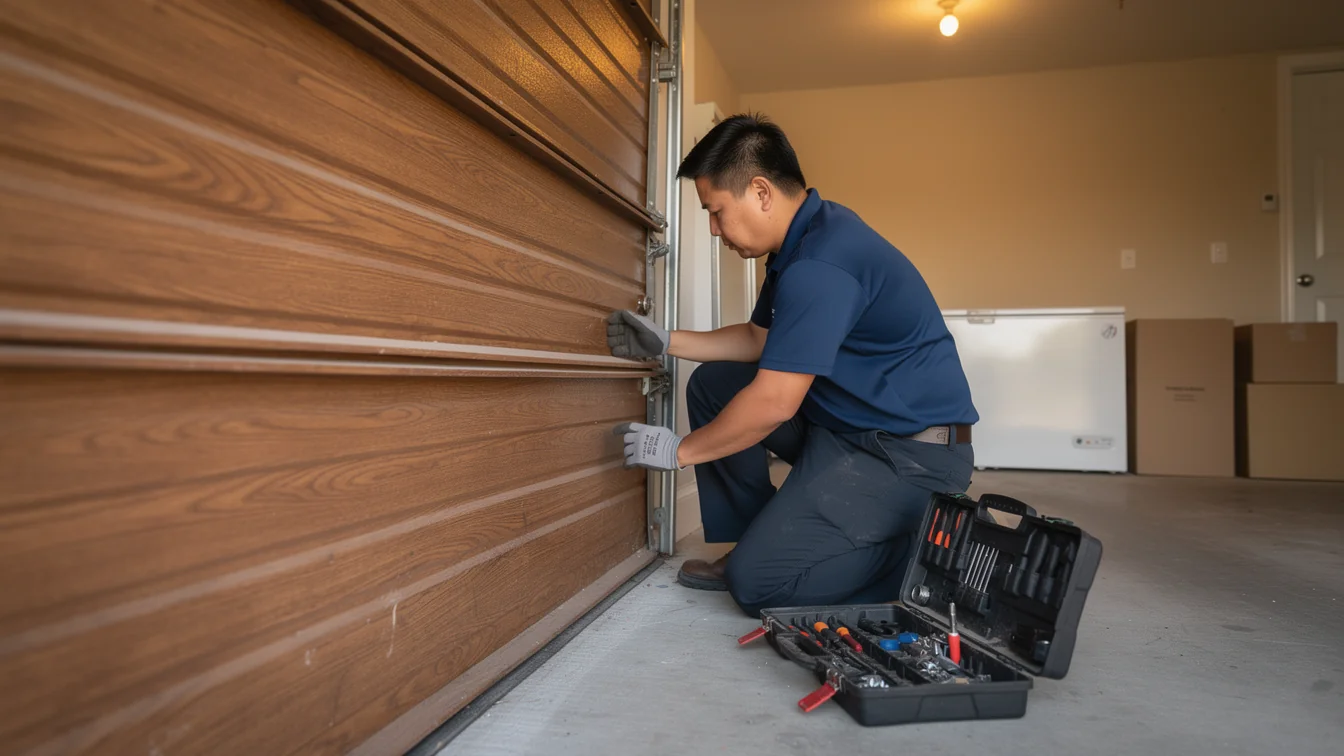
On a house in this age range, a technician works through the system in order: springs first, since a 1960s-era torsion spring has had decades of cycles and wear doesn't show up until it snaps. Then the cables, checking for fraying at the drum, especially on doors that have never had the cable replaced. Rollers and hinges come next, since steel rollers from an older install wear a visible track-side groove that nylon replacements don't. Last is the opener itself, and even then, the check is about whether it's original or a retrofit unit added later, because retrofit units on older track systems sometimes fight the door's actual travel distance. None of this is a guess. It's a fixed order, because on a door built to 1960s-70s dimensions, the failure almost always shows up in the same sequence: spring, cable, roller, opener.
How we work
How Local Conditions Play In
La Mirada sits in a mild temperate climate band, which matters here mostly for what it rules out. Technicians working in places with real freeze-thaw cycles check for ice in the track or metal contraction on cold mornings. That's not a factor in this area. What does matter is steady, unexceptional wear over a long service life, since mild weather doesn't stress hardware the way extreme heat or cold does, but it also doesn't slow the clock on a 1960s spring that's simply reached the end of its rated cycles. In other words, the climate here isn't adding damage, it's just not preventing the plain mechanical wear that comes from fifty-plus years of daily use. That's a different kind of check than you'd run in a harsher climate, and it's part of why age of the house, not the weather, is the first question worth asking.
Questions
Common questions
How old does a garage door have to be before you'd recommend replacing it instead of repairing it?
It depends more on what's actually worn than on the exact year, but on a door that's run since the 1960s or 70s original install, we're often looking at whether the spring, cable, and roller wear adds up to more than a straightforward repair. We'll tell you honestly if a repair isn't worth it on a door that old.
Why does the age of my house matter if my door and opener look newer?
Track and spring hardware often outlasts cosmetic door panels. A homeowner may have replaced the door face once but kept the original 1960s-era track and spring setup underneath, since that's the more expensive part to swap. A technician checks the hardware date, not just how the door looks.
Is La Mirada's weather hard on garage doors?
Not in the way cold climates are. This is a mild temperate area, so you're not dealing with ice in the track or metal contraction in winter. The wear we see here is mostly from decades of normal use, not weather damage.
Recommendation
You Might Also Like
More garage door guides for La Mirada homeowners.
What a Service Call Actually Covers in La Mirada
A real look at what a garage door service call checks in La Mirada, tied to the 1960s-70s housing stock and mild coastal-inland climate here.
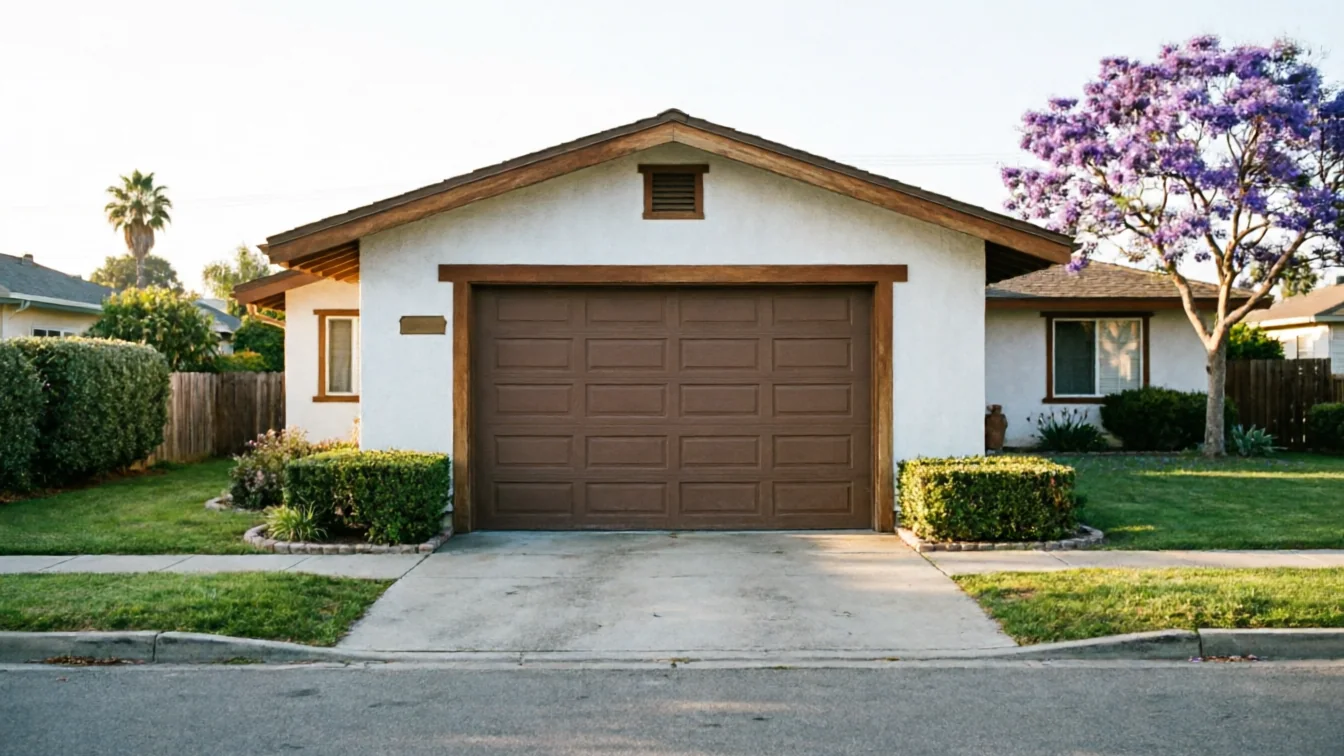 Attached or Detached: The Garage Door Question La Mirada Homes Actually Face
La Mirada's 1960s-70s housing stock split between detached and attached garages.
 Openers and Power Cuts in La Mirada Homes
La Mirada's housing stock dates mostly to the 1960s and 70s.
Ready when you are
Need a garage door sorted in La Mirada?
La Mirada Garage Door Pros repairs and installs garage doors, springs and openers in La Mirada, CA and the surrounding area.
Certified Experts
Quality Assured