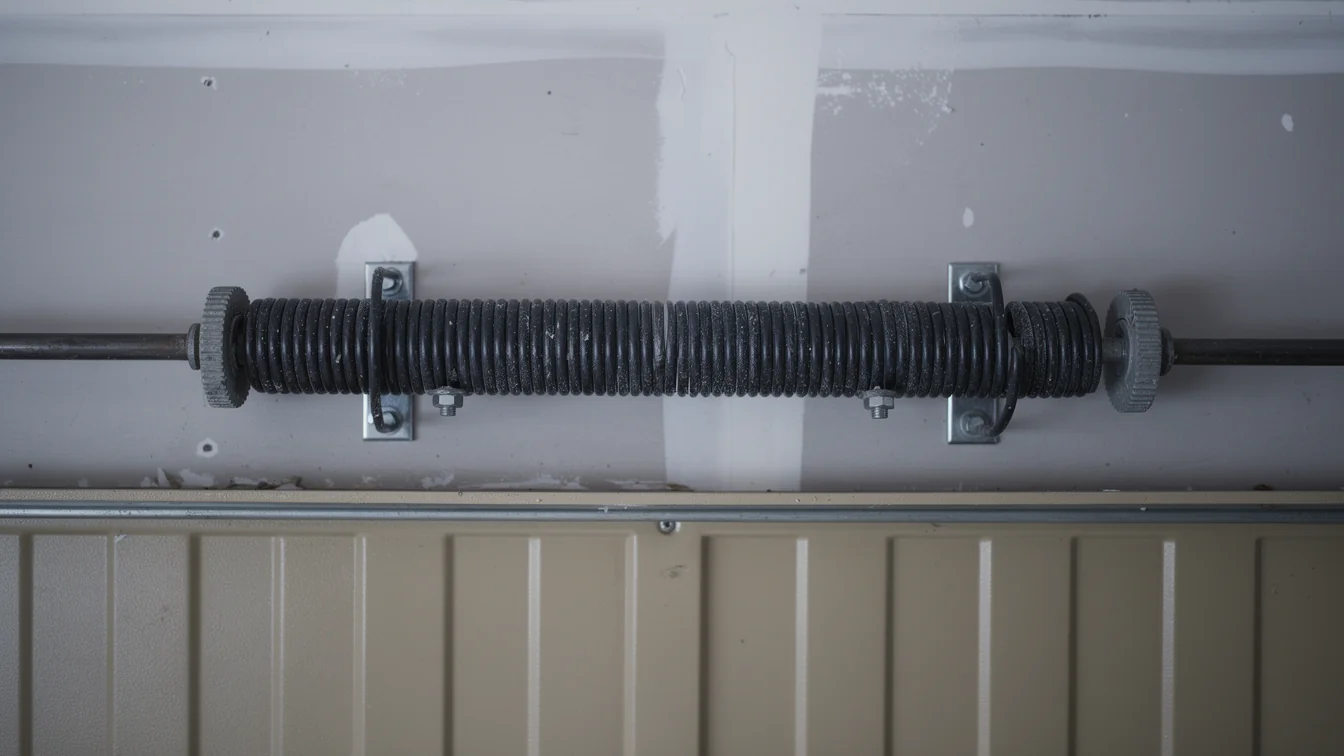
 When a Spring Goes in Cold Weather: What's Really Happening in La Mirada
La Mirada's 1960s-70s housing stock and mild winter cold snaps put old torsion springs under strain.
Wind and the Wide Double Door in La Mirada
Why La Mirada's wide, 1960s-era double doors flex and rattle in wind, what the mild climate hid from builders, and what to check before a panel buckles.
Local detail
What Is Going On
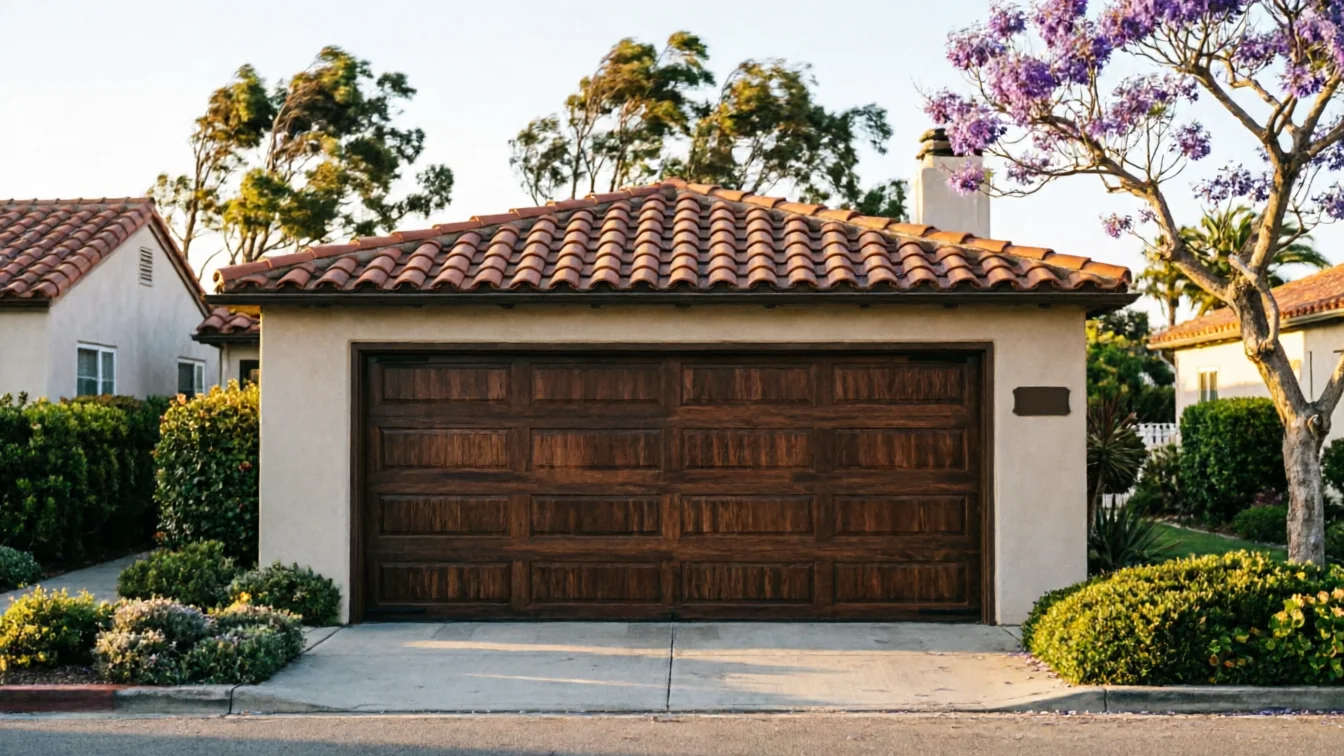
Walk most blocks in La Mirada and you're looking at houses built between 1943 and 2012, with the bulk of the stock going up in the 1960s and 70s. That era liked the two-car tract garage with one wide door - 16 feet across, sometimes wider - instead of two single bays. A wide door has more surface area for wind to push against, and the panels on a door that old are usually thin steel or aluminum with no internal reinforcement. When gusts hit a door that size, the whole panel can bow instead of staying flat, because there's nothing inside it to resist the load.
This isn't a door that's failing because it's old in the sense of worn out. It's a door that was built for a mild climate where wind load was never part of the design conversation. La Mirada sits in a mild temperate band - no snow load, no ice buildup to size for - so manufacturers in that era put their engineering budget elsewhere. The tradeoff shows up now as flex, not failure, until one day it's both.
The area
Where People Go Wrong
The most common mistake is treating a bowing door as a cosmetic problem. Owners notice the middle of the door pulling inward when the wind picks up and assume it's just the material settling with age. It's not settling - it's the panel doing exactly what a wide, unreinforced piece of thin steel does under lateral pressure, every single time.
The second mistake is replacing rollers or adjusting the opener's force settings and calling it fixed. Neither touches the actual problem, which is panel rigidity, not the hardware that moves the door up and down. If the door came with this era of housing stock, there's a decent chance it was never built with a horizontal strut running the width of the panel, and no amount of track or roller work adds that back.
What we find
What to Check
Open the door and look at the back of the top two panels in daylight. If you don't see a horizontal strut - a metal bar running the width of the door, usually near the top - the door has nothing fighting the bow on a wide span. Run your hand along the face of the door on a windy day if you can do it safely; a door that moves noticeably under hand pressure will move more under real wind.
Check the track brackets at the top corners too. On a 16-foot door, the corners take more torque than people expect, and loose lag screws at the bracket show up here first, well before the center panel visibly fails. If the brackets have any play when you grip and pull, that's wear worth addressing before it becomes a bent track.
How we work
How Local Conditions Play In
La Mirada's mild temperate climate is part of why this problem hides for years. There's no freeze-thaw cycle stressing the steel, no heavy snow load forcing an early repair, so a door can run marginal for a decade before anyone notices the bow. The housing stock itself - median build year around 1964 - means a lot of these doors are original or close to it, sized for the standards of their decade, not today's.
I don't have wind-speed or storm-frequency data specific to this service area, so I won't give you a number to plan around. What I can tell you is that a wide door on an unreinforced panel, in a house from this era, is the shape of door most likely to show flex first. If you're not sure which panel era you've got, that's worth a look before you assume the door is fine just because it's still closing.
Questions
Common questions
Why does my garage door bow in the middle when it's windy?
It's almost always a wide door - commonly 16 feet on houses from this area's 1960s-70s building boom - without a horizontal strut reinforcing the top panels. Thin steel across that span flexes under lateral wind pressure. It's not damage yet, but it's the panel doing what an unreinforced wide door does.
Does my older La Mirada house need a stronger garage door because of the climate?
The mild temperate climate here doesn't demand snow or ice load engineering, which is likely part of why doors from this era were never built with a reinforcing strut. The climate didn't push builders toward stronger panels, so the weak point is the door's age and width, not weather extremes.
Can I just add a strut to my existing door instead of replacing it?
Sometimes, depending on the panel material and how much flex is already there. It's worth having someone look at the specific door before assuming either way - a door that's already showing visible bow may be past the point where a strut alone solves it.
Recommendation
You Might Also Like
More garage door guides for La Mirada homeowners.
When a Spring Goes in Cold Weather: What's Really Happening in La Mirada
La Mirada's 1960s-70s housing stock and mild winter cold snaps put old torsion springs under strain.
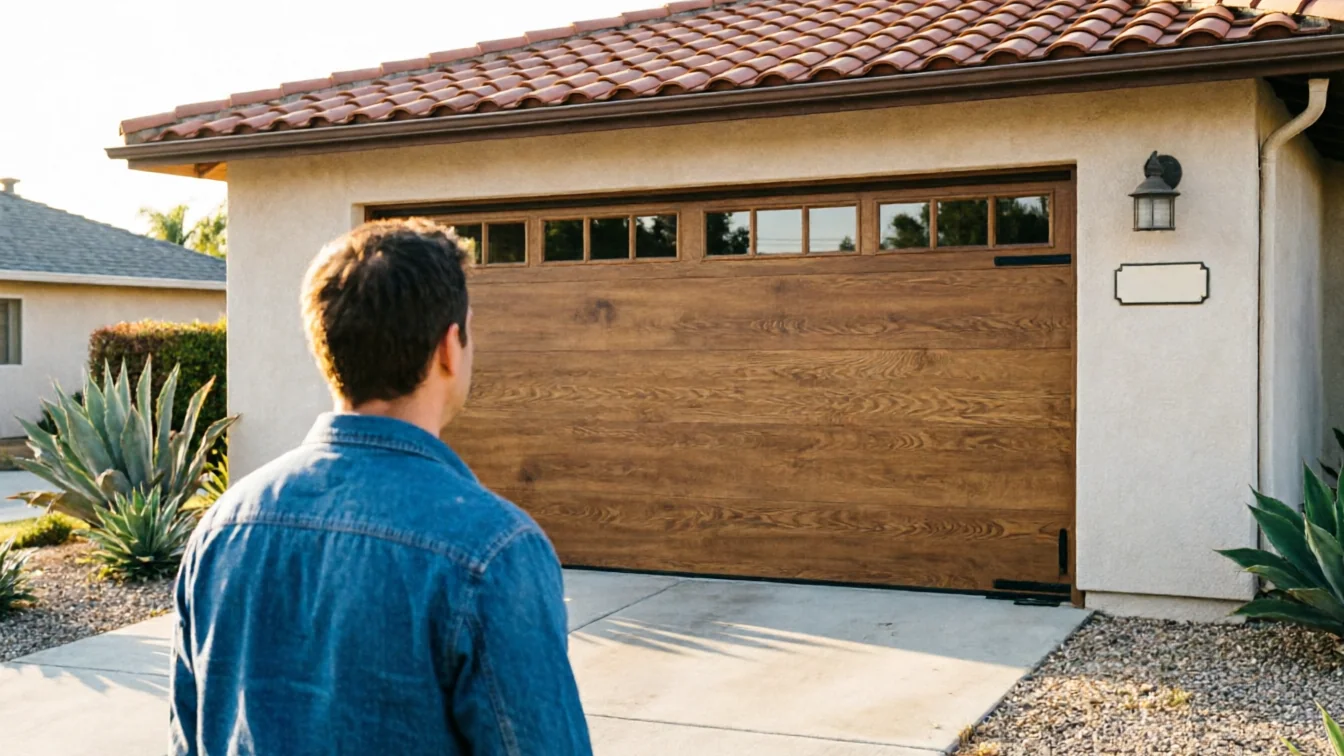 Replacing a Garage Door in La Mirada: What Actually Matters
A look at why La Mirada's 1960s housing stock and mild climate change what replacement door you actually need, not just what's on sale.
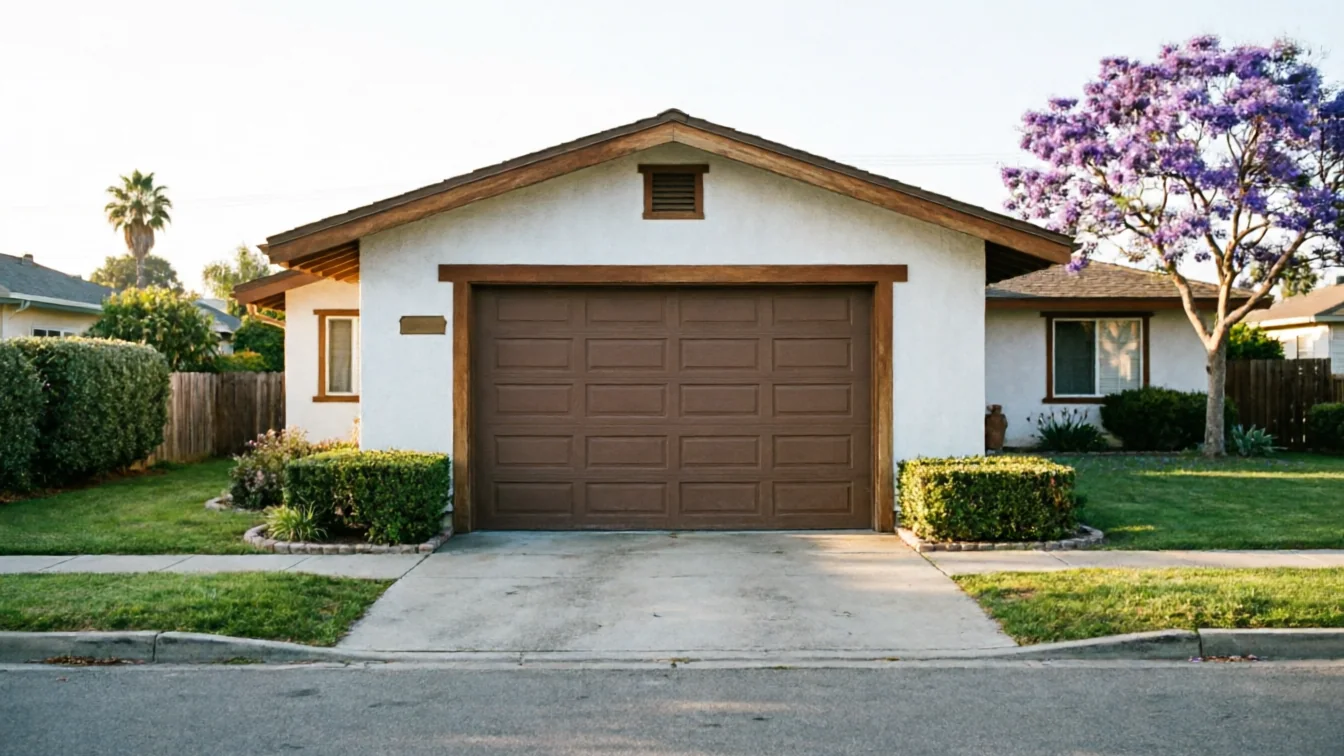 Attached or Detached: The Garage Door Question La Mirada Homes Actually Face
La Mirada's 1960s-70s housing stock split between detached and attached garages.
Ready when you are
Need a garage door sorted in La Mirada?
La Mirada Garage Door Pros repairs and installs garage doors, springs and openers in La Mirada, CA and the surrounding area.
Certified Experts
Quality Assured