
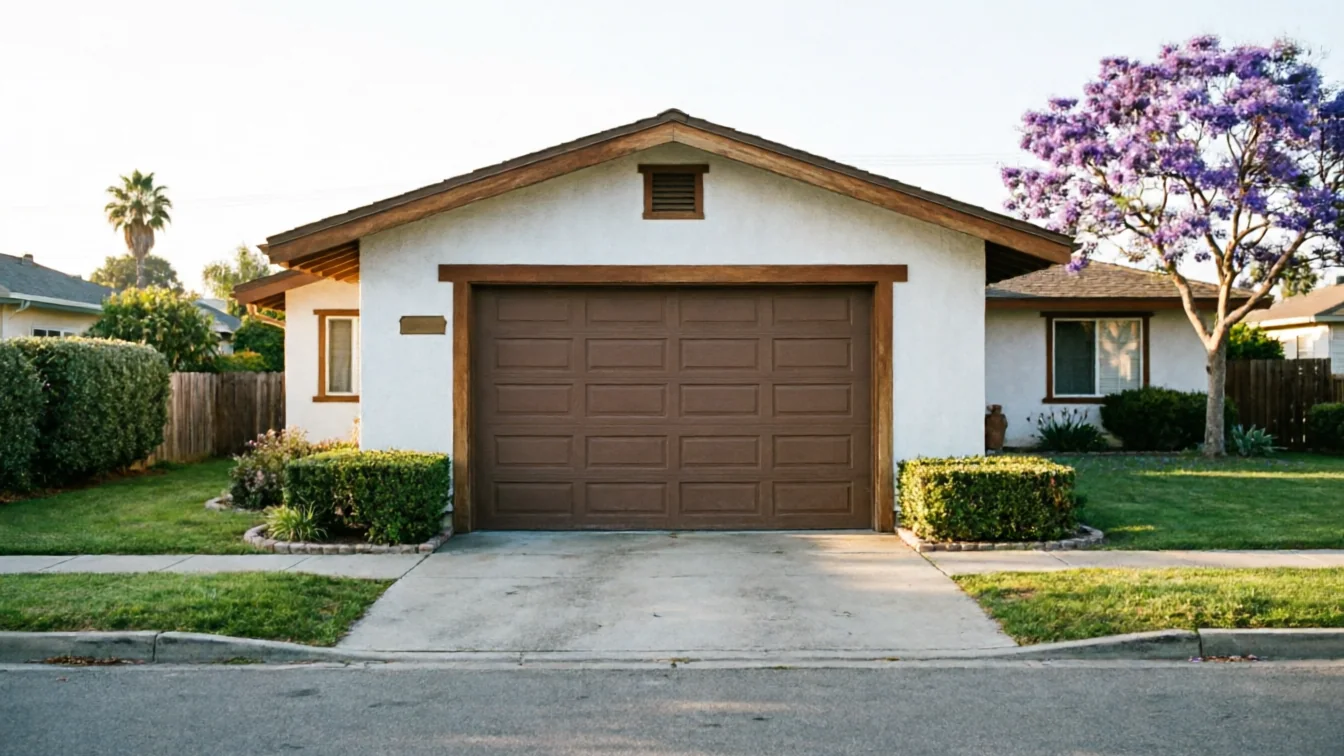
 Attached or Detached: The Garage Door Question La Mirada Homes Actually Face
La Mirada's 1960s-70s housing stock split between detached and attached garages.
When a Spring Goes in Cold Weather: What's Really Happening in La Mirada
La Mirada's 1960s-70s housing stock and mild winter cold snaps put old torsion springs under strain. Here's what actually happens and what to check before it breaks.
Local detail
What Is Going On
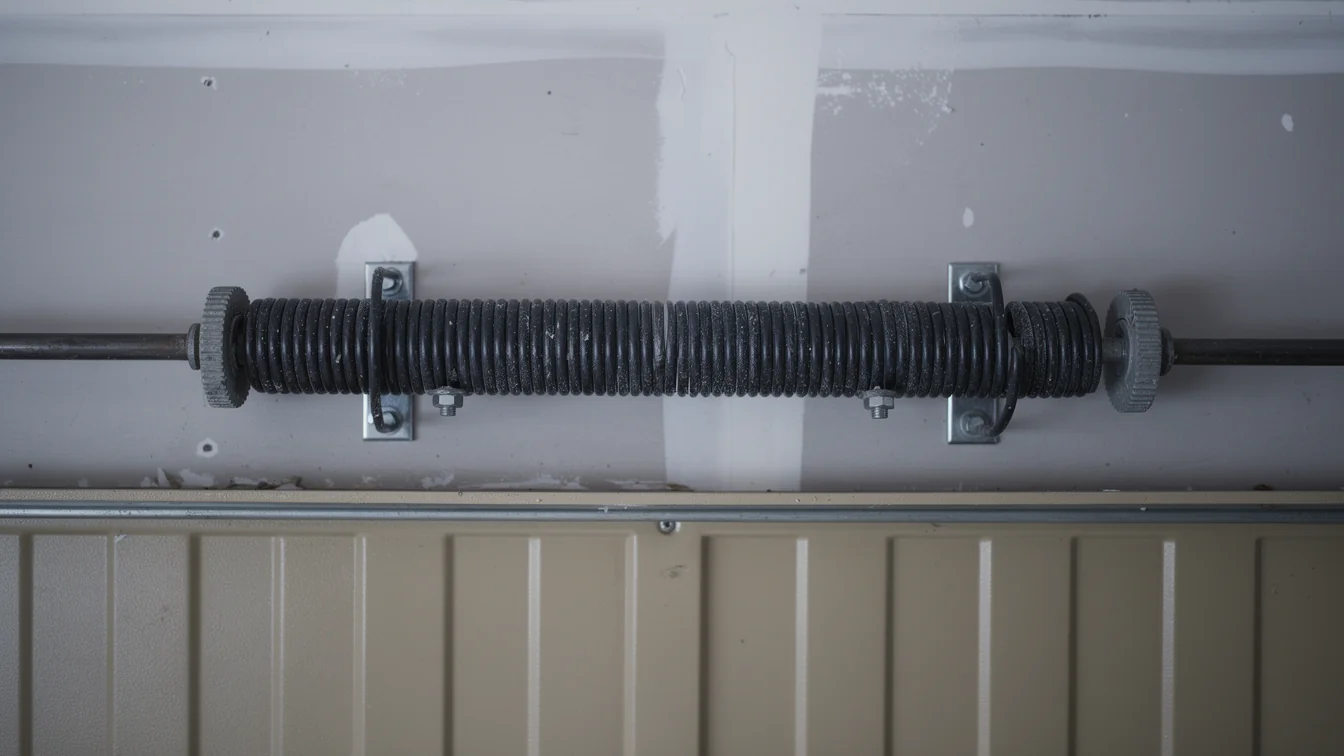
Most houses in La Mirada went up between 1943 and 2012, with the median build year sitting around 1964. That means a huge share of doors in this town are still running on torsion springs that were installed, or replaced once, decades ago. Steel loses some flex as it cools. La Mirada sits in a mild temperate band, so you're not dealing with weeks of hard freeze, but you do get overnight drops, and that's enough. A spring that's already near the end of its cycle count doesn't need a hard freeze to fail - it just needs one cold morning where the metal is stiffer than it was the day before, and the extra load from a slightly heavier door (water in the air, a slightly swollen wood panel on an older model) pushes it past what's left in the coil. It usually goes with a bang loud enough that people think something hit the house. What's actually going on is simpler: old spring, cold morning, last straw.
This isn't a weather event. It's a maintenance event that weather happened to trigger. The cold didn't break a healthy spring. It finished off one that was already close.
The area
Where People Go Wrong
The common mistake is treating the bang as a one-time fluke tied to the cold snap, instead of asking how old the spring actually is. In a town where a lot of the housing stock dates to the 1960s-70s wave, a spring that's original or close to it isn't rare - it's the normal case. People wait for the next cold morning to see if it happens again, which just means living with a door that can't be opened safely in the meantime, or worse, trying to force it.
The other mistake is assuming a broken spring is a quick DIY fix because the part itself looks simple. A torsion spring under tension is not a weekend project, cold weather or not - the spring that just snapped was storing enough force to do real damage to a hand or a face on the way out. That's the one limitation worth saying plainly: we don't talk anyone through a torsion spring swap over the phone, and we wouldn't recommend trying it even with the right tools on hand. It's a call-out job.
What we find
What to Check
Before you assume cold weather alone is the problem, look at a few things. First, how old is the door - if it's from the original build era common across this area, the spring has likely already outlived a normal duty cycle even without a single cold morning involved. Second, listen for a grinding or popping sound on the last few mornings before the break; that's usually the coil telling you it's near the end, not a sudden event. Third, check whether the door is noticeably harder to lift by hand in the early morning versus the afternoon - a working spring shouldn't care much about a 15-20 degree swing, but a tired one will.
If the door feels heavy, uneven, or makes a new noise on cold mornings and nothing changes by afternoon, that's a spring losing its temper, not just contracting metal. Don't wait for the loud bang to call. A spring that's audibly struggling in the cold is cheaper to replace on your schedule than on its own.
How we work
How Local Conditions Play In
La Mirada's climate is mild overall - this isn't a place where springs fail from sustained hard freeze the way they might somewhere with real winters. What drives failures here is the combination of age and the swing, not the absolute cold. A 20-degree overnight drop on a 50-plus-year-old spring does more than the same swing would do to a five-year-old one. Because so much of the local housing stock clusters in that 1960s-70s build window, a lot of doors across town are hitting that same fatigue point around the same time, which is why cold mornings tend to bring a run of calls rather than one-off cases.
The practical upshot: don't read a cold-weather spring break as bad luck. Read it as the age of the hardware showing up on the one morning of the year it had the least margin left.
Questions
Common questions
Why did my spring break on a cold morning and not during the summer?
Cold doesn't cause the failure by itself - it just removes the last bit of margin from a spring that's already near the end of its life. Metal is stiffer when it's cold, so a spring that was marginal in July can snap in December. In La Mirada's mild climate, it's usually the overnight temperature swing, not a hard freeze, that's the trigger.
How old is too old for a garage door spring in La Mirada?
We don't have an exact cycle-count figure to give you, but a lot of the housing here dates to the 1960s and 70s, and a spring installed with the original build or even a first replacement is well past the point where cold-weather failure becomes likely. If you don't know when yours was last replaced, that's worth finding out before winter, not after a break.
Can I replace a torsion spring myself to save money?
We'd advise against it. A torsion spring holds enough stored tension to cause a serious injury if it releases while you're working on it, cold weather or not. This is one job we treat as a call-out every time, regardless of how simple the part looks.
Does the cold affect the opener too, not just the spring?
It can, though less dramatically. A motor working against a spring that's lost tension will strain harder on a cold morning, which can shorten its life too. But the spring is almost always the first thing to actually fail outright.
Recommendation
You Might Also Like
More garage door guides for La Mirada homeowners.
Attached or Detached: The Garage Door Question La Mirada Homes Actually Face
La Mirada's 1960s-70s housing stock split between detached and attached garages.
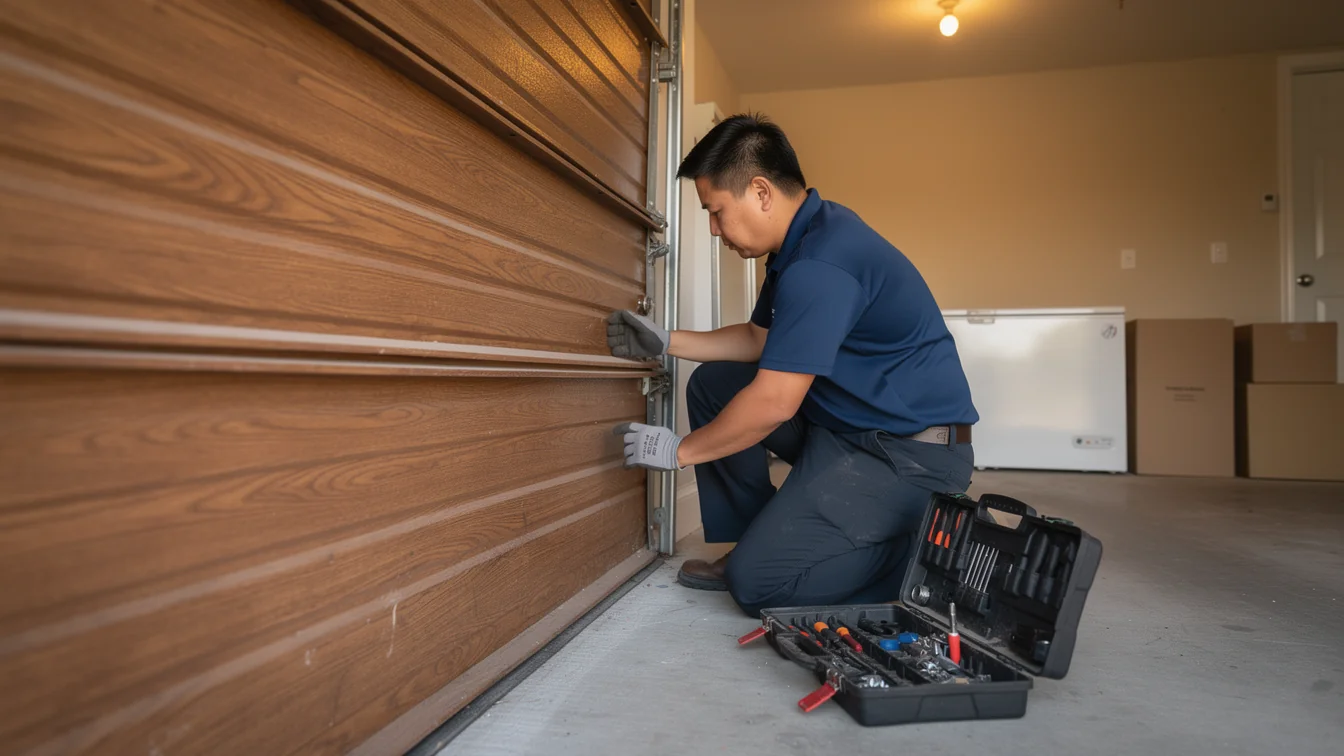 What a Service Call Actually Covers in La Mirada
A real look at what a garage door service call checks in La Mirada, tied to the 1960s-70s housing stock and mild coastal-inland climate here.
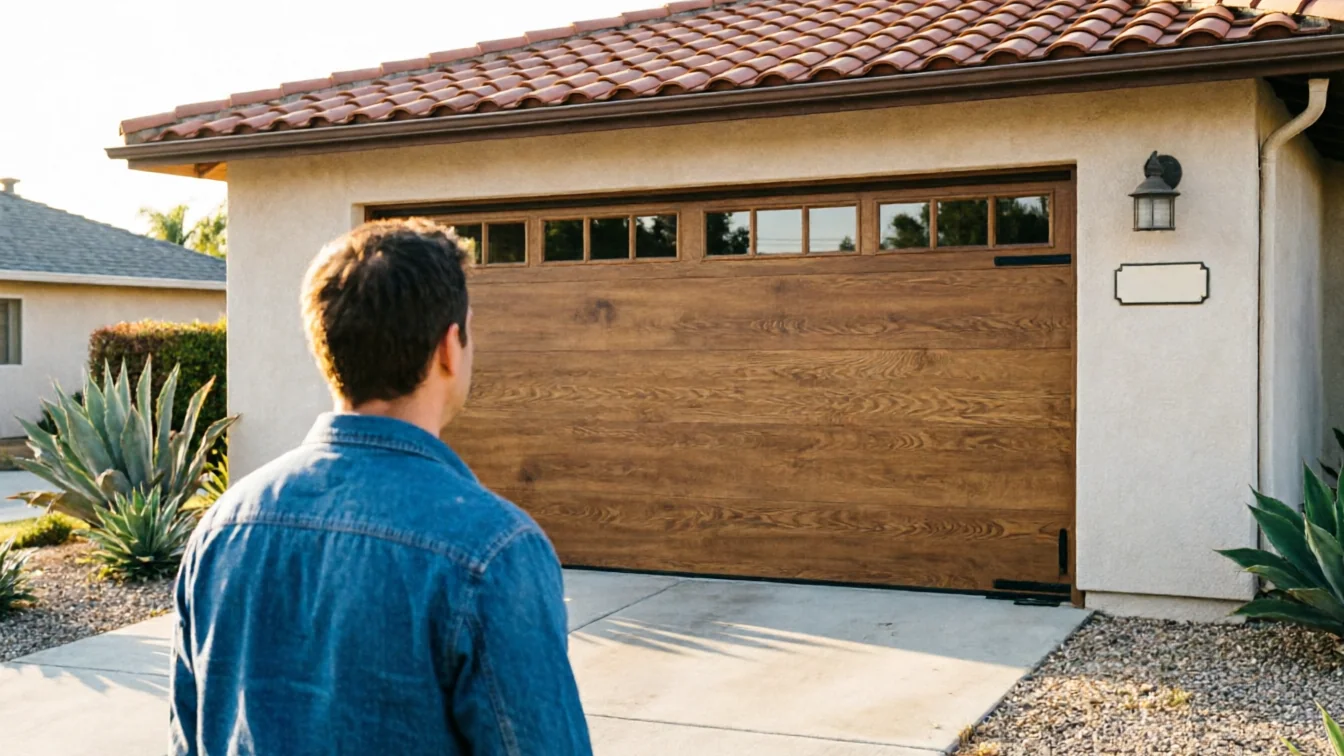 Replacing a Garage Door in La Mirada: What Actually Matters
A look at why La Mirada's 1960s housing stock and mild climate change what replacement door you actually need, not just what's on sale.
Ready when you are
Need a garage door sorted in La Mirada?
La Mirada Garage Door Pros repairs and installs garage doors, springs and openers in La Mirada, CA and the surrounding area.
Certified Experts
Quality Assured