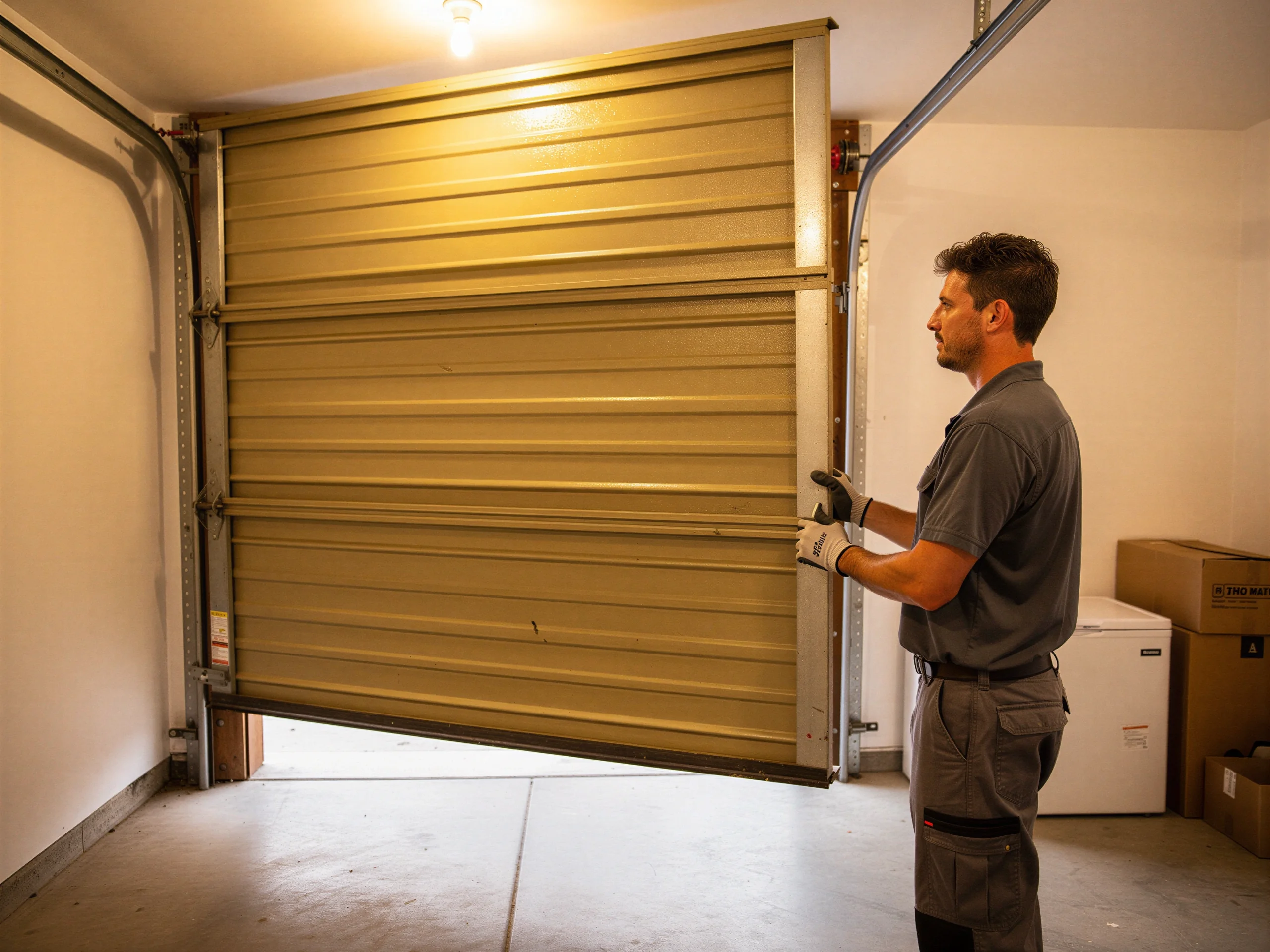
Can You Do This Yourself
A lot of what goes wrong on a 1964-built house in Glendora is tied to extension springs mounted above the horizontal track, not the torsion bar you see on newer builds.
Ladder-level maintenance
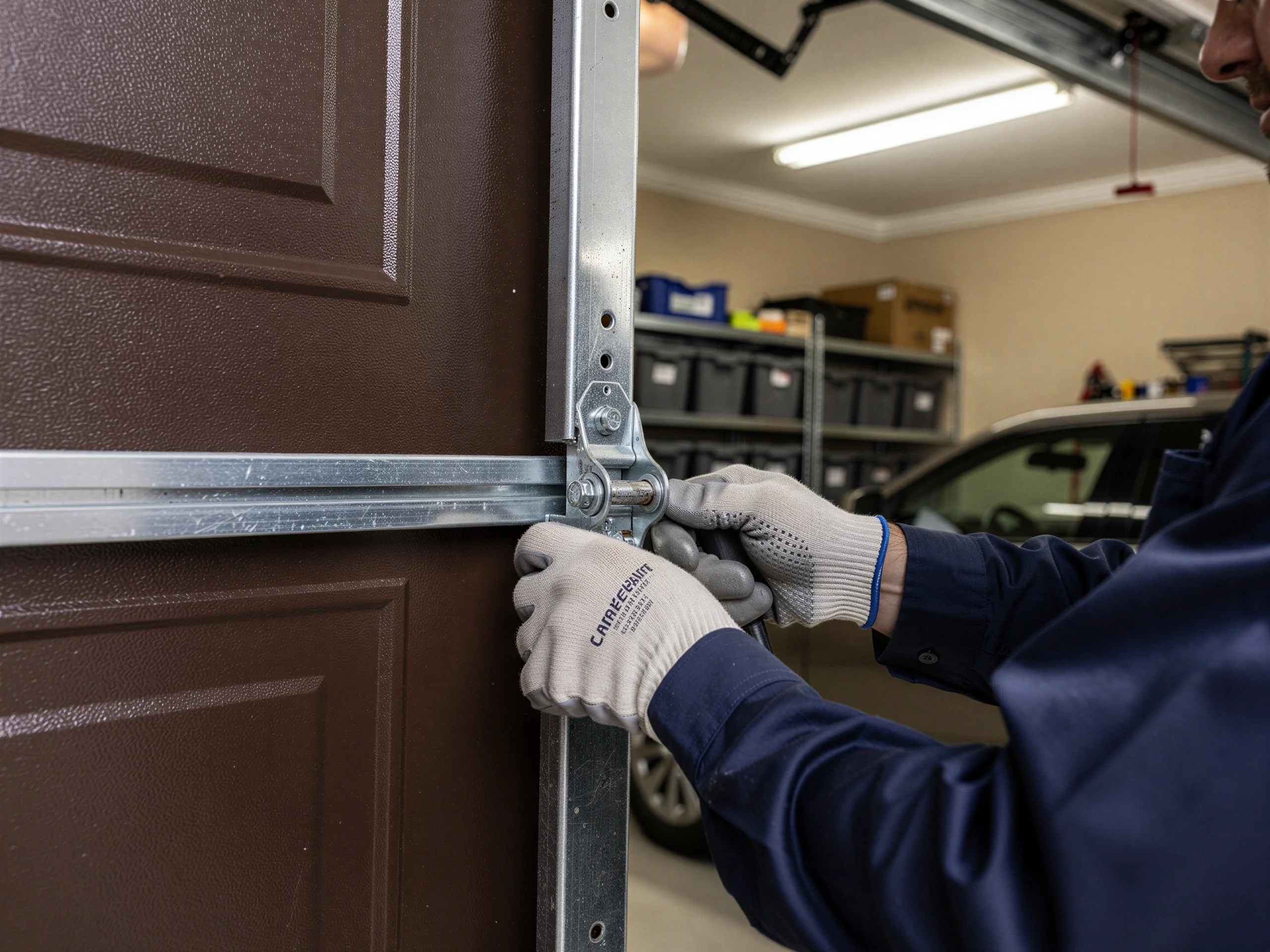
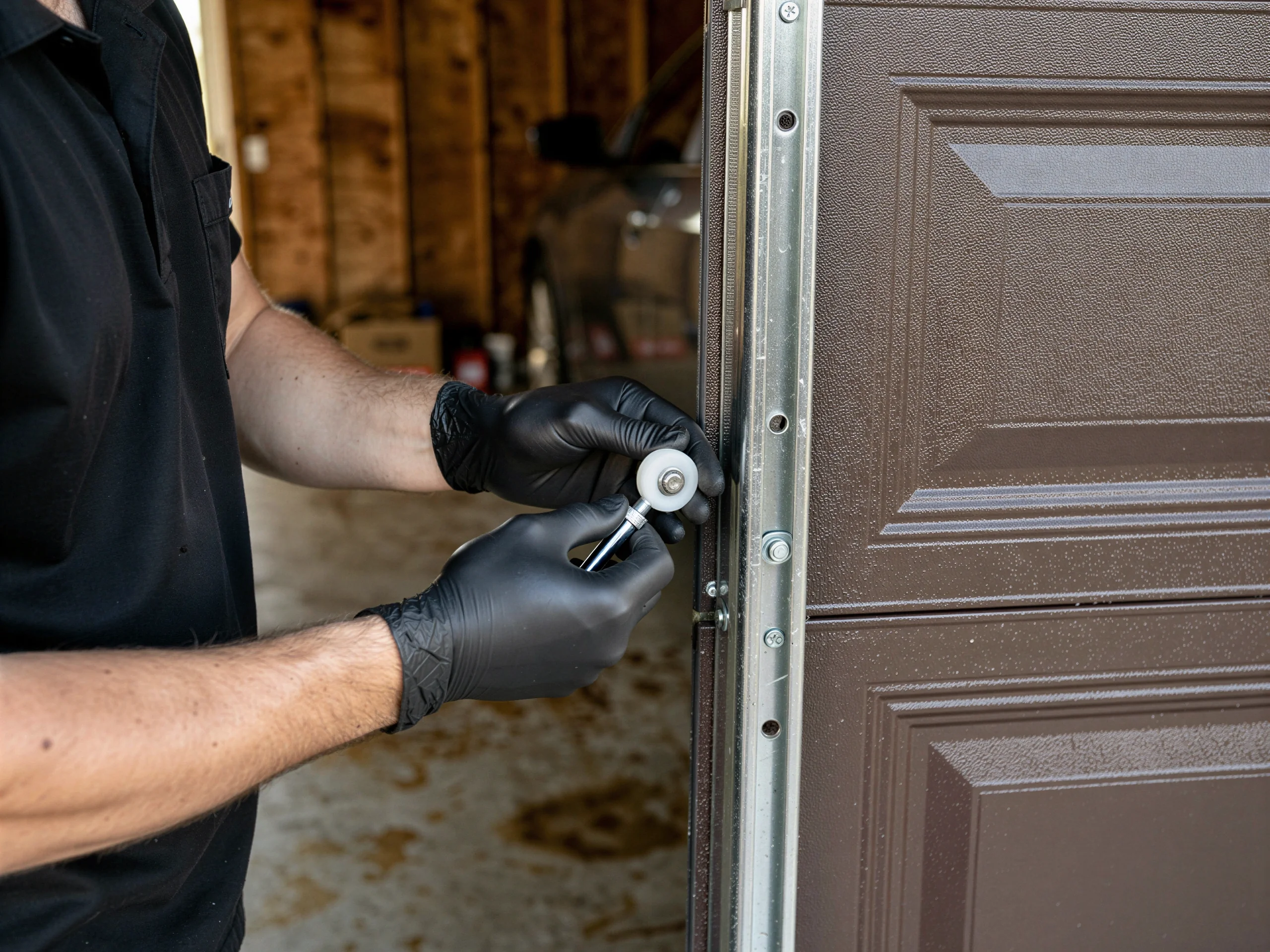
You can grease a track, tighten a loose hinge, or swap a worn roller if you're comfortable on a ladder. What you shouldn't touch is the spring itself.
Whipping extension cable
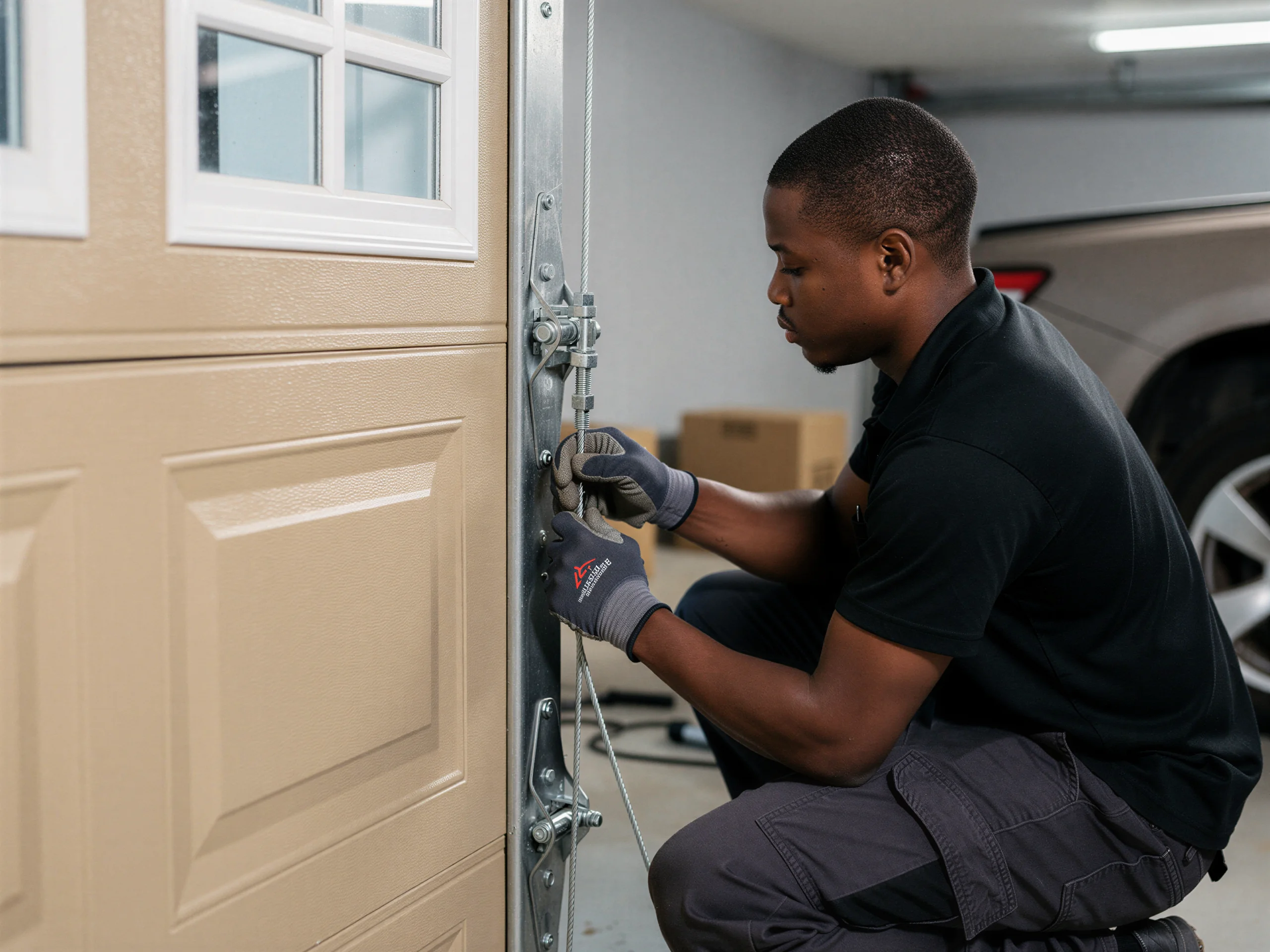
An extension spring under tension can whip a safety cable loose and take a finger with it, and on doors this age the cable itself is often as tired as the spring. If the door won't stay up, slams down, or the cable has visible fraying, that's a call, not a weekend project.
Leave tension to pros
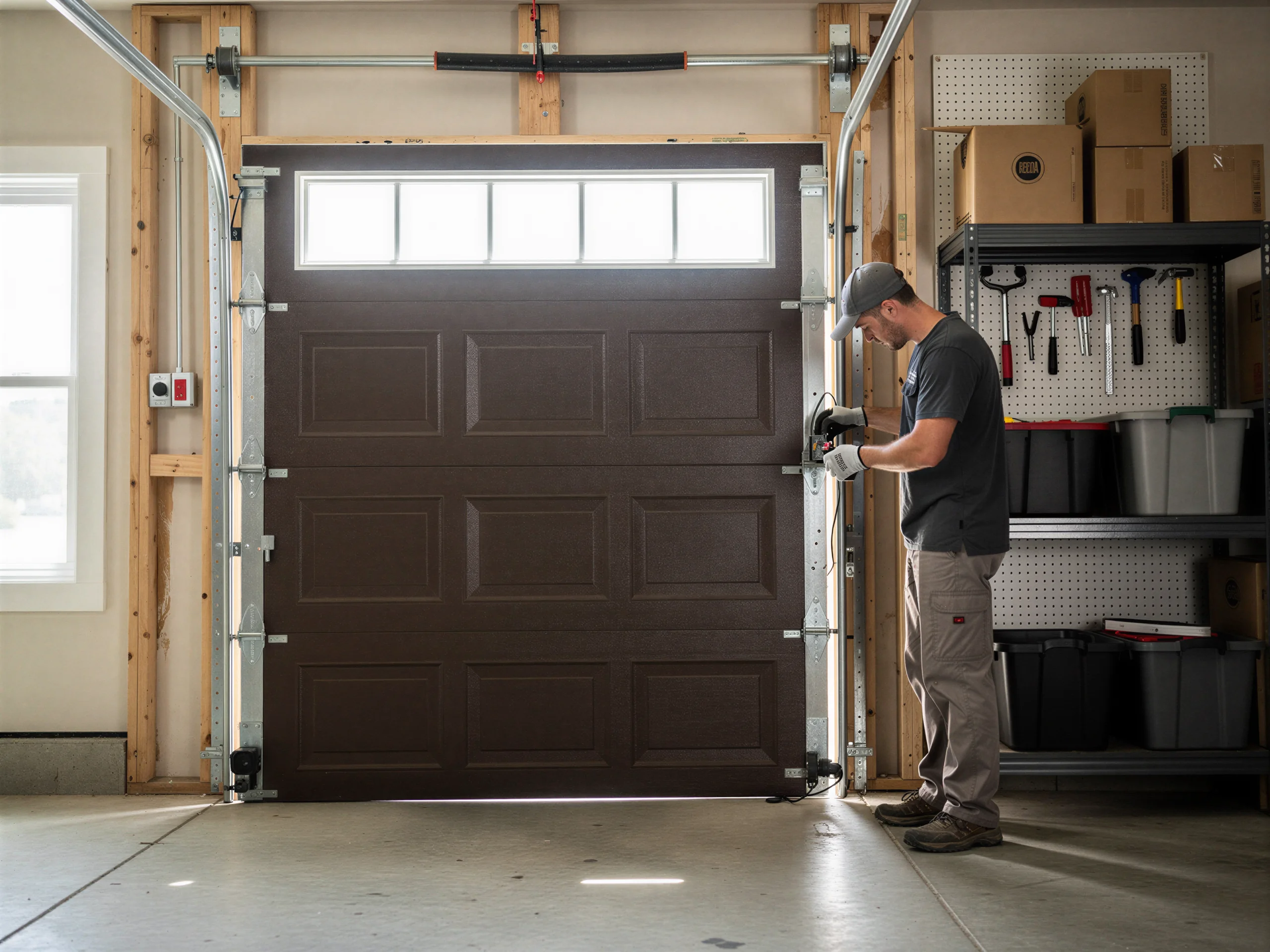
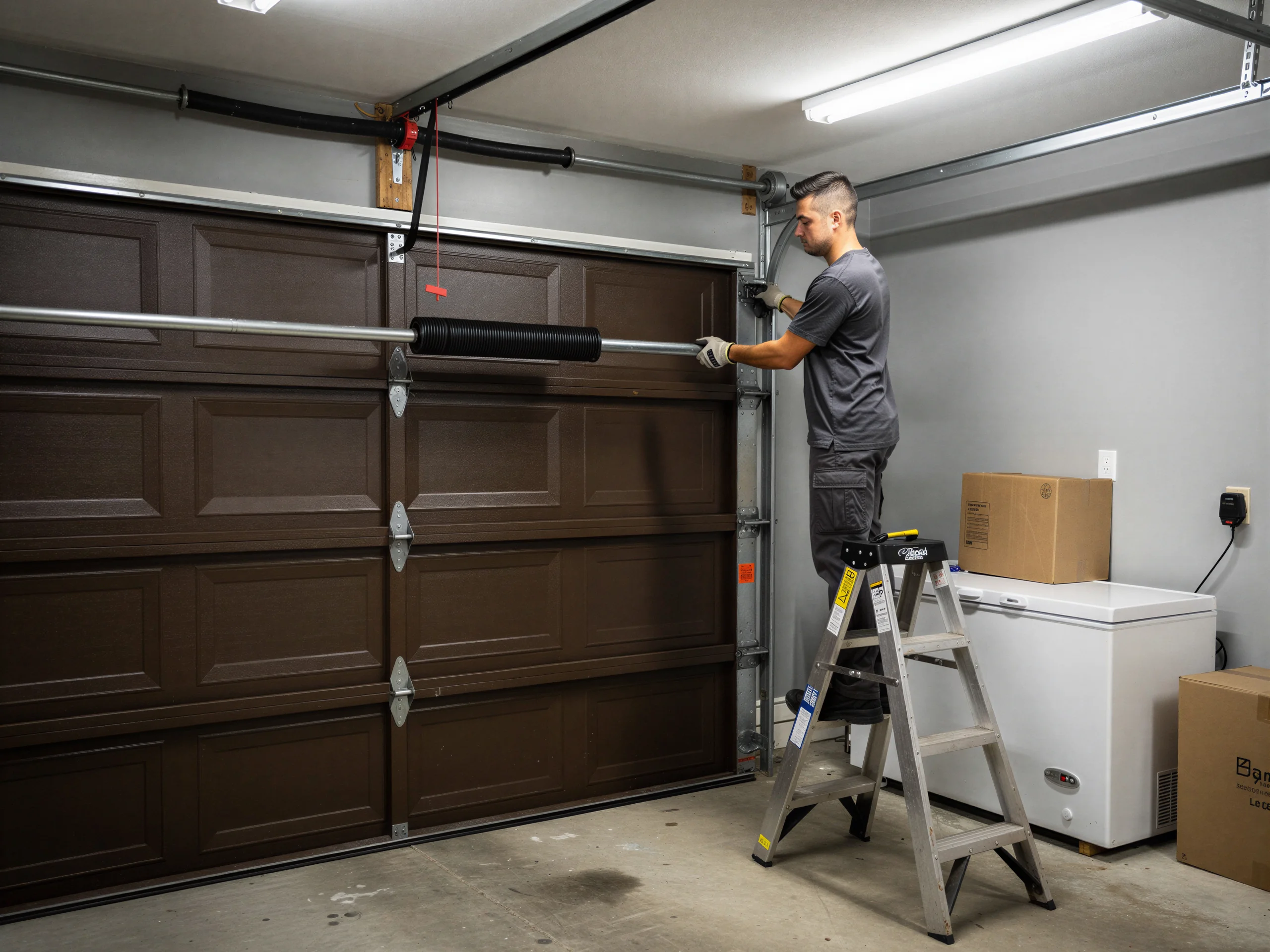
We're not going to tell you to leave every adjustment to a pro - a sagging bottom bracket bolt is fair game for a wrench. But spring tension, cable replacement, and anything involving the torsion or extension assembly under load belongs to someone who does it daily.
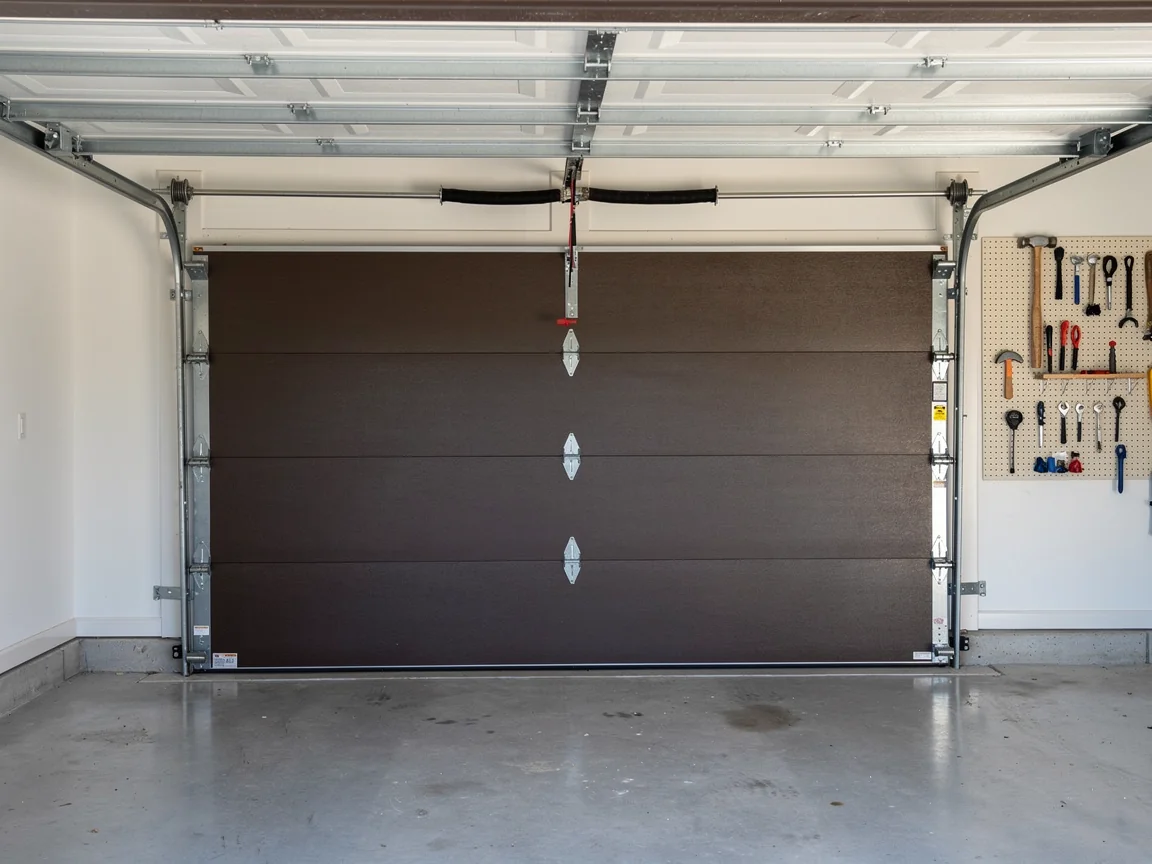
The Cost of This Job
We're not going to print a number here that doesn't match what shows up on the invoice, and pricing on a 1964-era door depends on whether the original steel section can still be matched or whether the whole panel run needs replacing.
Opener-only history
Glendora's median household income sits at $111,915, well above the broader service area's $95,385, and a fair number of these houses have had one opener swap and little else since the door went in.
Rusted brackets raise cost
That matters because a job that's just springs and cable runs a lot less than one where the track brackets have rusted into the jamb and need to come out too. Ask for the breakdown before work starts: parts, labor, and whether anything is being ordered rather than pulled off the truck.
Special-order track width
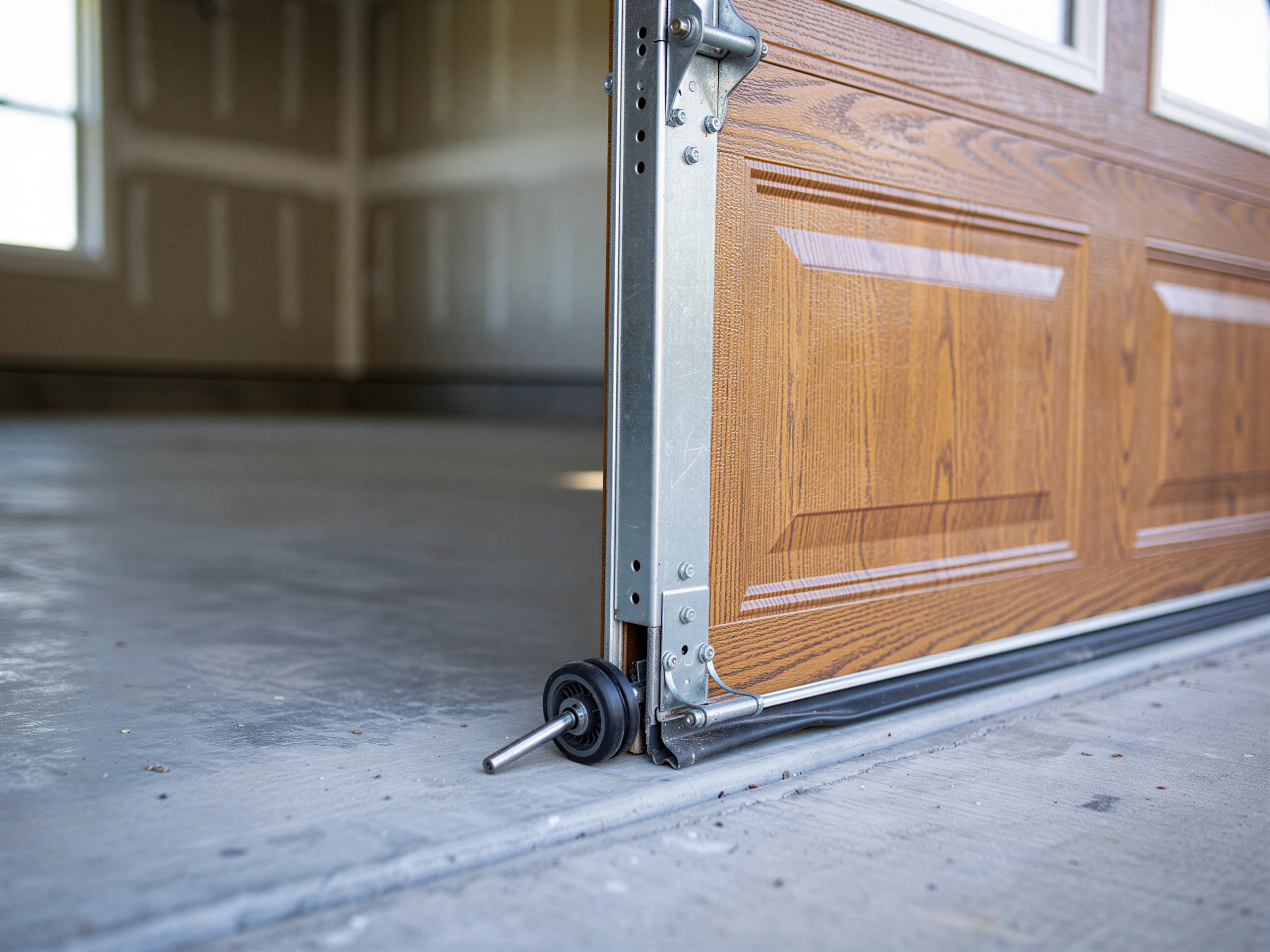
If a part has to be special-ordered for an original 1960s track width, that adds time and cost both - we'll tell you up front if that's the case rather than guess.
The Symptom
The fault we see most in Glendora starts the same way every time: the door comes down fine but won't stay up, or it drops the last foot on its own.
Never-replaced original springs
That's a fatigued extension spring, and on a house built around 1964 - which lines up with the broader 1960s-70s stock across this part of the region - that spring has usually never been replaced. Original hardware from that era used lighter-gauge springs than what goes in today, so by the time a homeowner notices the sag, the spring is often stretched past its rated cycles.
Pulley taken with spring
A second common sign is a loud bang from the garage followed by the door refusing to move at all - that's usually the spring letting go entirely, sometimes taking a pulley or cable with it.
Cycle fatigue, original parts
Because the climate here stays in the mild band, rust isn't usually the trigger the way it is in wetter regions; it's cycle fatigue on original parts that have simply been doing their job for decades longer than they were built to.
Time on the Job
A straightforward extension spring replacement on one of these doors runs faster than a job where the track brackets have pulled loose from original wood framing, which happens more often on houses from this build era than on newer construction. If the opener is original too and the chain or belt has stretched along with it, that adds a step. We size up the job on arrival rather than quote blind over the phone, because a door that looks like a spring job can turn out to need a cable and a pulley once the cover comes off. The one thing we won't do is rush a tension adjustment to hit a shorter number on the clock - that's how doors come back down wrong a month later.
Getting It Booked In
Glendora sits about 19 miles out from our base in La Mirada, so we schedule the trip rather than promise a same-hour arrival - if your door is stuck in the up or down position and blocking the garage entirely, say so when you call and we'll work it into the route accordingly.
Normal scheduling lead
For anything that isn't an immediate safety issue, a day or two out is normal. Have the door's rough age ready when you call, even if it's just "original to the house" - for a 1964-built door that tells us more about likely spring type and track width than the brand name on the opener does.
Glendora URL links
You can see more on what we handle for this town at /glendora-garage-door-repair/, and if you're closer to our home base, /garage-door-service-la-mirada-ca covers that side of the work.
What Is on the Truck
For calls into Glendora we carry extension springs in the common residential weights, replacement safety cables, and pulleys sized for the lighter track hardware typical of 1960s builds, since that's what most doors out here are still running. We also carry torsion conversion hardware for homeowners who'd rather move off extension springs entirely - it's a sturdier setup and one we'll walk you through if a spring job turns into a bigger conversation. What we don't carry is every obsolete bracket or track width from fifty-plus years ago; if a part is truly original and no longer made, we'll tell you that on the spot rather than stall the job pretending otherwise, and we'll talk through whether a matched replacement panel or a full section swap makes more sense.
Talk to a local pro
Garage door service in La Mirada?
Same-day service with honest, upfront quotes.