The Cost of This Job
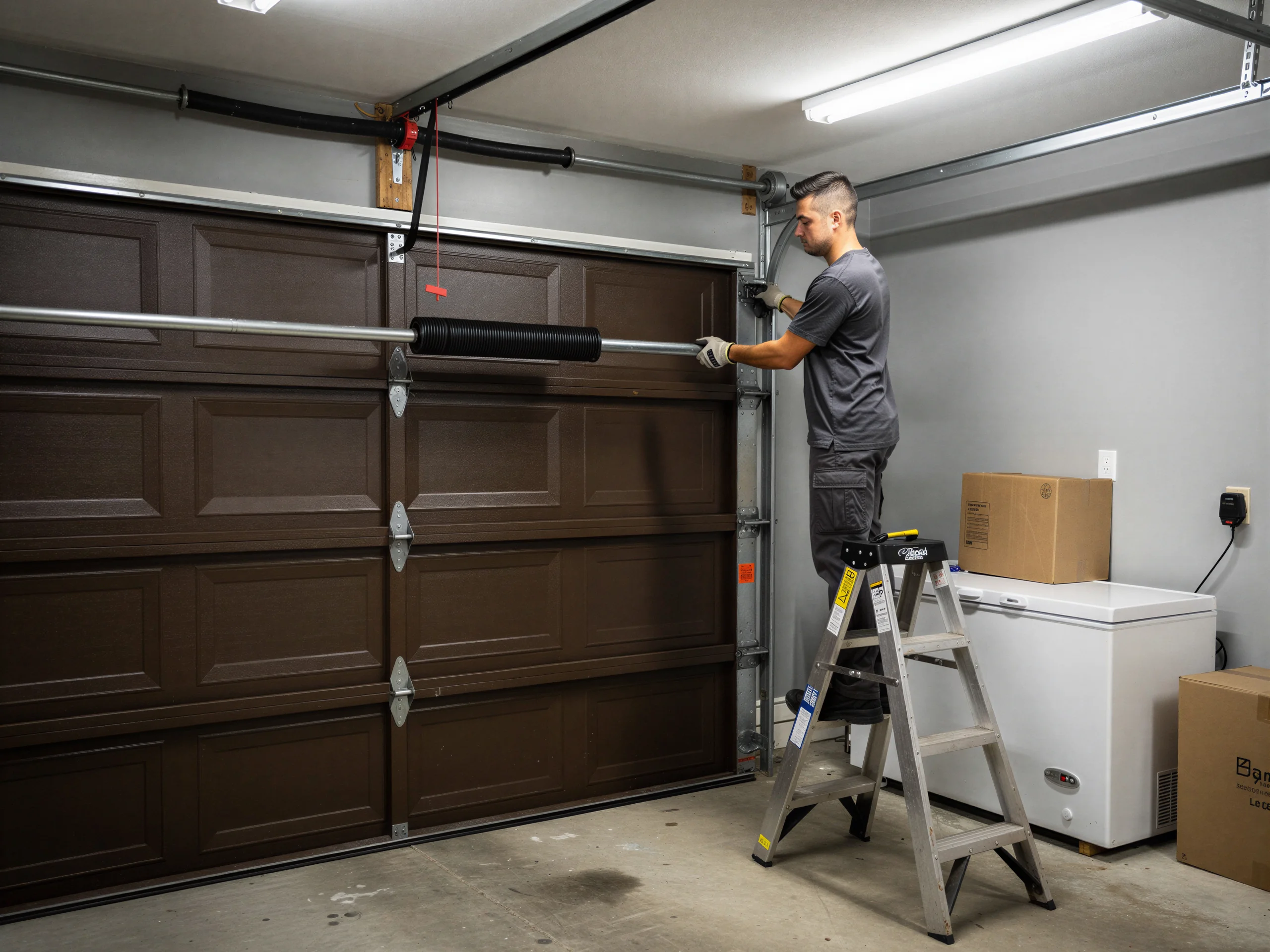
What you pay for a spring job here tracks the hardware, not the town. Diamond Bar's housing stock centers on 1979, a good fifteen years newer than the 1964 median across the wider service area, so the doors we're opening up are steel sectional doors on torsion shafts, not the older one-piece slab doors still common closer to La Mirada. That matters for cost because sectional doors almost always run two torsion springs sized to the door's weight, and a snapped spring on one side puts enough extra strain on the other that most owners here choose to do both at once rather than replace one and wait on the second. A median household income of $106,602 in Diamond Bar backs that pattern up - full replacement over a patch job is the more common call. We quote the job on-site once we've got the door open and the spring size in hand, because two doors that look the same from the driveway can carry different wire gauge depending on when the garage was actually built out.
What Can Go Wrong
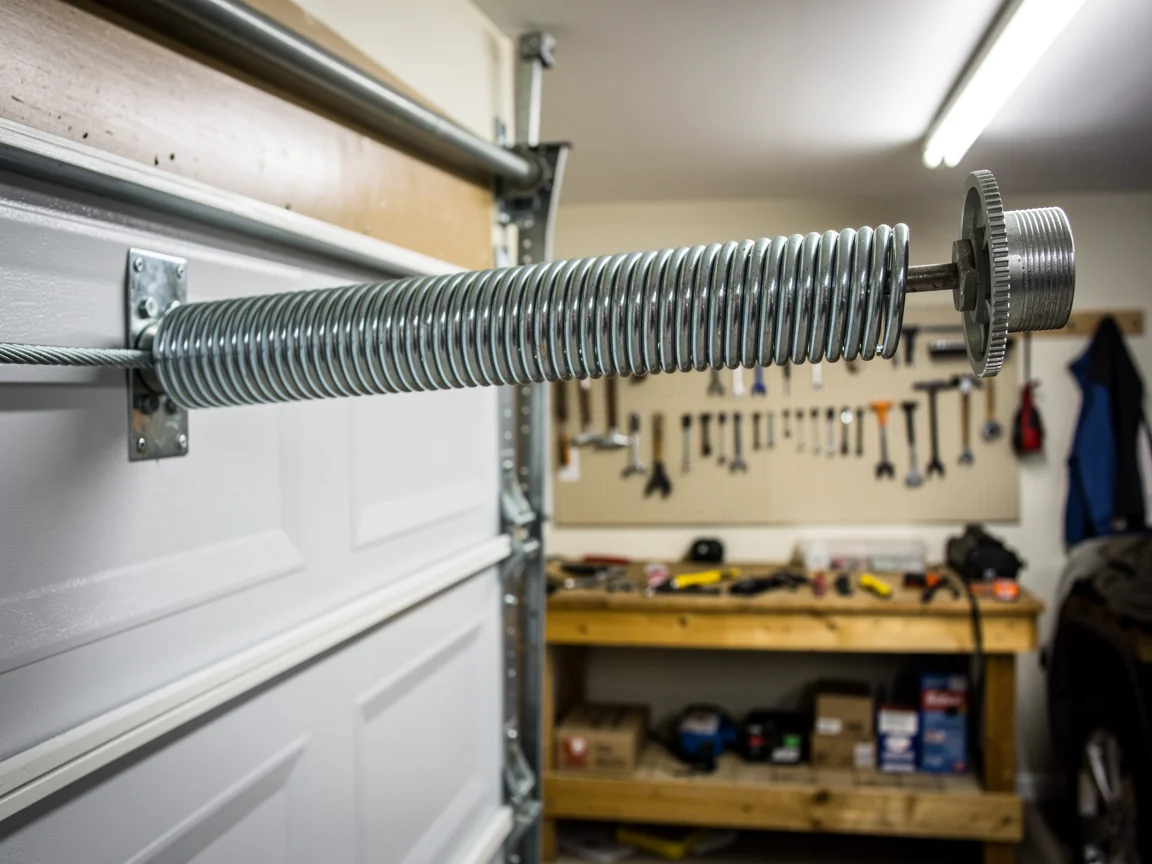
A torsion spring is rated for a number of open-close cycles, and in a tract built out around 1979, a lot of that original hardware is now pushing 45 years old.
Coil fatigue, no rust
That's the main failure mode we see: plain fatigue, the coil just giving out after decades of lifting the same door. The mild year-round climate here hasn't rusted these springs out the way damp or coastal air might elsewhere, so when one breaks at this age it's almost always fatigue and not corrosion eating the coil from outside in.
Oval bearing plates
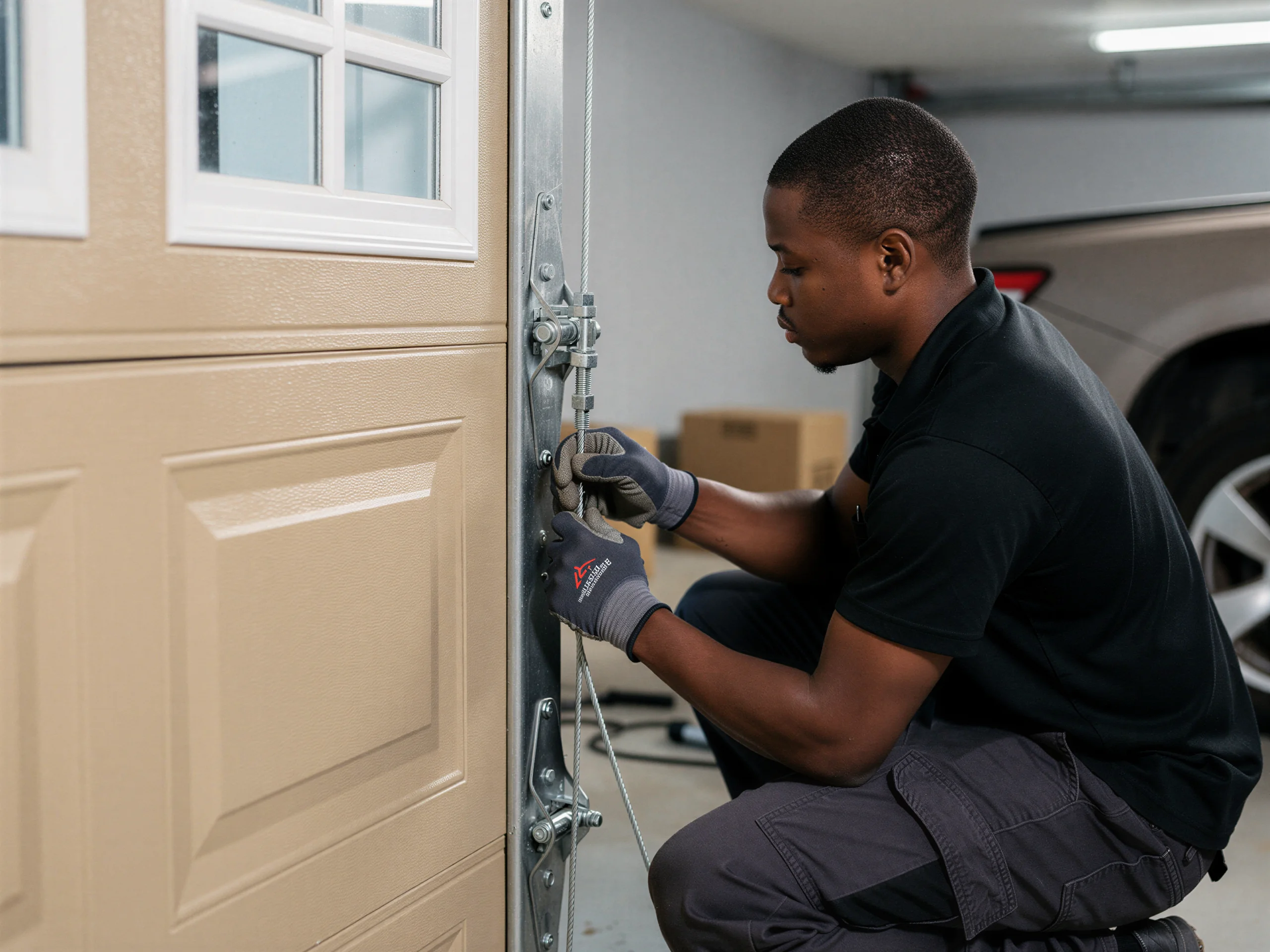
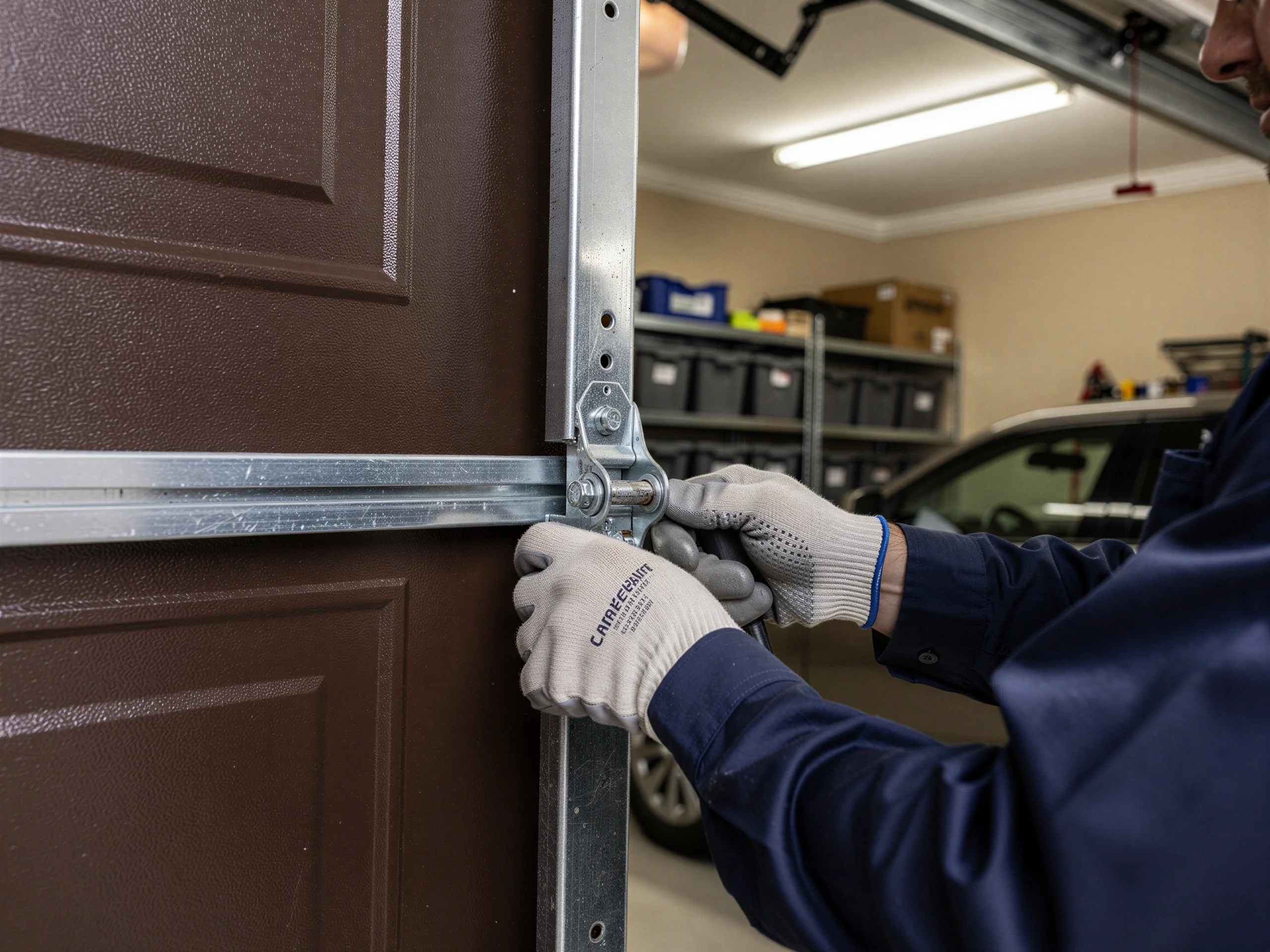
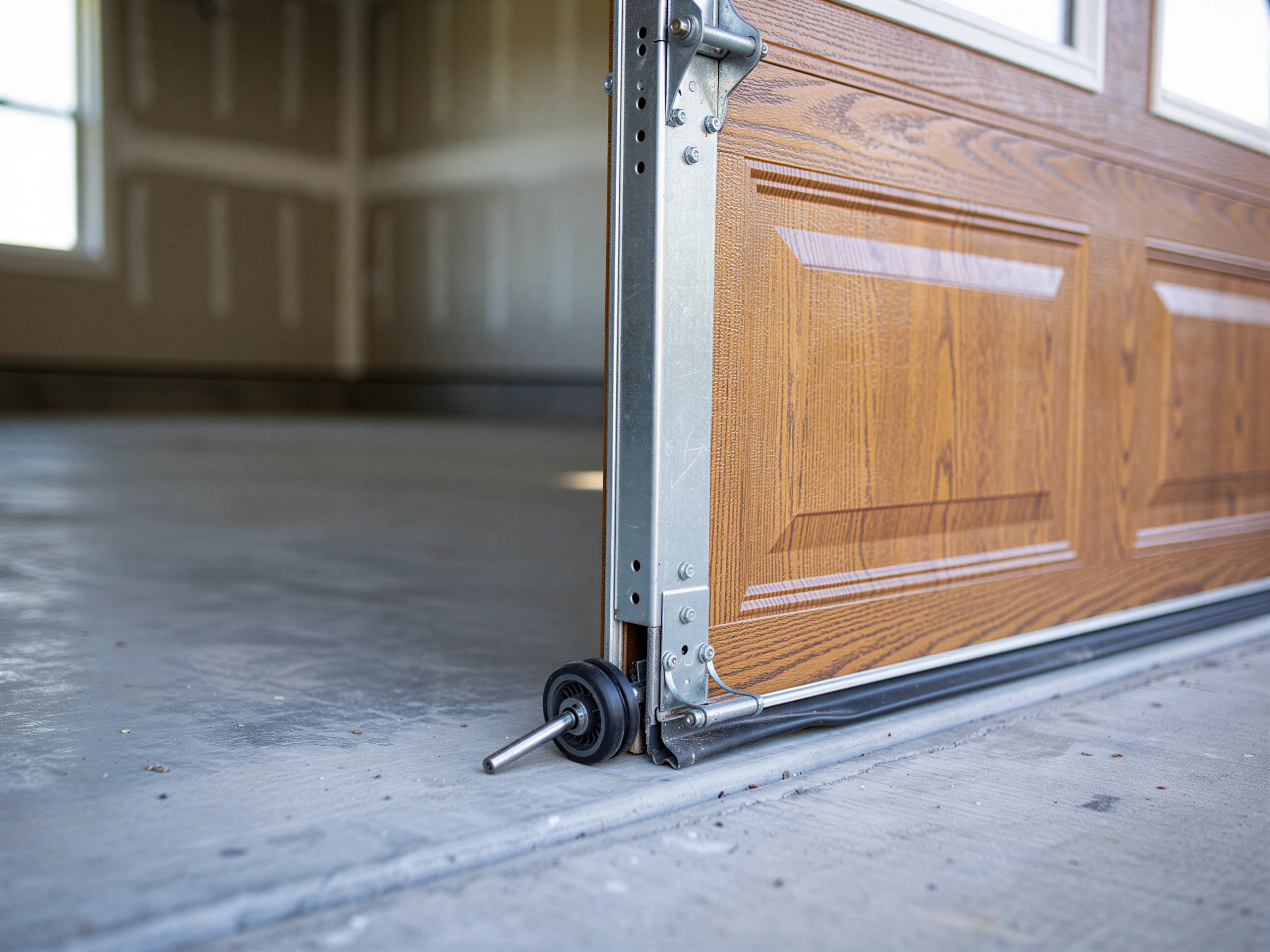
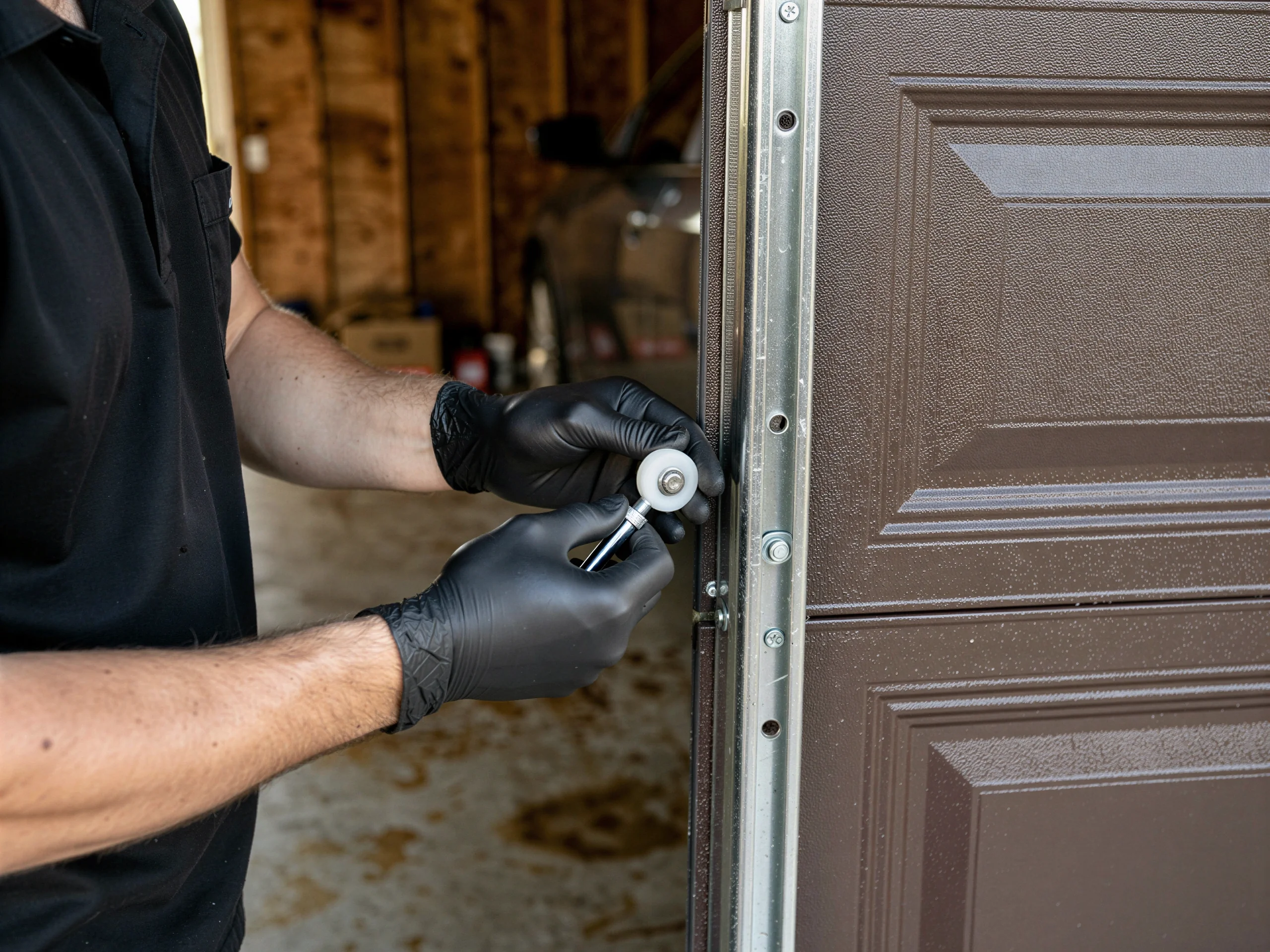
What goes wrong alongside the spring itself is usually the cable on that side, frayed from carrying sudden slack, and sometimes the end bearing plate, worn oval instead of round after the same decades of load.
Opener strain from spring
We also see the opener take a hit - it wasn't built to lift a dead-weight door and the strain on the drive gear shows up fast once a spring goes.
Can You Do This Yourself
No, and this is the one place on the page where we're not going to hedge. A torsion spring on a sectional door carries real stored energy - enough to break fingers, crack a skull, or put a winding bar through drywall if it slips. The tools for winding and unwinding it safely aren't the ones in a homeowner's garage, and buying them for a one-time job costs more than the repair. If the spring already let go and the door's sitting stuck, don't try to force it open or closed - leave it as is until a truck gets there. There's no version of this job that's safe to learn on your own door.
The Symptom
The most common call out of Diamond Bar is a door that won't lift at all, or lifts a few inches and stalls - the opener straining against a dead spring instead of a balanced door.
Coil snap or heaviness
Some owners hear it happen: a loud bang from the garage, usually a coil snapping clean. Others just notice the door's gotten heavier to open by hand over a few weeks, which is the slower version of the same fatigue failure working its way through an old coil.
Dropping door sign
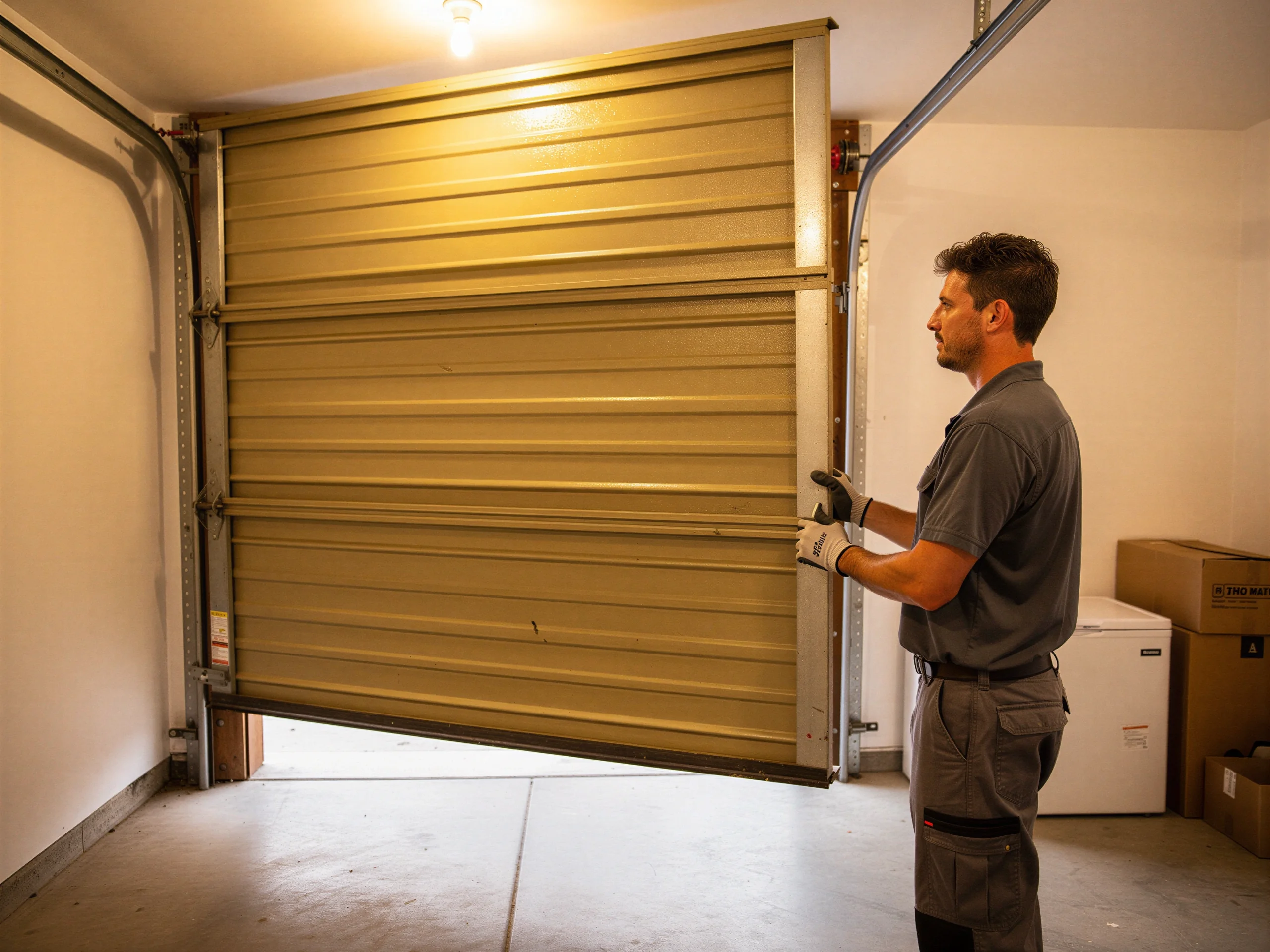
A door that drops hard when the garage button is pressed, instead of lowering evenly, is another sign - that's a spring not carrying its share of the weight anymore, with the opener doing work it was never built to do alone.
What Is on the Truck
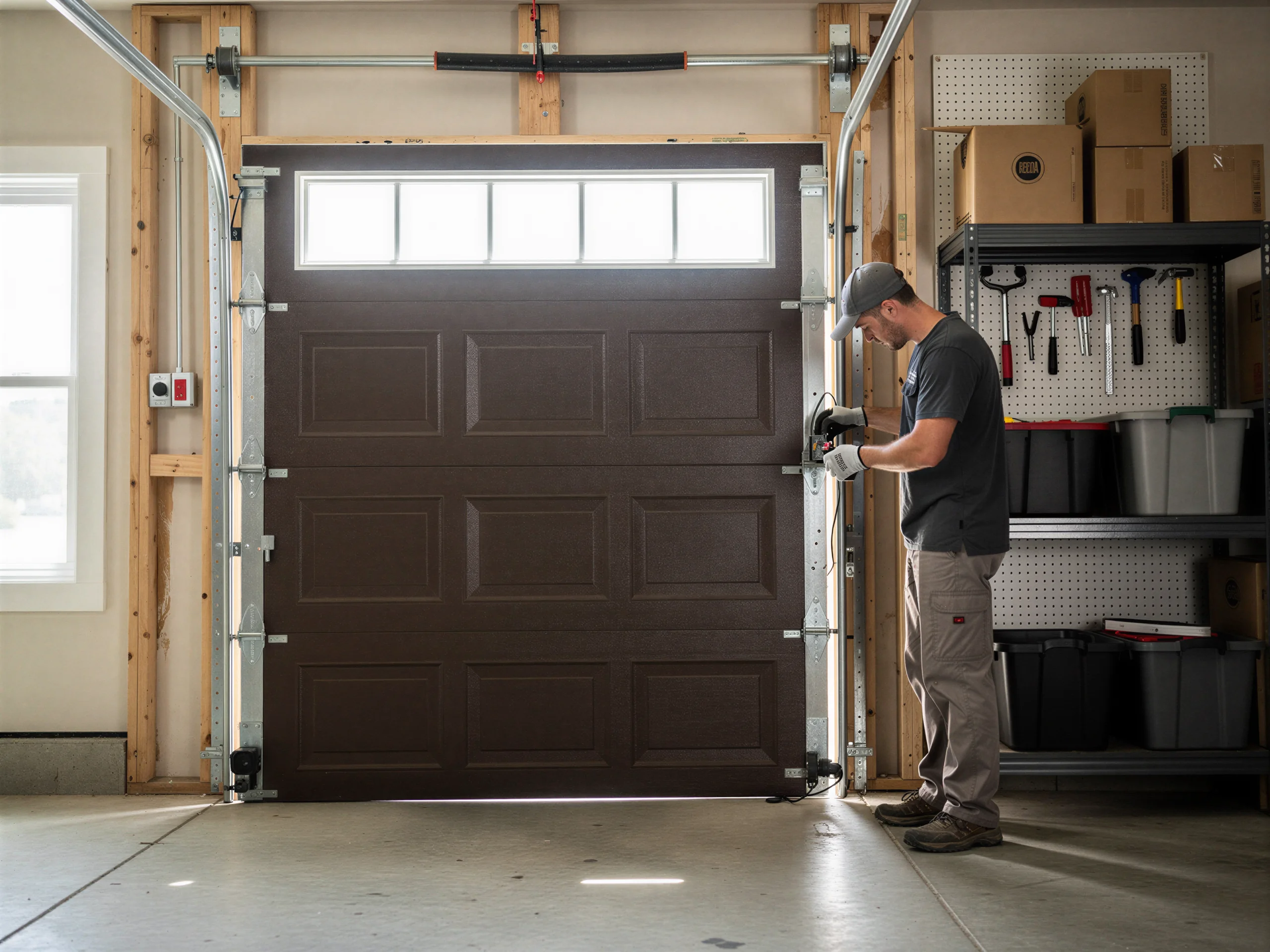
Diamond Bar runs about 13 miles out from our La Mirada base, one of the longer hauls on the route, so we size the truck stock before we leave rather than guess once we're on site. For a town built out mostly in the late 1970s, that means standard torsion springs sized for steel sectional doors, the common wire gauges for a two-car garage door, new end bearing plates, and cable to match - the parts that wear out alongside a failed spring, not just the spring itself. What we don't carry for every job is a spring custom-wound to an odd or older shaft size; those sometimes need a day's lead time to get in. We'll tell you on-site if that's the case rather than stall the job pretending otherwise.
Talk to a local pro
Garage door service in La Mirada?
Same-day service with honest, upfront quotes.