Why This Fails Locally
Arcadia counts about 19,291 households, a fraction of the 591,672 across the whole area this company covers. A town that size doesn't generate steady call volume for any one kind of job, but when a door fails here, it tends to fail the same way up and down the block, because most of Arcadia's garage doors went up within a few years of each other, clustered around 1965. The median home here dates to 1965, a touch newer than the 1964 median across the wider service area, which puts the original hardware squarely in torsion-spring territory - newer than the raw extension-spring setups some older neighborhoods carry, old enough that the spring is well past any reasonable cycle count. The mild year-round climate here doesn't baby that hardware the way people assume. Springs fail on cycle count, not rust, so a spring installed when the house was built is simply worn out by now regardless of weather. What that means in practice: the failure mode in Arcadia is mechanical fatigue, not corrosion, and the fix has to match that.
Getting It Booked In
There's no branch location in Arcadia. La Mirada Garage Door Pros drives in from La Mirada, about 16 miles out, to cover service calls here.
Describe problem up front
That distance doesn't change what gets fixed, but it does mean scheduling works better when you can describe the problem up front - whether the door won't lift at all, whether it's off track, or whether the opener is grinding without moving the door.
Town-specific repair page
For a look at the full range of repair work this company handles, the Arcadia garage door repair page lays out what's covered for this town specifically, and the La Mirada service page covers the company's full service list for the whole area.
Access when truck arrives
Booking from farther out just means it helps to have someone home, or at least reachable, when the truck arrives, since there's no local depot to swing back from if the door's not accessible.
The Cost of This Job
There's no flat number to quote here, and anyone who gives you one without seeing the door is guessing. What does shape the decision in Arcadia is the age of the hardware: original 1965-era springs, drums, and track brackets are rarely a direct swap for stock parts, so a repair sometimes becomes a partial hardware upgrade rather than a like-for-like replacement.
Owners favor full replacement
Arcadia's median household income of $116,142 sits well above the $95,385 median across the whole service area, and in practice that means more owners here choose full replacement over patch repair when a door is already mid-life, rather than stretching an old torsion system another few years.
Spring swap as cheap path
That's a homeowner choice, not a sales pitch - a straight spring swap is almost always the cheaper path if the rest of the door and track are sound.
Special-order lead times
The honest limitation: if a part is a special order for an obsolete door model, that adds lead time no truck roll can shortcut, and it's better to know that before the job starts than after.
What Can Go Wrong
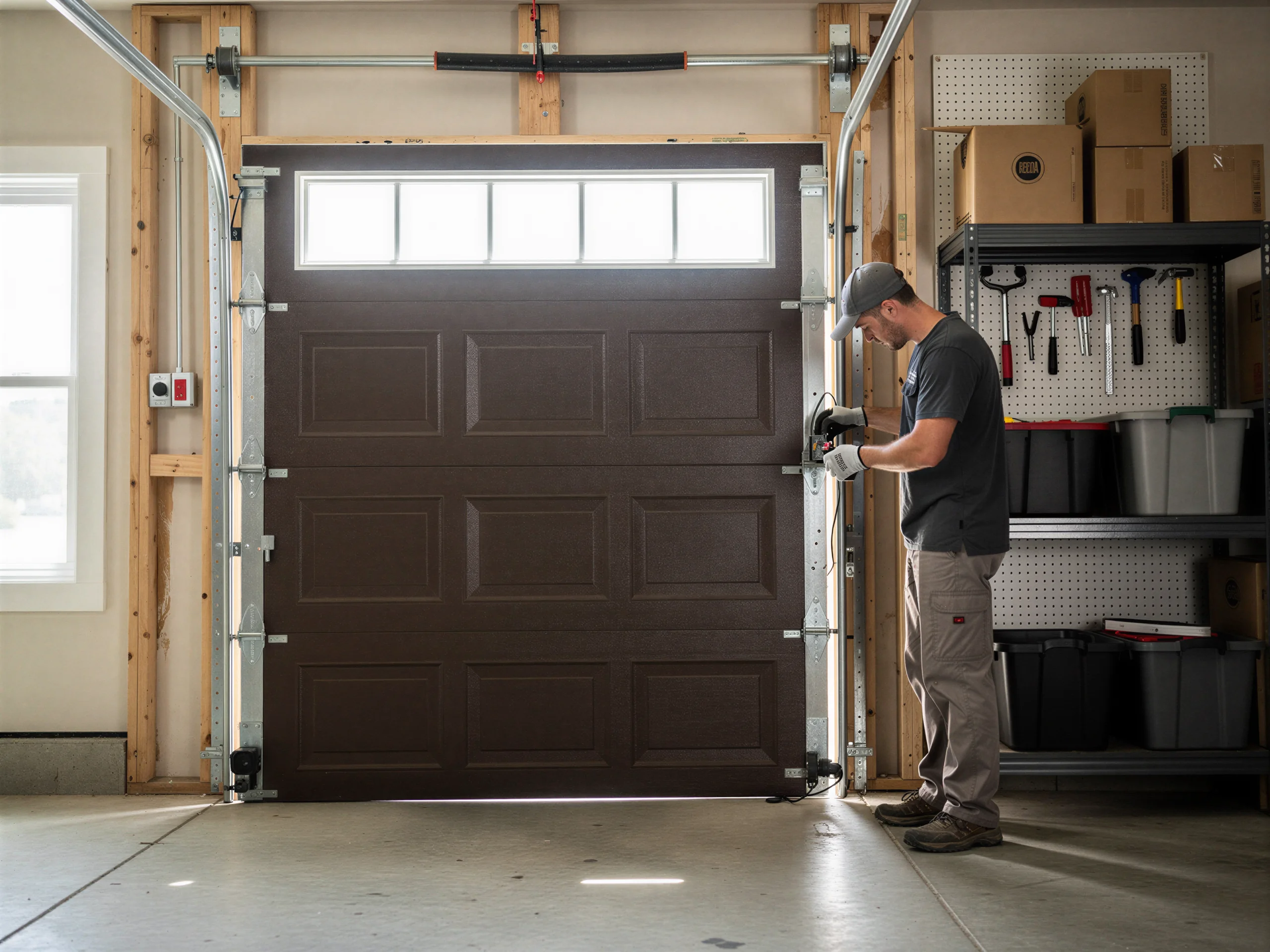
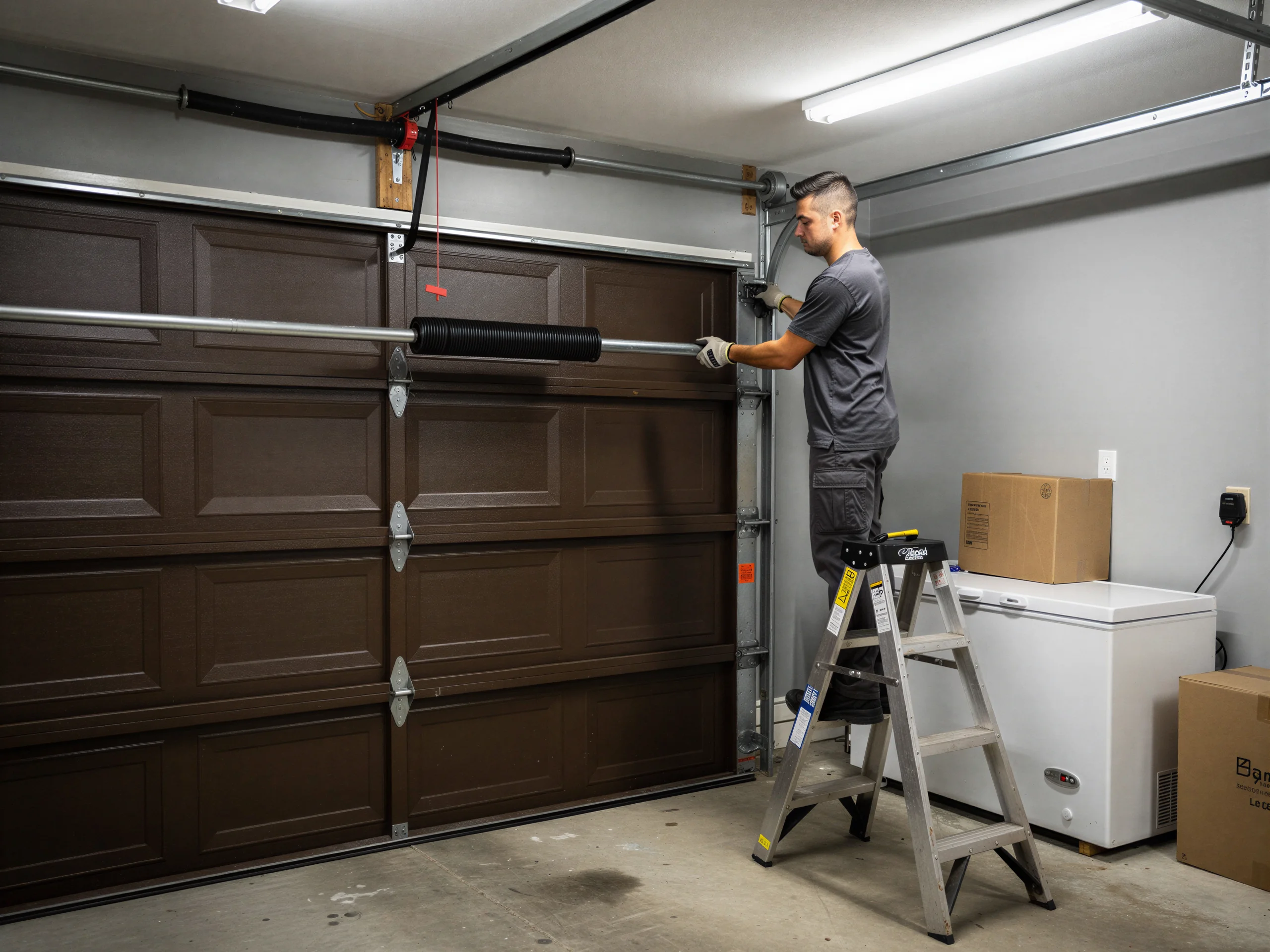
On a door this age, the torsion spring is the most common failure point, and it's rarely the only thing to check once it goes - a spring that snaps under load can take a worn cable or a bent drum with it.
Steel-on-steel roller wear
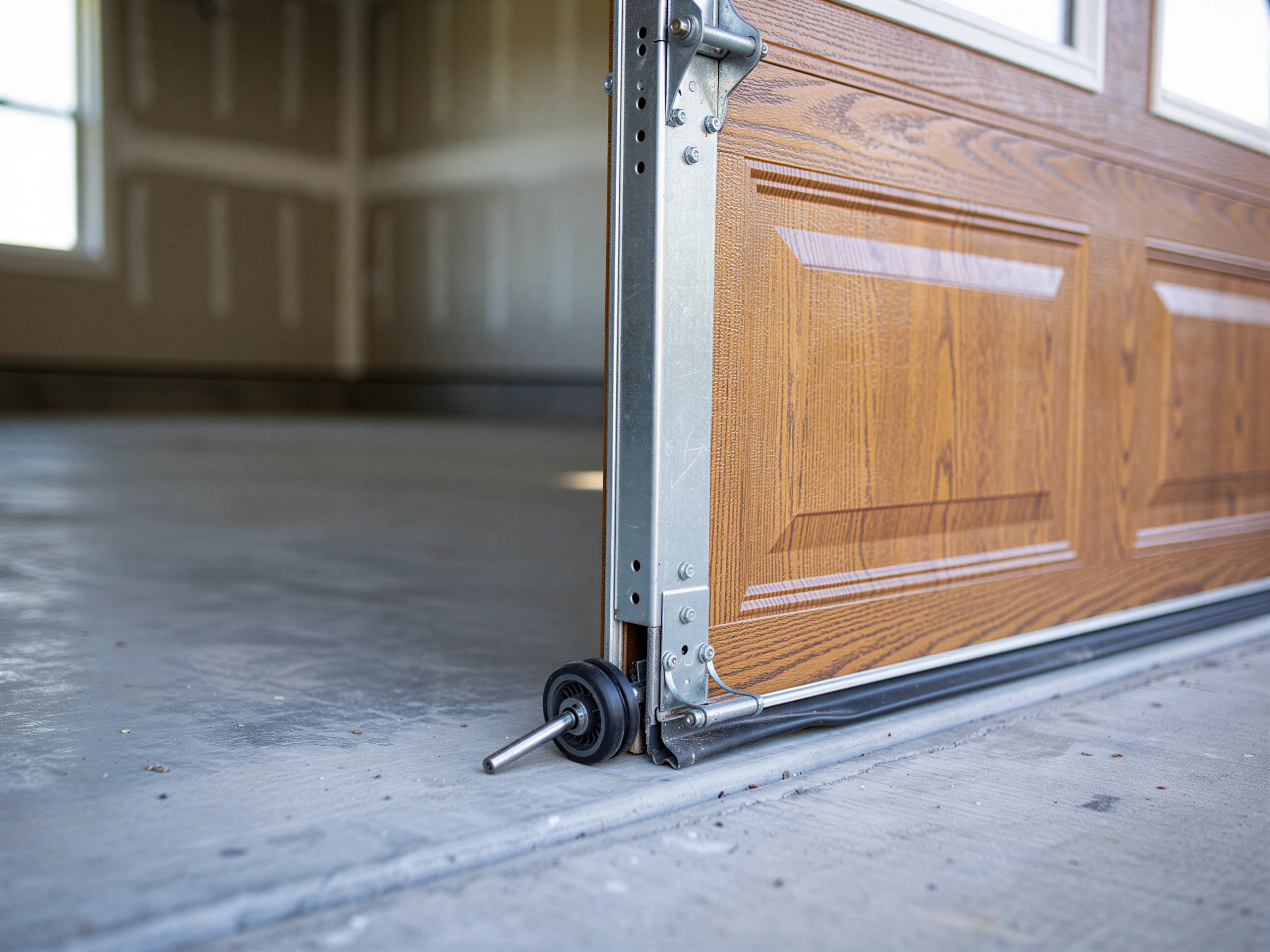
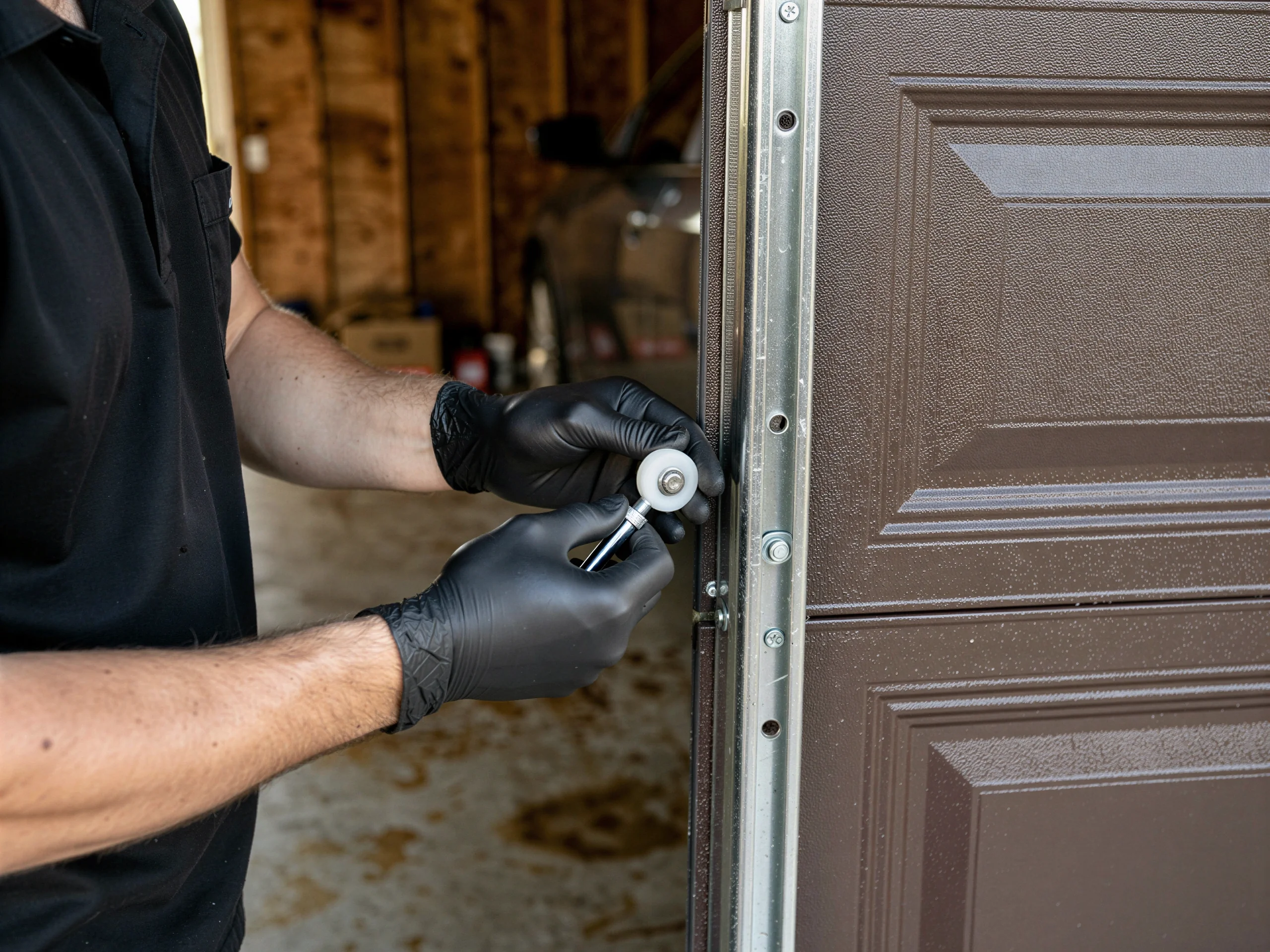
Original rollers from a 1965-era install are typically steel-on-steel with no nylon bushing, so they wear the track grooves unevenly over decades, which shows up as a door that binds partway through its travel rather than failing all at once.
Opener mismatch symptoms
Openers added later to these doors sometimes weren't matched to the door's actual weight, so a struggling opener motor can be a symptom of the door, not the opener.
Same-era housing pattern
None of this is unique to one house - it's the pattern across a cluster of homes built in the same few years, which is exactly what you'd expect when a whole area went up on the same construction schedule.
What the Fix Involves
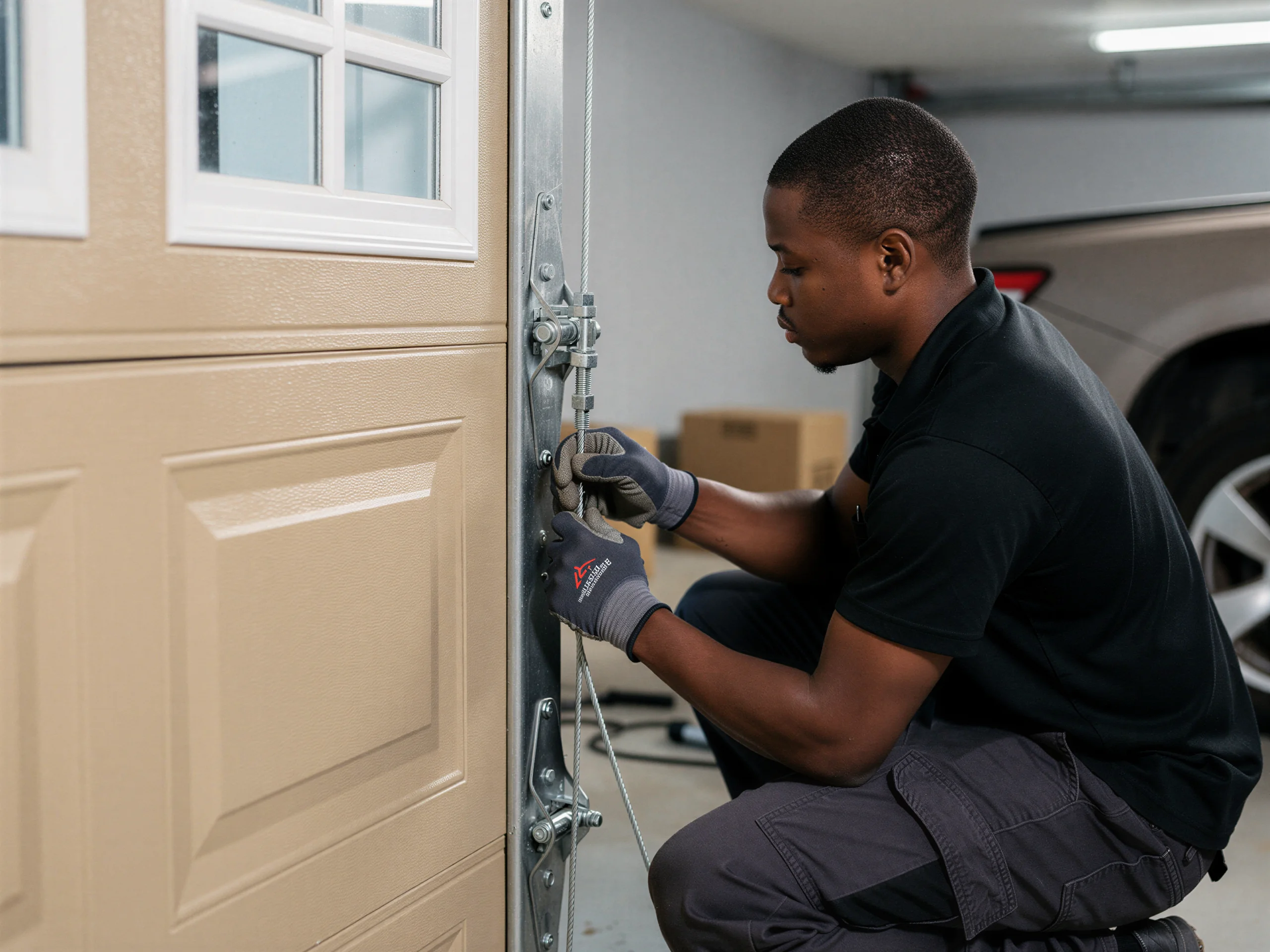
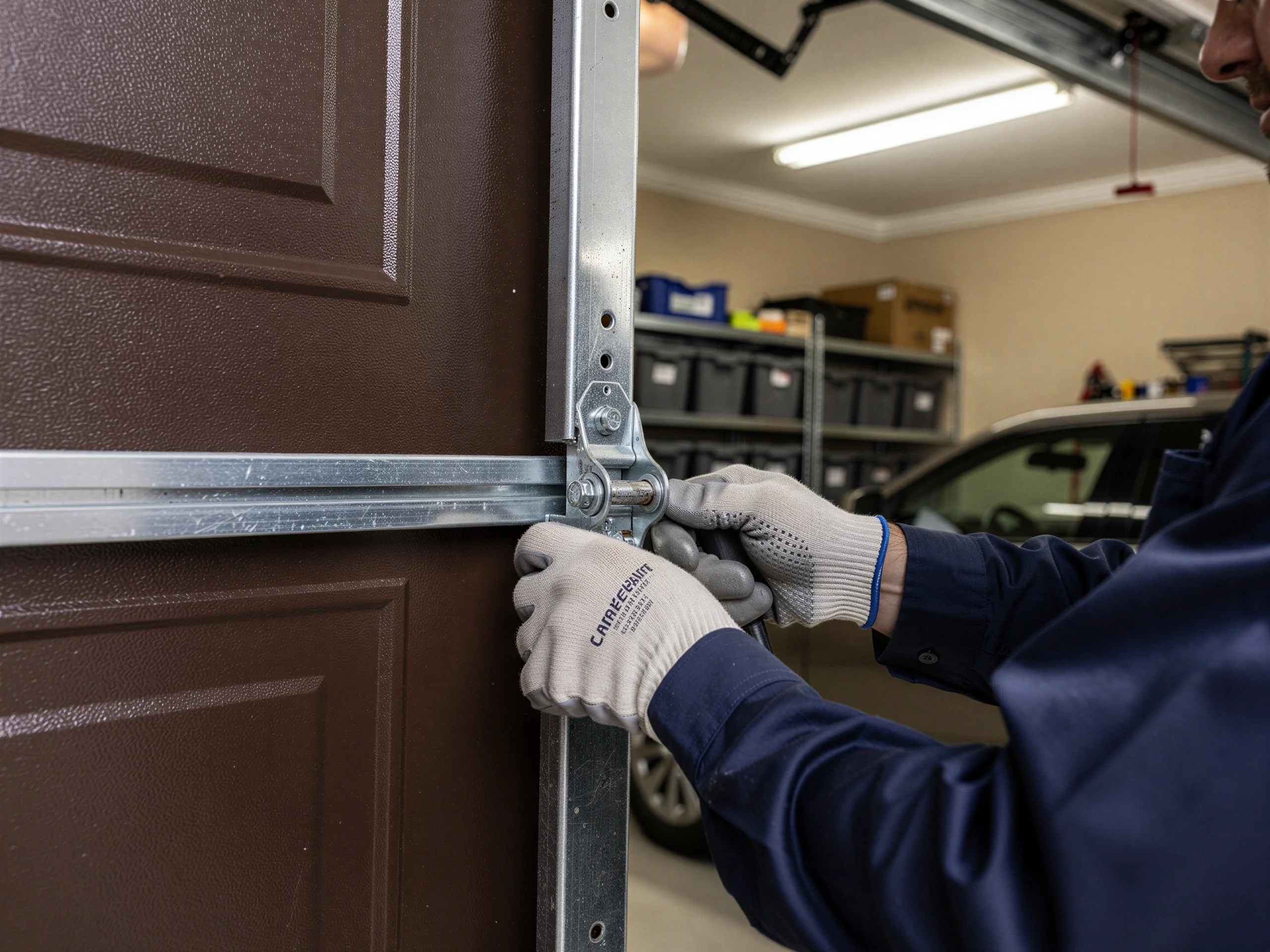
The work starts with checking the spring's wind and wire gauge against what the door's actual weight calls for, since original 1965 hardware was sized for doors that may have since been replaced or reinforced. Cables, drums, and end bearing plates get checked together, because a failure in one usually stresses the others. Track alignment gets checked next - on an older door, it's common to find the track slightly bowed from years of a misaligned roller grinding against it, and straightening or replacing that section matters more than people expect. Parts specific to the original door model aren't something any truck carries as stock; modern torsion springs and rollers fit the function but not always the exact original fixtures, so some jobs involve a reasonable substitute rather than an exact match. That's the honest limitation - a 1965 panel insert or a decorative original hardware piece may need to be sourced separately, and that's not a same-visit fix.
The Symptom
The call that comes in from this part of town is usually one of two things: the door won't lift past a foot or two before the opener strains and stalls, or the door comes down hard and fast instead of settling onto the floor.
Spring tension nearly gone
Both point to the same root cause on a house this age - a torsion spring that's lost most of its tension, so the opener or the person lifting is doing work the spring used to carry.
Roller failure off-track
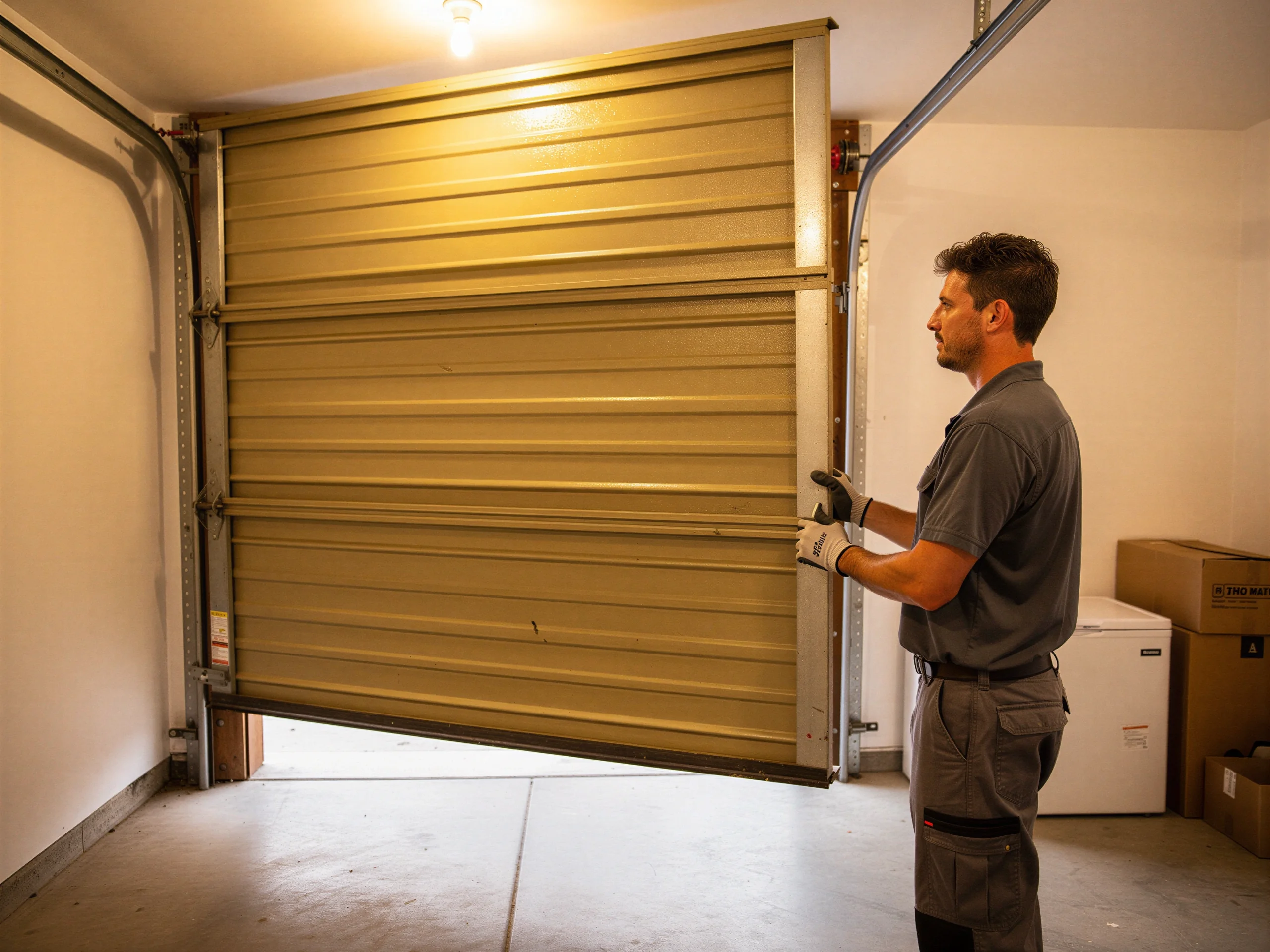
Less often, the door comes off track entirely, usually because a roller finally gave out after years of grinding in a slightly bent groove. None of these show up overnight.
Slow decline, sudden failure
They build for months as the spring loses a little tension with every cycle, which is why a door that worked fine last week can fail completely this week with no new damage to explain it.
Talk to a local pro
Garage door service in La Mirada?
Same-day service with honest, upfront quotes.