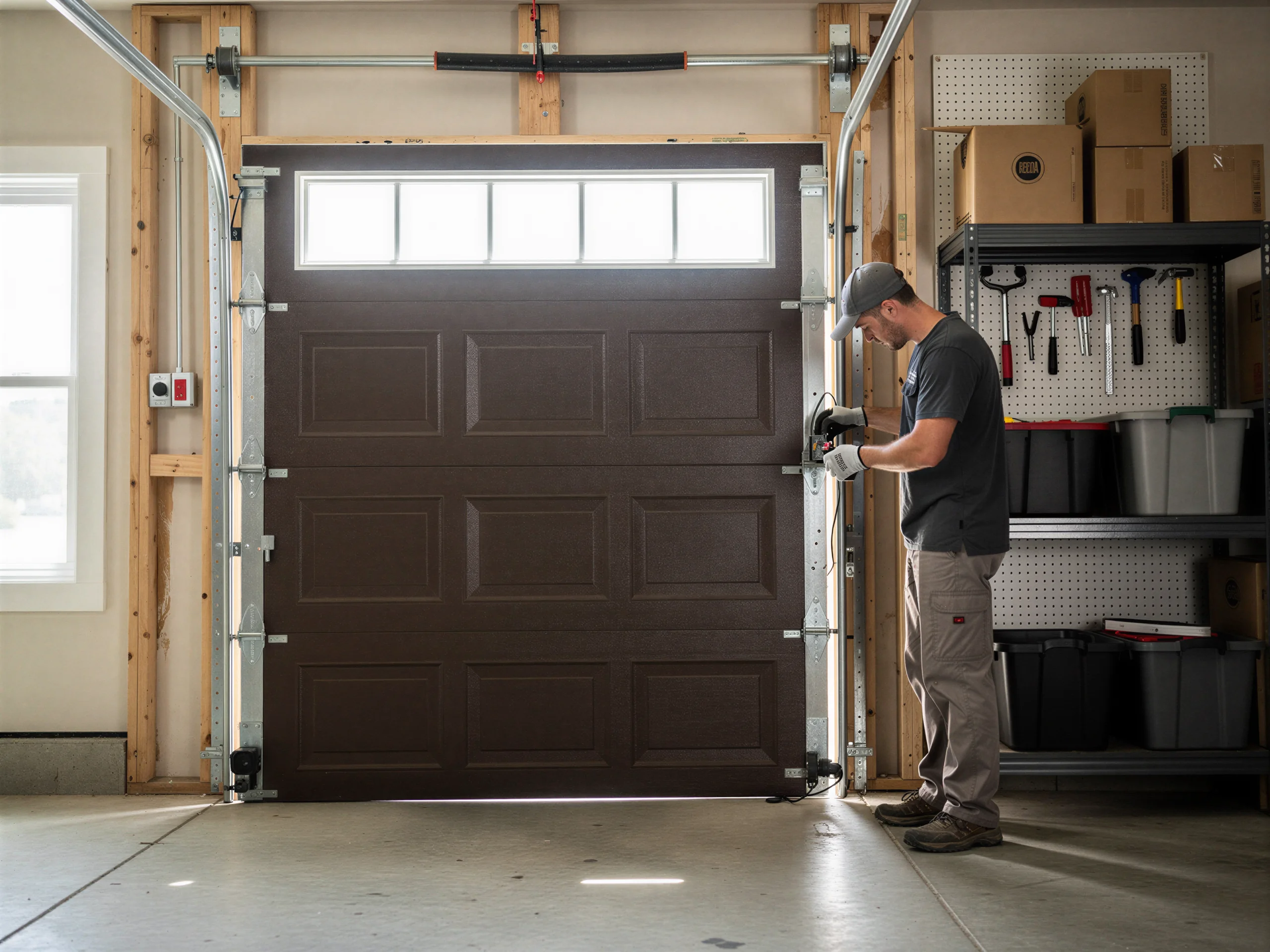
Why This Fails Locally
Arcadia's median household income sits at $116,142, well above the $95,385 median across our wider service area. That gap matters because it changes where the repair-or-replace line falls. A homeowner here can usually afford a full replacement instead of nursing along a worn spring or a bent track, and that's often the better math once a door is past its working life.
The houses behind those doors mostly went up around 1965, putting Arcadia in the same 1960s-70s hardware generation as most of the service area we work. That means original torsion springs sized for lighter single-layer steel doors, galvanized track that's never been swapped, and openers bolted onto hardware that predates current safety sensors by decades. When a door from that era finally quits, it's rarely one part. The spring, the cable drum, and the rollers are usually all at the same age and the same point of failure.
What doesn't apply here: this isn't a coastal salt-air problem and it isn't a freeze-thaw problem. The climate band is mild temperate, so the failures we see are wear, fatigue, and age - not weather damage.
Getting It Booked In
We run this job from La Mirada, 16 miles out, so Arcadia installs get scheduled rather than slotted in same-day. If you're calling about a door that's already stuck shut or a spring that's already snapped, say so when you book - that changes the order we load the truck, and it's worth separating from a planned replacement where the door still opens but you want it gone before it fails on its own.
Batch measure and install
Because we're traveling in rather than based in Arcadia, we try to batch the measuring visit and the install where the job allows it, instead of two separate trips.
Single visit confirms size
For a straightforward single or double door swap on a house from the 1965-era stock, one visit to confirm opening size and header clearance is usually enough before we order the door. We don't keep a local yard or depot in Arcadia.
Real arrival windows
Every job here is a dispatch from La Mirada, which is also why we don't promise a response time for this town - we'll give you a real window when you call, not a generic one.
The Cost of This Job
We're not going to put a number on this page that doesn't hold up once we've seen your opening size, your current track configuration, and whether the header has room for a standard spring system or needs a low-headroom kit.
Mid-range versus composite
What we can tell you is how the decision tends to shake out here: at a median household income of $116,142, most Arcadia homeowners we'd quote are choosing between a mid-range insulated steel door and a higher-end wood-look composite, not between repair and replacement on a door that's barely failing.
Single part, not door
The honest limitation: if your door is less than ten years old and the problem is a single broken part - a cable, a roller, a sensor - replacing the whole door is the wrong call and we'll say so on site.
Hardware generation decides
New installation makes sense when the hardware generation itself is the problem, which for a lot of Arcadia's 1965-era housing, it now is. Get us out for a look before you decide; quoting a full install sight-unseen on an opening we haven't measured isn't a number you can trust anyway.
What Can Go Wrong
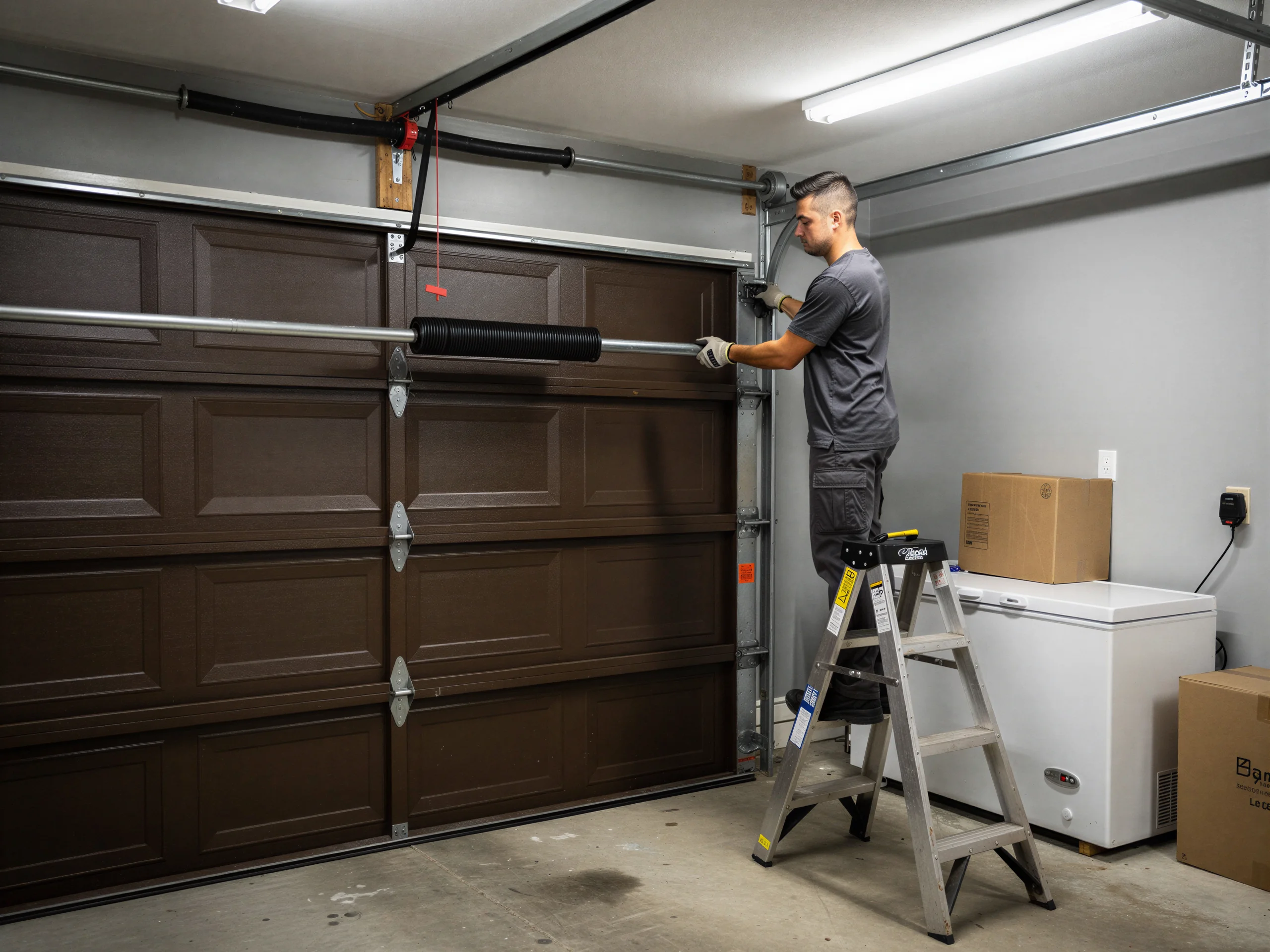
The most common surprise on a 1960s-era Arcadia opening is header clearance. Original construction from that period often left less room above the door than current spring systems want, which means a standard torsion kit doesn't always fit without a low-headroom bracket - something you only find out once the old door's off the track.
Mismatched opener mounting
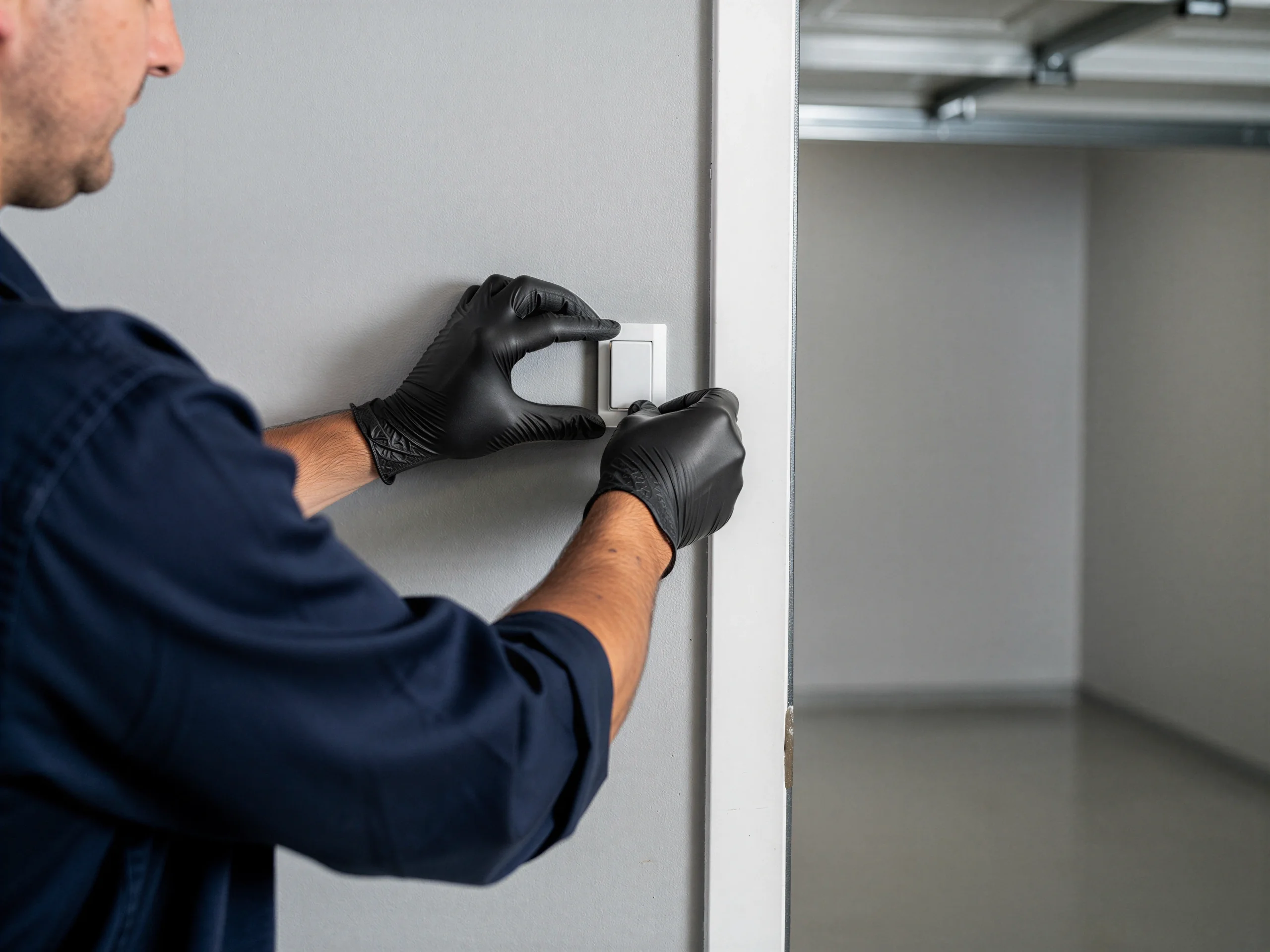
The second surprise is the opener. A lot of these houses have had the opener replaced once already, sometime after the original door went in, which means the opener's mounting and the door's new weight don't always match.
Undersized opener motor
A heavier insulated door on an opener sized for the old lightweight steel panel will struggle, trip its safety reverse constantly, or burn out the motor early. We also see wiring that's been patched more than once - a wall switch run on old cable that wasn't rated for a modern opener's safety circuit.
Patched wiring risk
It's not a garage door problem exactly, but it's one we flag because it'll fail the new door just as fast as it failed the old one, and it's cheaper to fix before the new door goes in than after.
What the Fix Involves
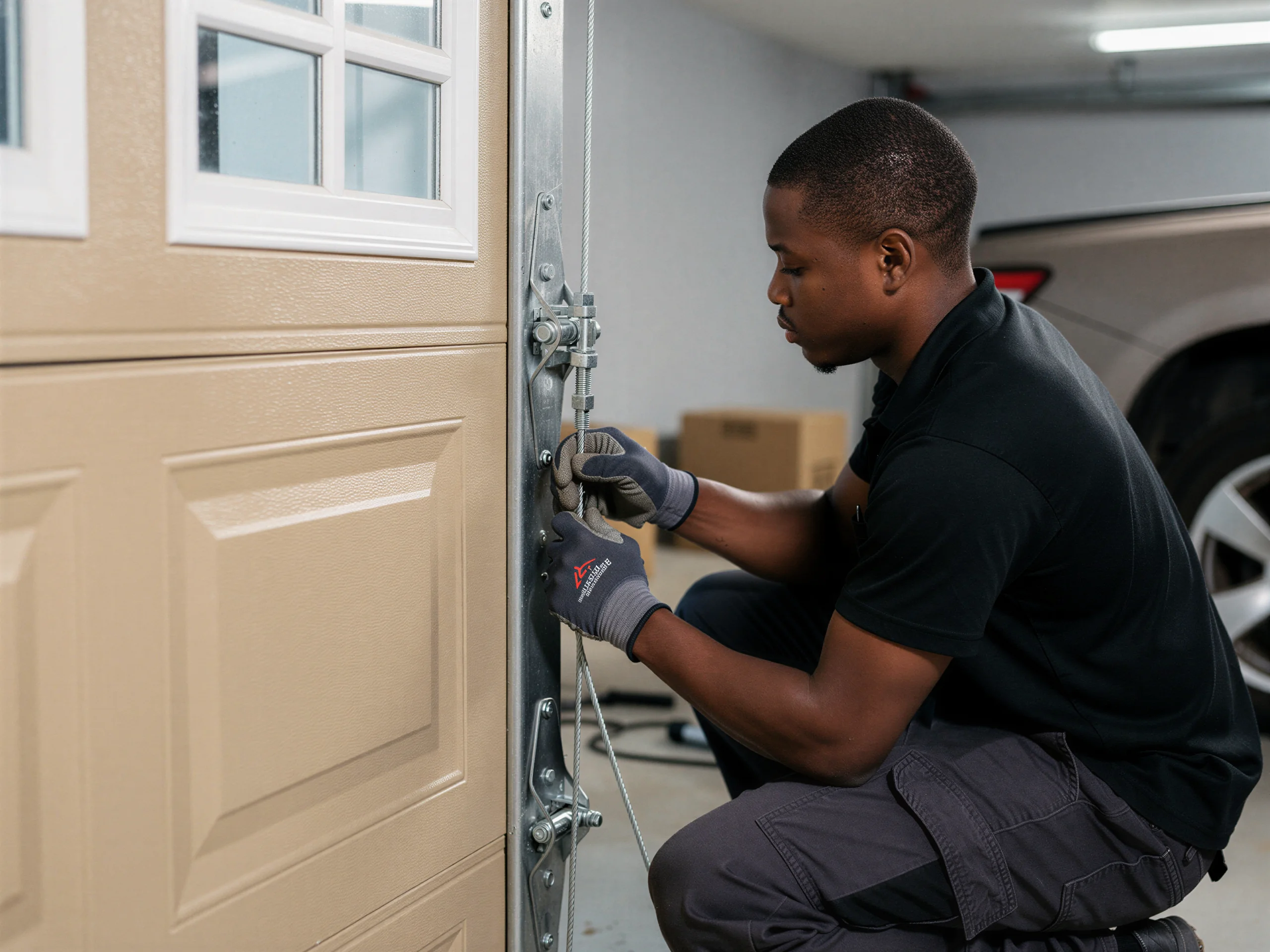
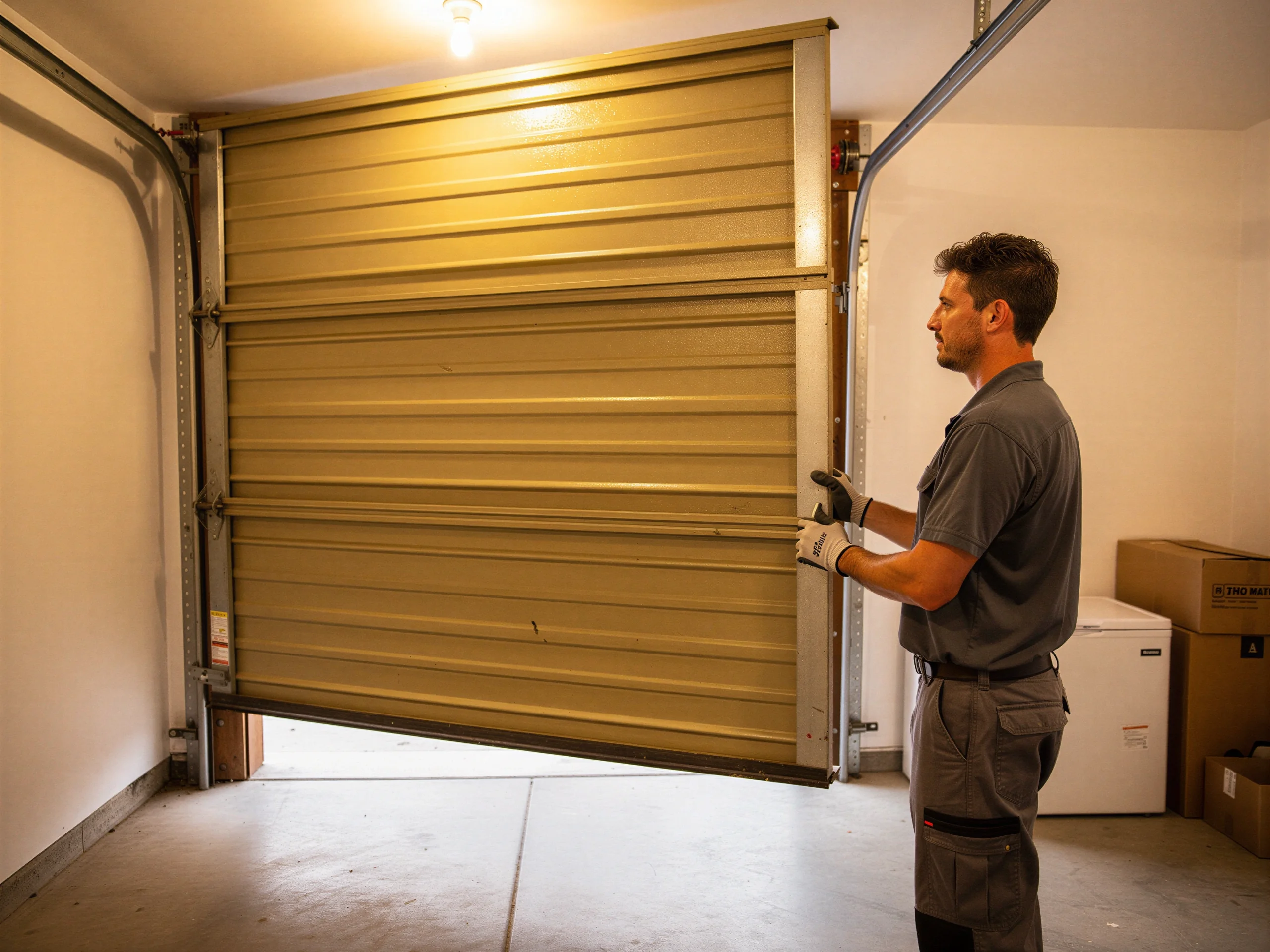
A full install starts with pulling the old door, track, and springs - on a house from the 1965 era, that hardware is usually original and comes out as one brittle unit.
Checking square and headroom
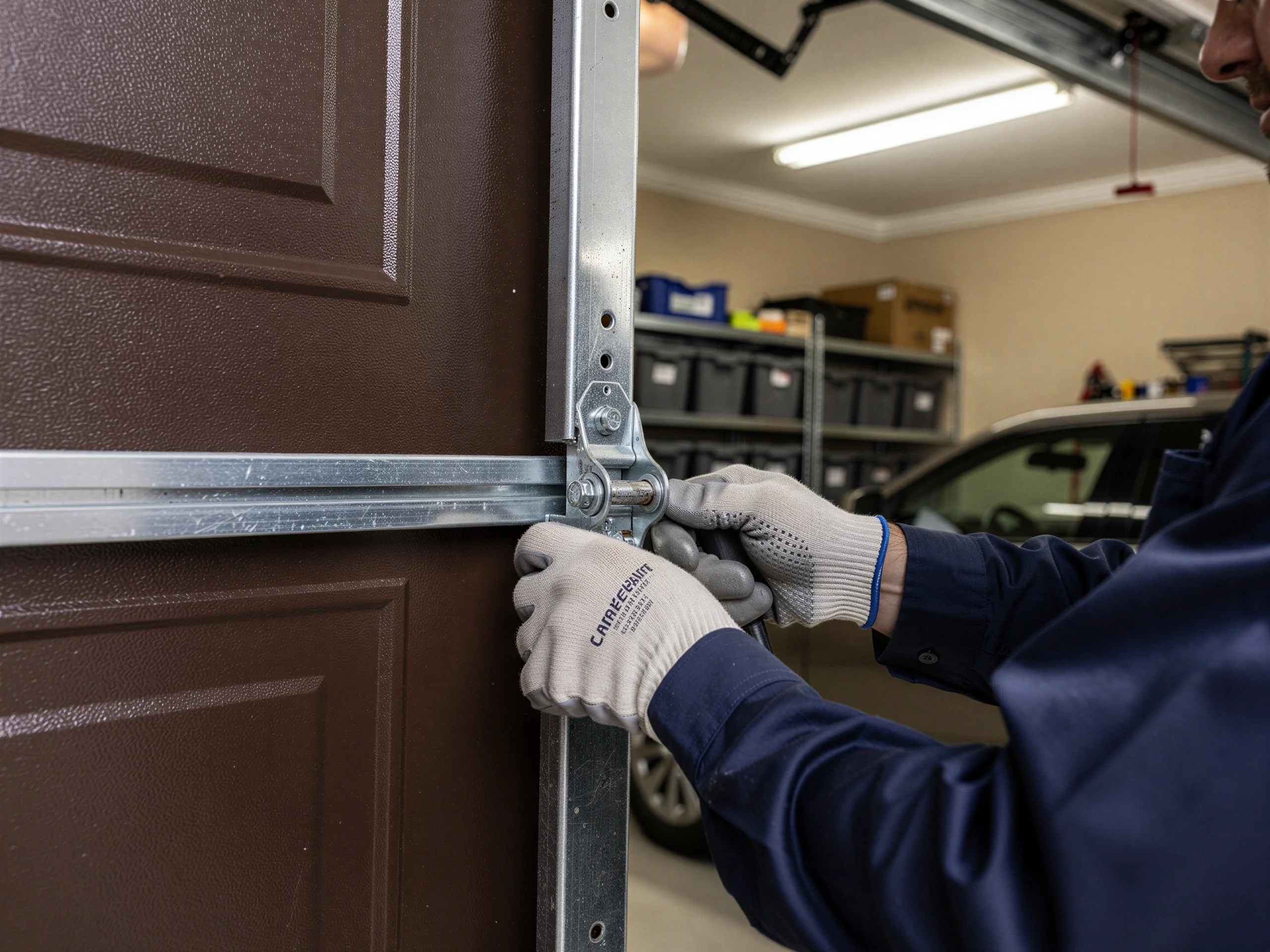
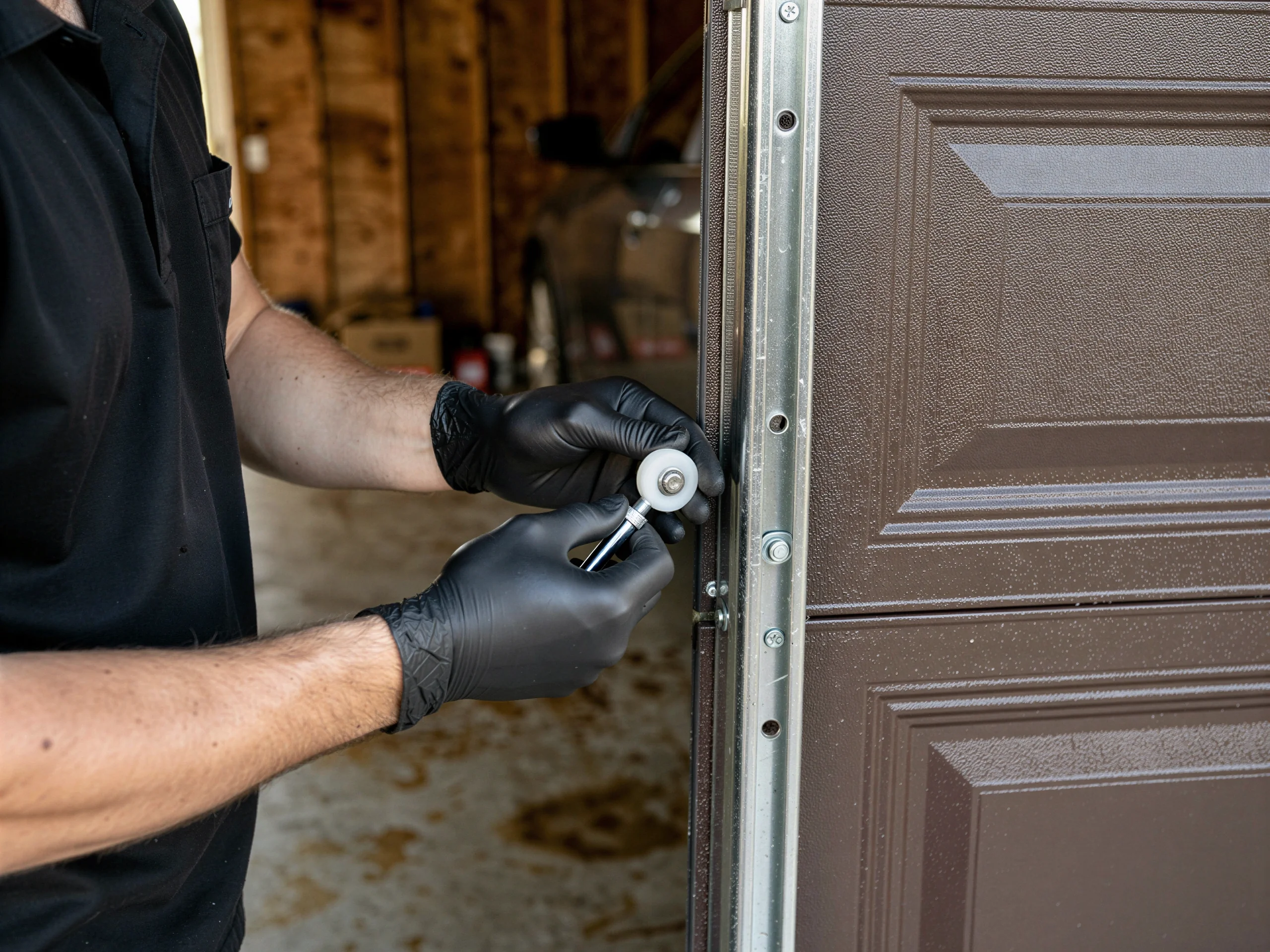
We check the opening for square and measure header clearance before anything new goes up, since that decides whether a standard torsion spring system fits or whether we need a low-headroom kit. New track gets set and leveled before the door panels go in section by section, with rollers and hinges matched to the door weight, not reused from the old setup.
Springs sized to actual weight
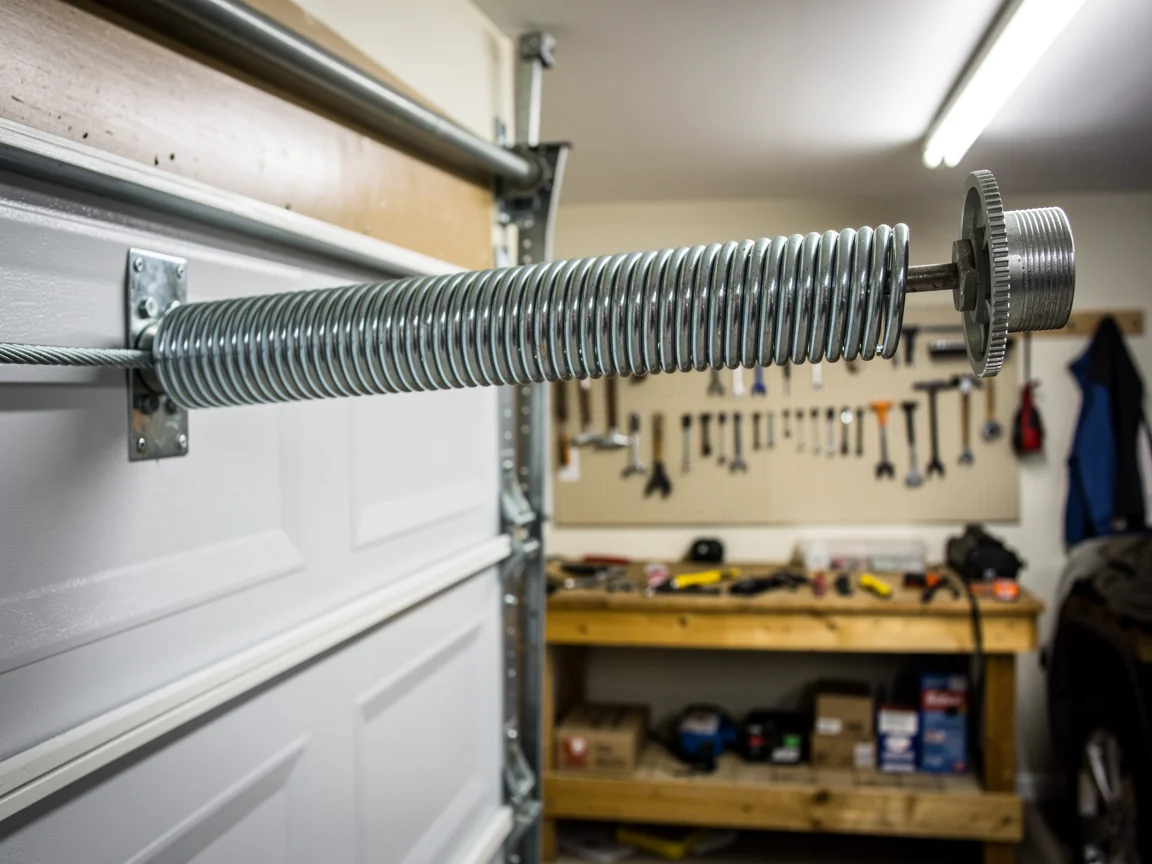
Springs get sized to the actual finished door weight, including insulation, not estimated off the old door's spec. If the opener's being replaced too, we mount it to match the new door's travel and set the safety sensors to current standard - something the original 1960s hardware never had.
No cracked track reuse
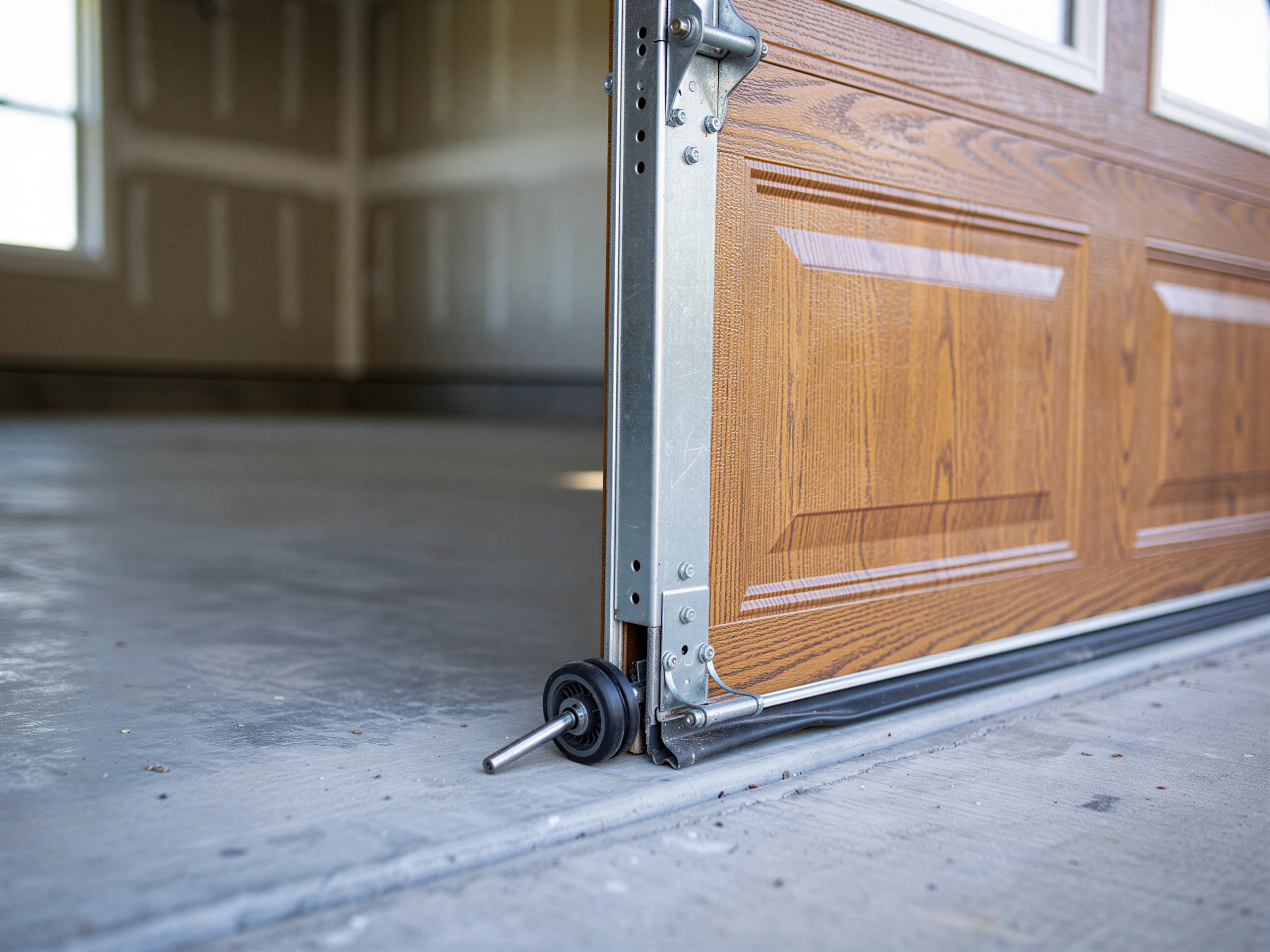
One thing we won't do: reuse a cracked or bent track to save a trip back to the truck. If the track's compromised, it comes out, because a new door on a bad track fails the same way the old one did, just faster.
The Symptom
Most calls start the same way: the door's gotten heavy to lift by hand, or the opener strains and reverses partway up. On a house from Arcadia's 1965-era stock, that's almost always the spring losing tension after decades of cycles, not a one-off fluke. Some homeowners notice a loud bang first - that's a cable or spring finally giving out, not a mechanical hiccup you can ignore until next week.
Others notice it gradually: the door sags visibly on one side when it's halfway up, or it won't sit flush against the floor anymore. That's usually track misalignment, which on original 1960s track is often the track itself warping slightly over fifty-plus years rather than something knocking it loose.
If the door's opening and closing fine but you're calling because it's just old and you want ahead of a failure, that's a different conversation than an emergency repair - see our page on garage door repair in Arcadia if the door's already stuck, or keep reading here if you're planning a full swap before that happens.
Talk to a local pro
Garage door service in La Mirada?
Same-day service with honest, upfront quotes.