Can You Do This Yourself
A snapped or frayed cable on a garage door is not a weekend fix, and that's true whether the door is a 1960s original or a later build.
Cable-drum danger zone
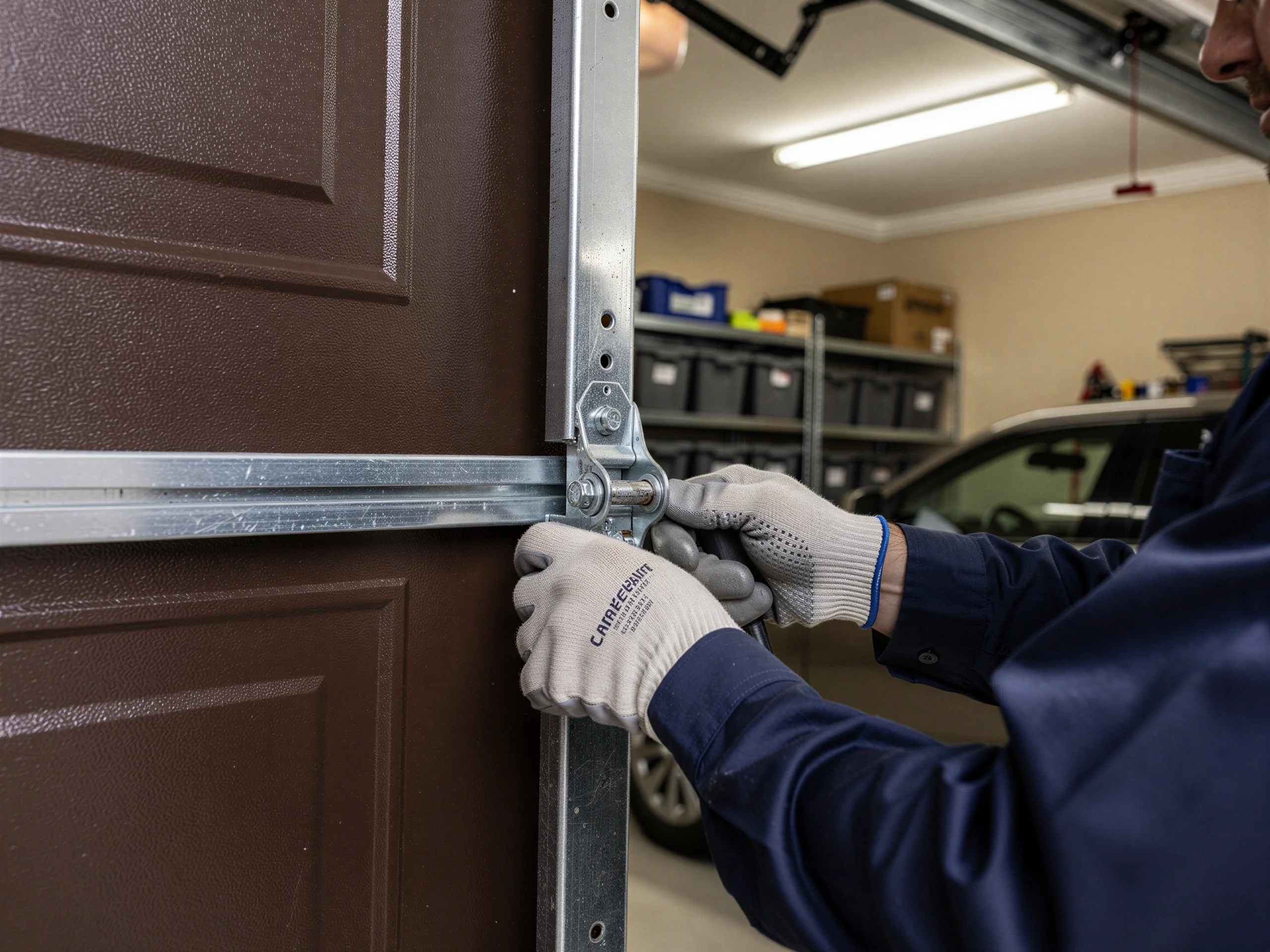
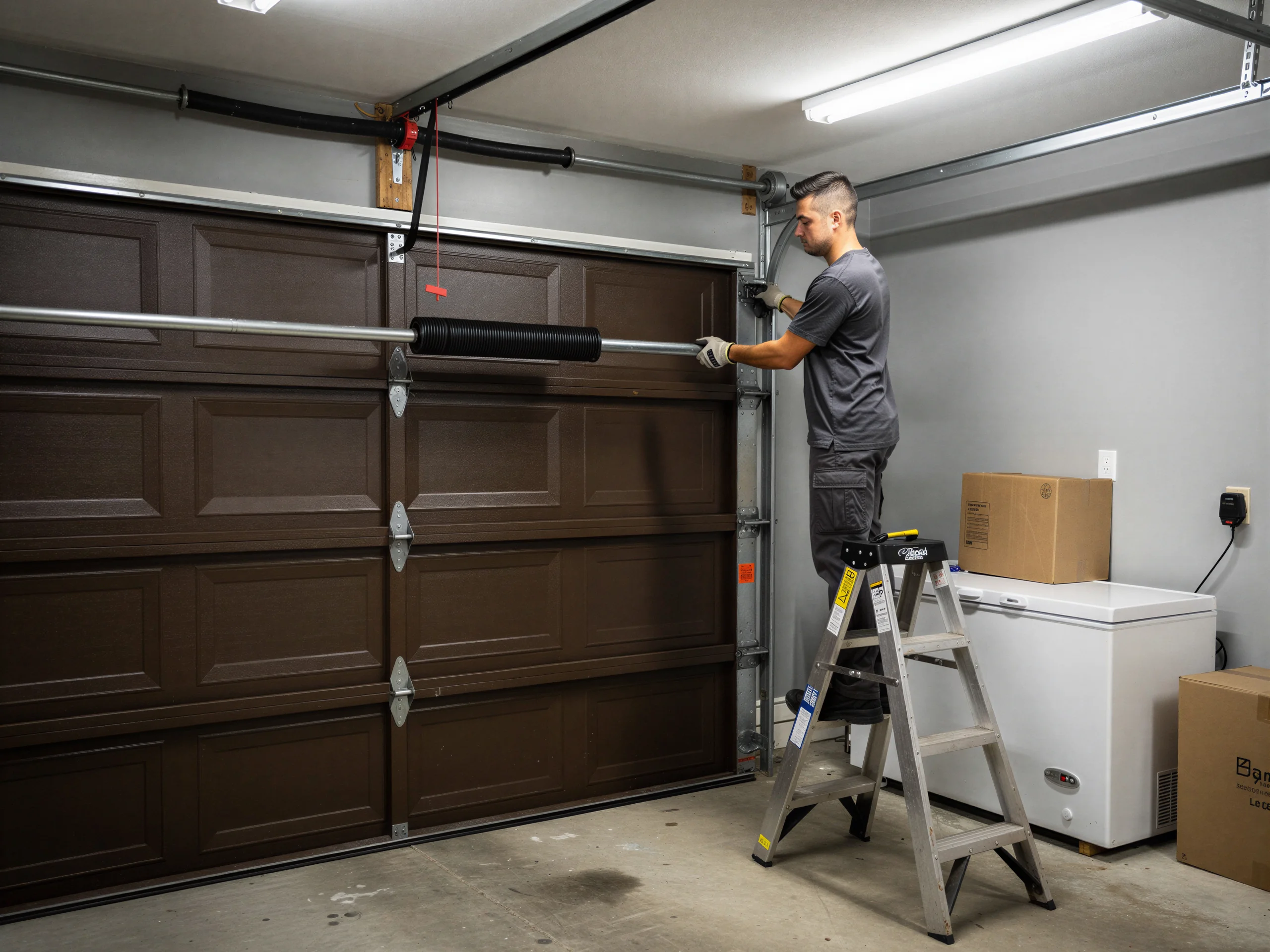
The spring holds enormous stored tension, and cables run through that tension on drums at the top of the torsion shaft or on the side with extension springs. Pull a cable off wrong, or try to wind it back on without locking the shaft, and you can lose fingers or worse - this isn't a scare line, it's why every trade guide tells homeowners to leave spring-side work alone.
Safe checks at home
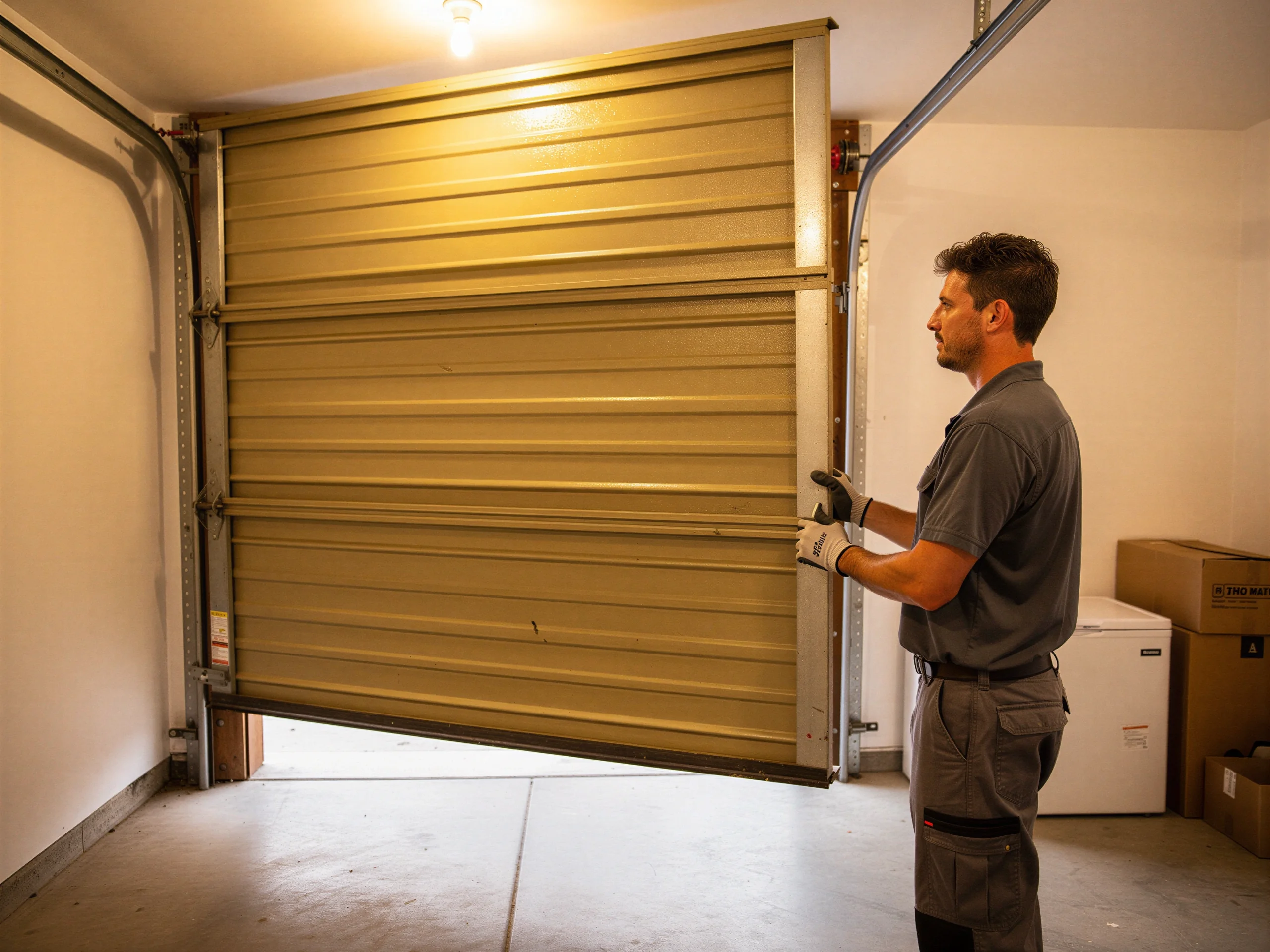
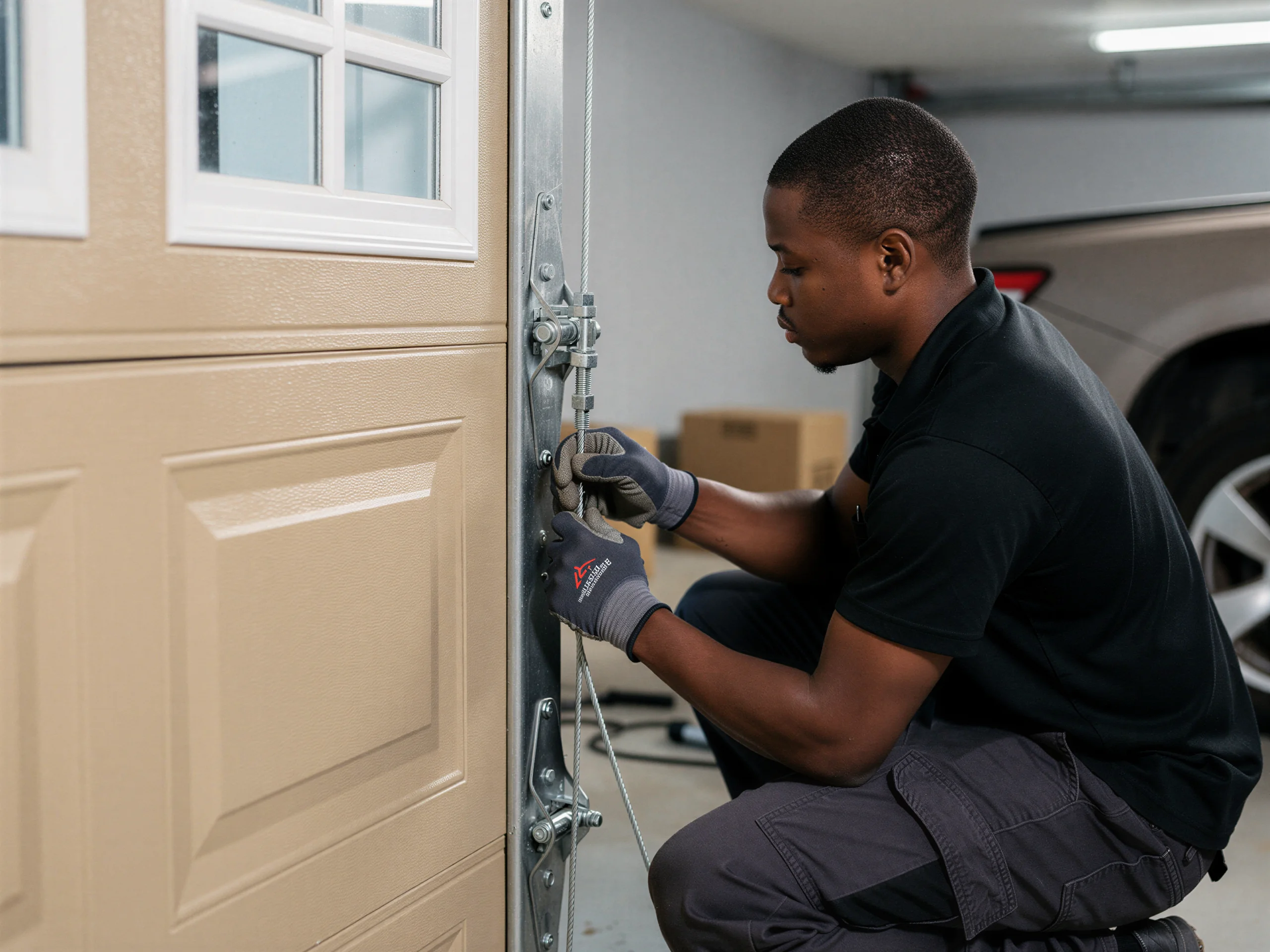
What you can safely do yourself: check whether the cable is still wound evenly on the drum, look for strands fraying near the bottom bracket, and see if the door is hanging crooked (a sign one cable has already let go).
Racking from one cable
If the door is a double-wide with two cables and one has snapped, do not run the opener - it will rack the door sideways and bend the track. Cypress, 6 miles from our La Mirada base, is a straightforward run for us, but we're not a walk-in counter here, so call ahead rather than waiting on-site for a truck that isn't already around the corner.
Cracked drum needs parts
One limitation worth saying plainly: if the drum itself is cracked, or the cable has jumped and chewed into the shaft, that's not a quick cable swap anymore - it usually means ordering parts, which can push the job out a day or two.
What Can Go Wrong
Cypress sits in the mild temperate band the whole service area shares, so you're not dealing with freeze-thaw snapping cables the way colder regions do.
Fatigue and corrosion
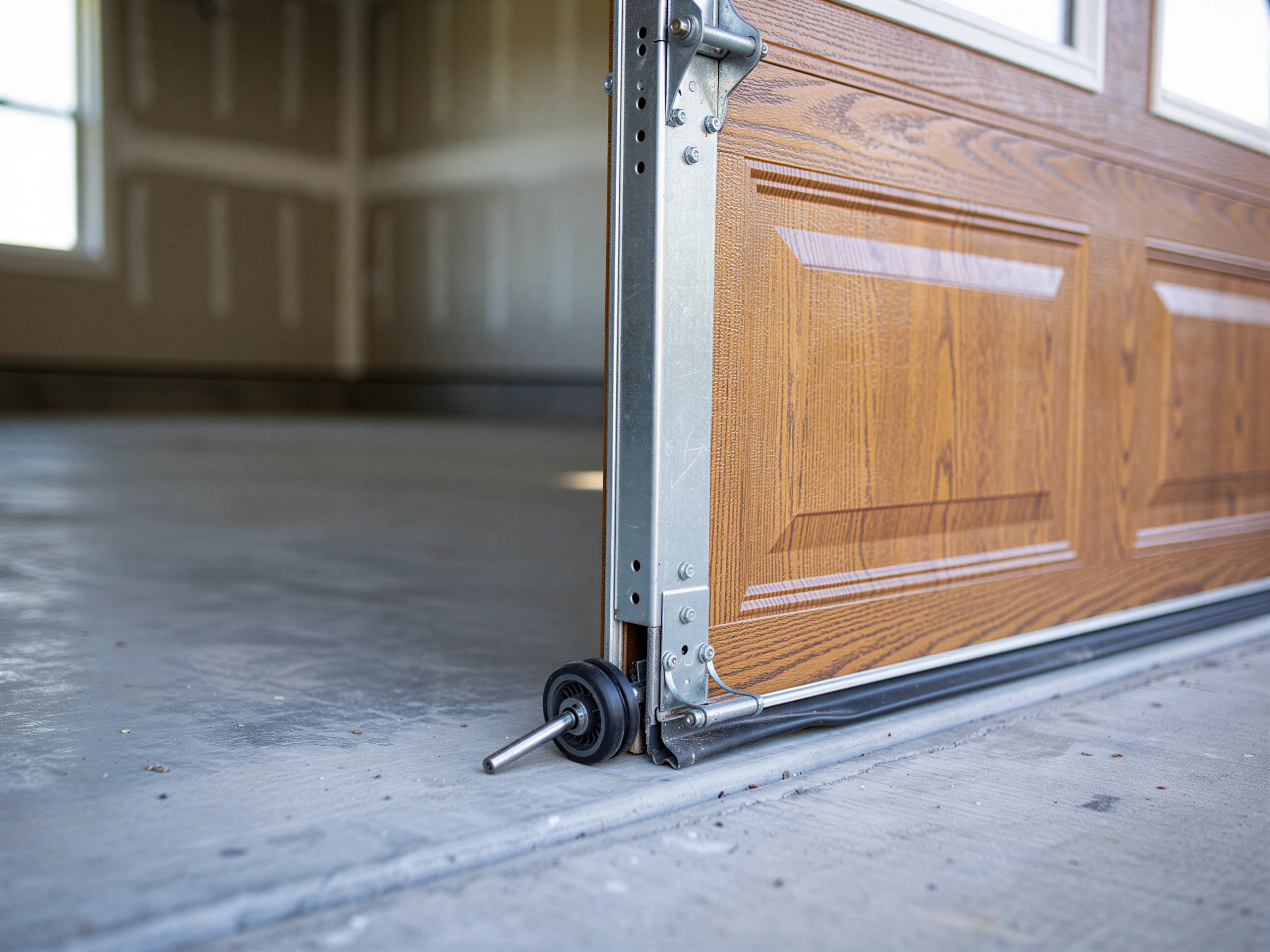
The failure pattern here is closer to plain fatigue and corrosion from repeated flex, especially on doors still running their original galvanized cable from a 1971-era install. At roughly that build year, a lot of Cypress garages have the extension-spring setup common to that stretch of construction rather than torsion - which matters because extension cables fail differently, often snapping clean at the bottom fixture rather than fraying slowly on a drum.
Silent cable jump
The other common failure: a cable that looks fine but has quietly jumped off the drum or pulley, usually after the opener forces the door through a few cycles with the door slightly misaligned. That wears a groove in the wrong spot and the cable eventually slips.
Seized pulley bearings
On older unlubricated hardware, we also see pulley bearings seize, which puts extra side-load on the cable until it frays at the point of contact. We can't tell you which failure you have without seeing the drum and the bracket in person - a cable that's merely off-track costs a lot less to fix than one that's snapped and taken the bottom bracket with it.
Time on the Job
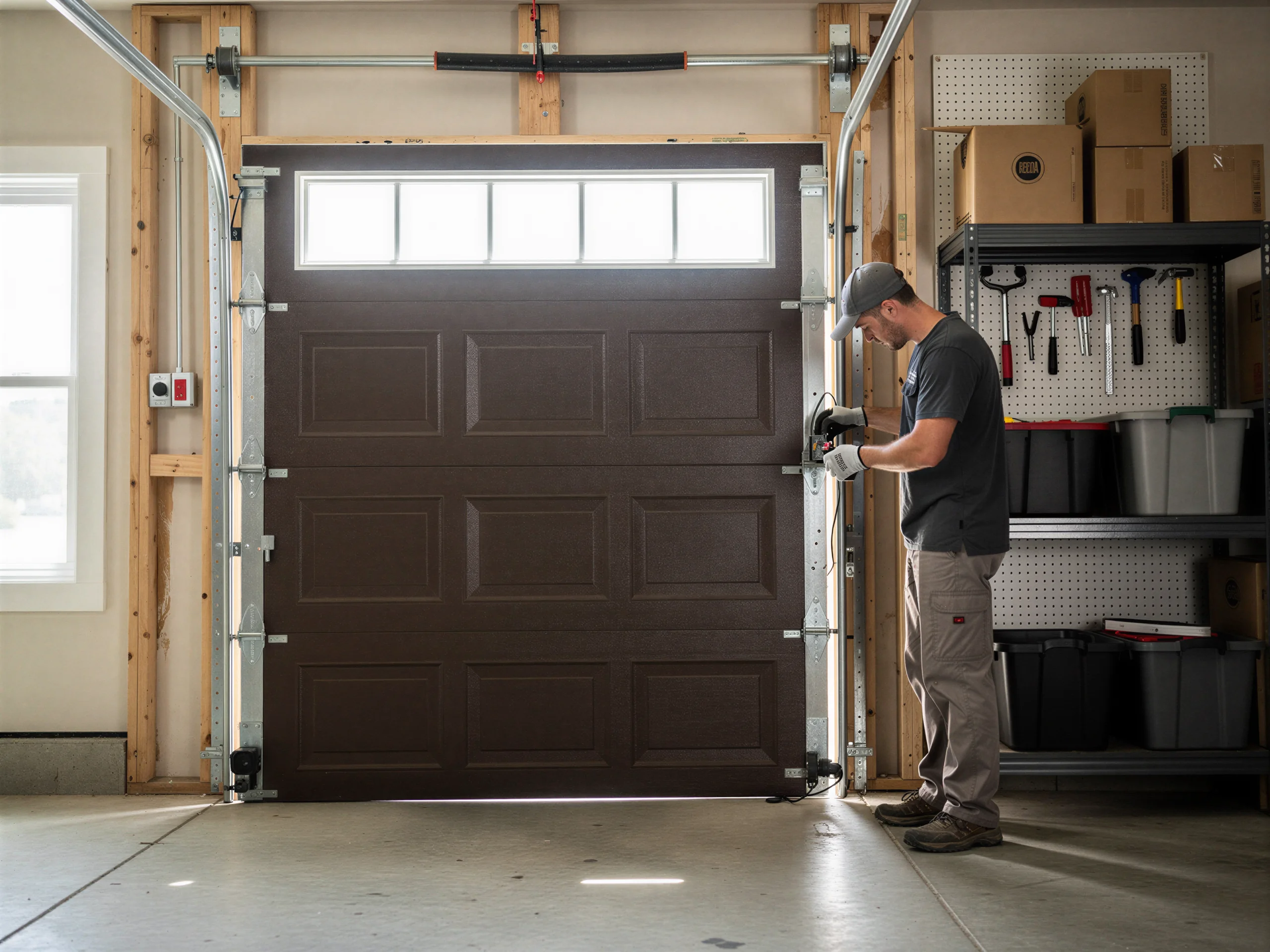
Most cable repairs on a single door, once we're on-site, run under an hour - rewind and reseat if the cable is just off-track, longer if both cables need replacing on a double door to keep the tension matched.
Uncommon cable sizes
We don't stock every length and drum size on the truck for every door variant out there, so if yours uses an uncommon cable gauge or a drum size tied to an older extension-spring system, we may need to order the part, which adds a day.
Drive time in schedule
Because we run from La Mirada, about 6 miles out, we build the drive time into scheduling rather than promising a same-hour arrival - we'd rather tell you the honest window up front than guess. Once on-site, the work itself doesn't change much because of distance; it changes because of what's actually on the door.
Patchwork hardware takes longer
A straightforward torsion cable swap on a door from the 1970s-era stock common across this part of the service area is a known quantity for us. A door that's been rebuilt piecemeal over the years with mismatched hardware takes longer to diagnose before we touch a tool.
The Symptom
The giveaway is almost always visual before it's a noise: the door hangs crooked, tilted down on one side, or it slams the last few inches instead of settling. If you see loose cable coiled loosely around the bottom bracket instead of taut and wound on the drum, that side has already let go - stop using the opener immediately, because running it with a broken cable can bend the track or crack a panel.
Some owners hear it first: a sharp snap, then a bang as the door drops a few inches. Others notice it gradually - a door that used to glide now jerks or seems to catch partway up, which often means a cable has frayed enough to catch on the drum but hasn't broken yet. That's actually the better time to call, since a frayed cable caught early is a simple swap, not an emergency.
If your door is original to a Cypress home built around the early 1970s and has never had the cables replaced, fraying from age is a reasonable guess even before we look - five decades is a long run for galvanized cable under constant tension.
Talk to a local pro
Garage door service in La Mirada?
Same-day service with honest, upfront quotes.