Can You Do This Yourself
Cypress sits about 6 miles from our shop in La Mirada, which changes how a repair call should start. We're not going to send a truck out on a guess, so the first step is almost always a phone conversation: what the door does, what it doesn't do, and roughly how old the house is.
Build year narrows causes
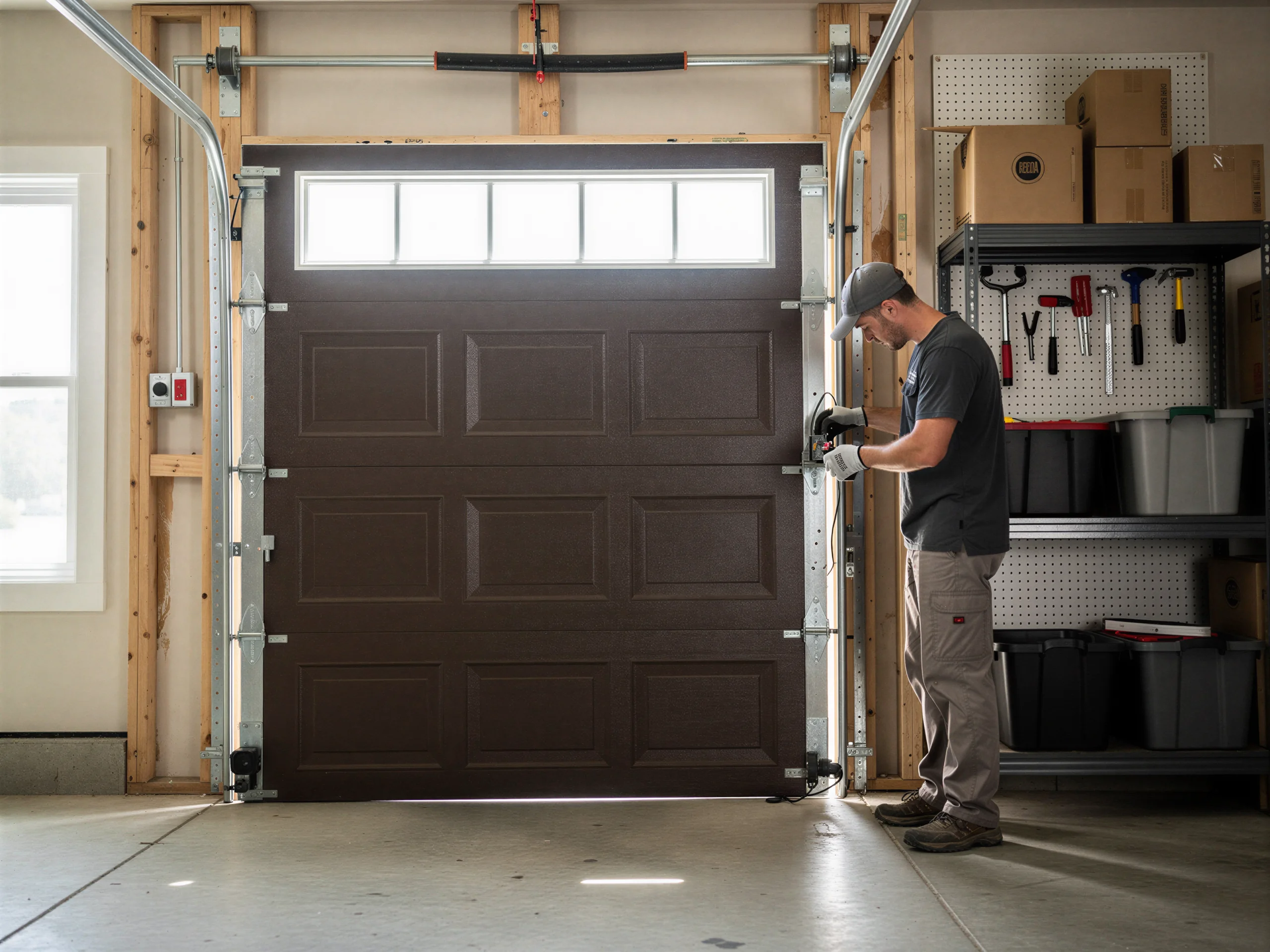
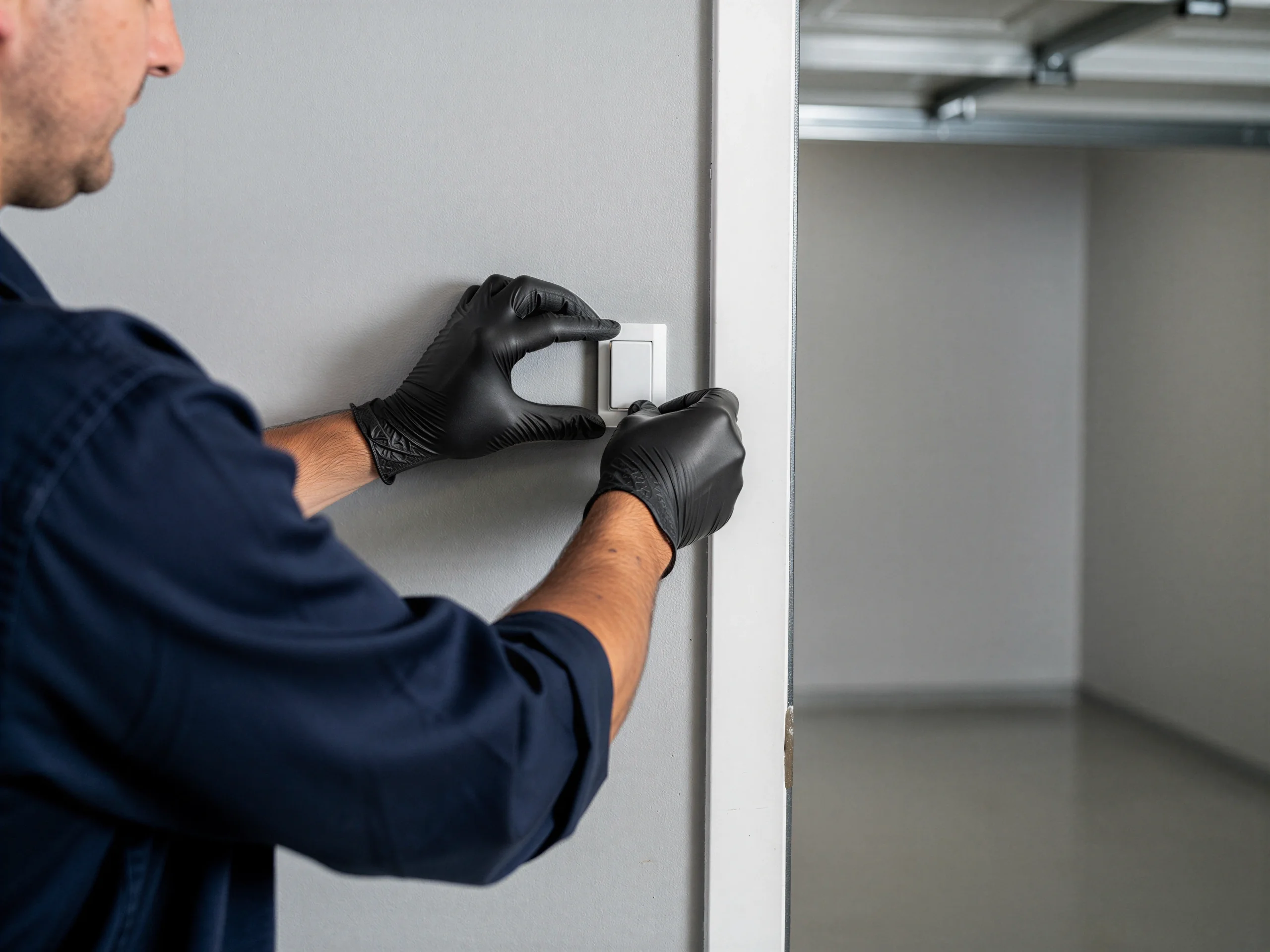
A lot of Cypress was built around 1971, and that detail alone narrows down what we're probably dealing with before anyone gets in a van. Some things are safe to check yourself. If the door won't close, look at the photo-eye sensors near the bottom of the tracks - a stray box or a cobweb can trip them.
Emergency release check
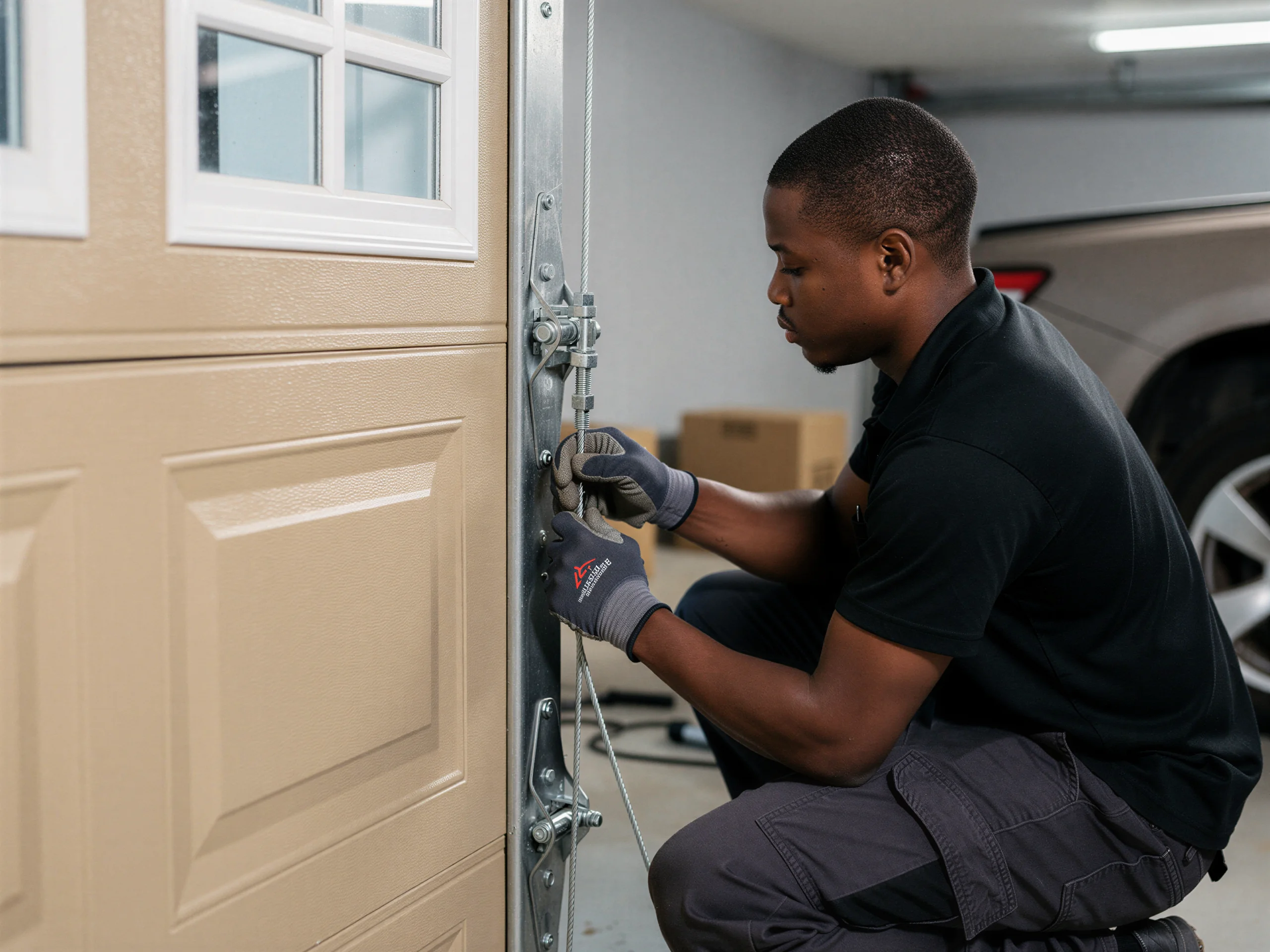
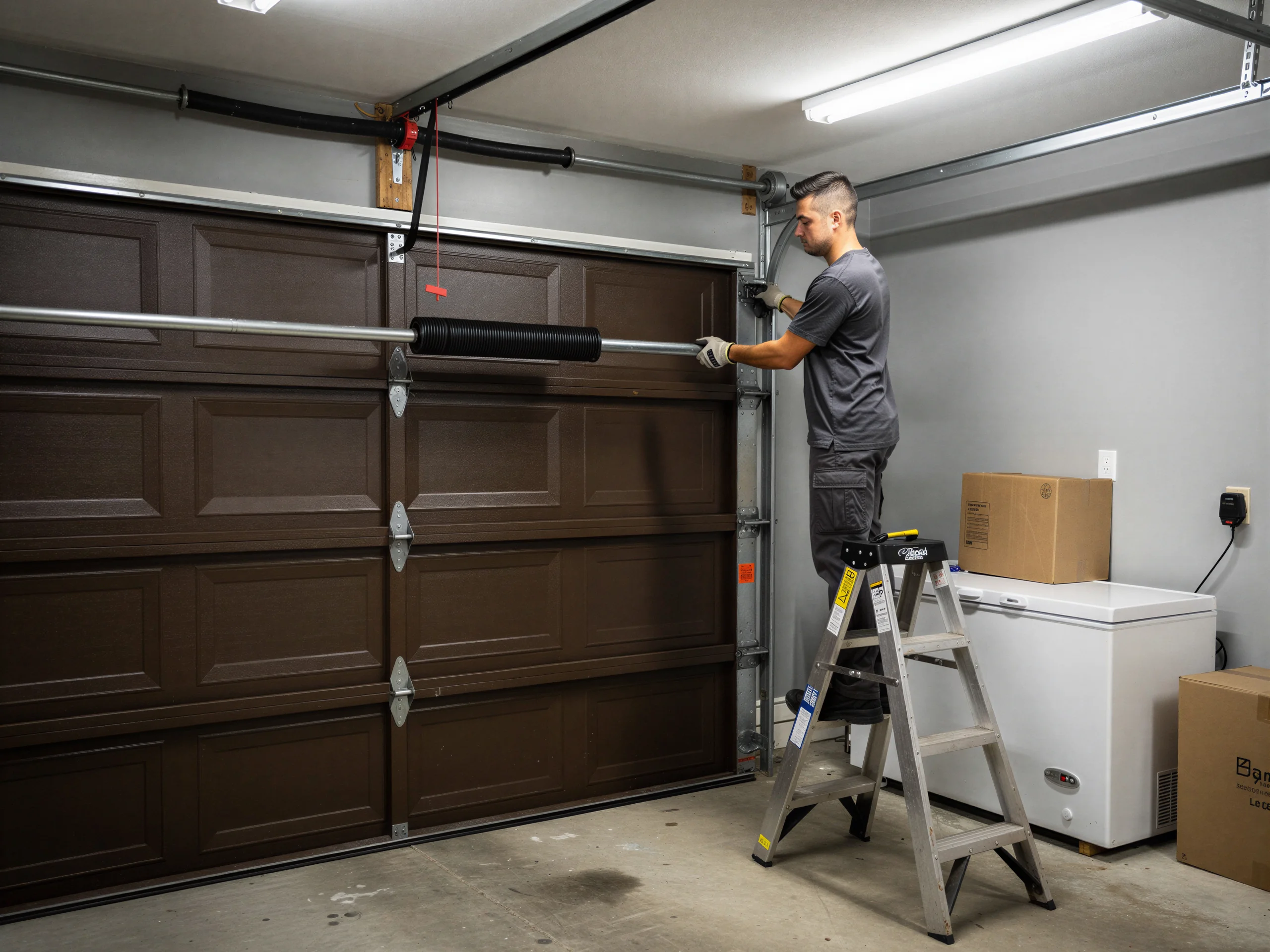
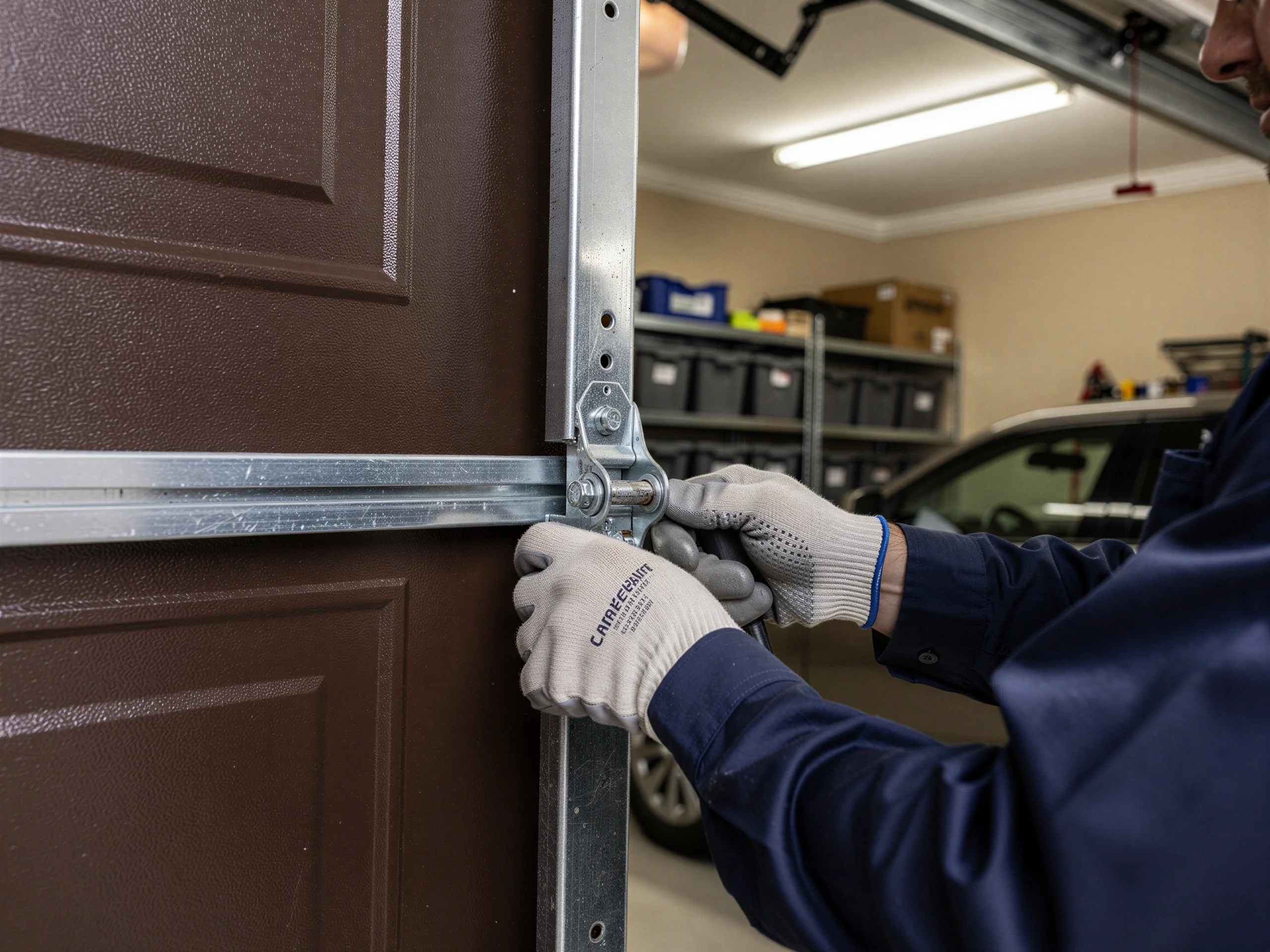
If the opener runs but the door doesn't move, check whether the emergency release cord got pulled. Those take five minutes and cost nothing. What you should not touch: a torsion spring under tension, or anything involving the cables that run from the spring to the bottom bracket.
Heavy doors need pros
On a two-car door that's several hundred pounds of stored force, and houses from this era in Cypress often still have the original heavier doors, which means more spring, not less. That's where a six-mile drive is worth it over a YouTube video.
What Can Go Wrong
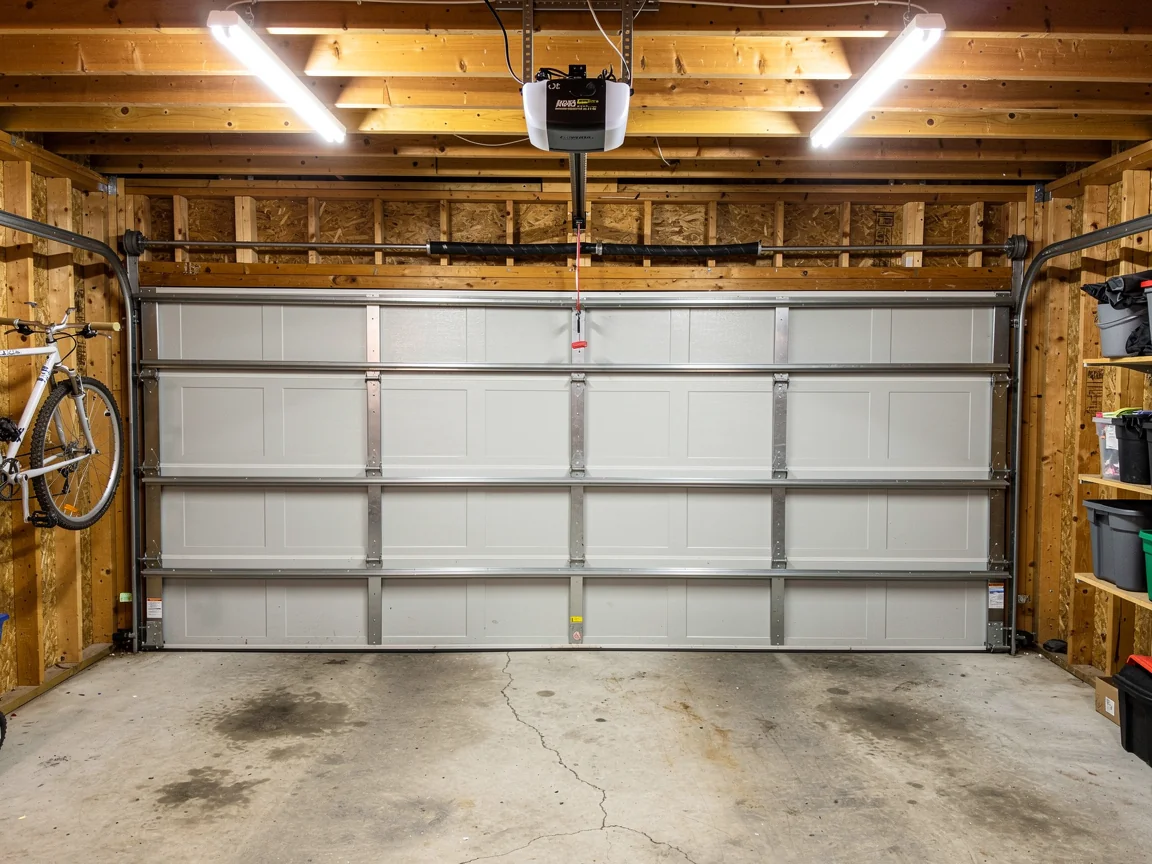
With a median build year of 1971, Cypress sits right in the stretch of construction that ran from the early 1940s into the early 2010s across this service area, but the early-70s houses carry their own pattern of wear.
Thinner steel, mixed hardware
Doors from that period were often steel but thinner-gauge than what's sold now, and openers have frequently been swapped once or twice over 50-plus years - which means mismatched hardware is common. We see brackets that don't match the track, or a newer opener bolted onto an original wood-era header it was never designed for.
Plain fatigue failures
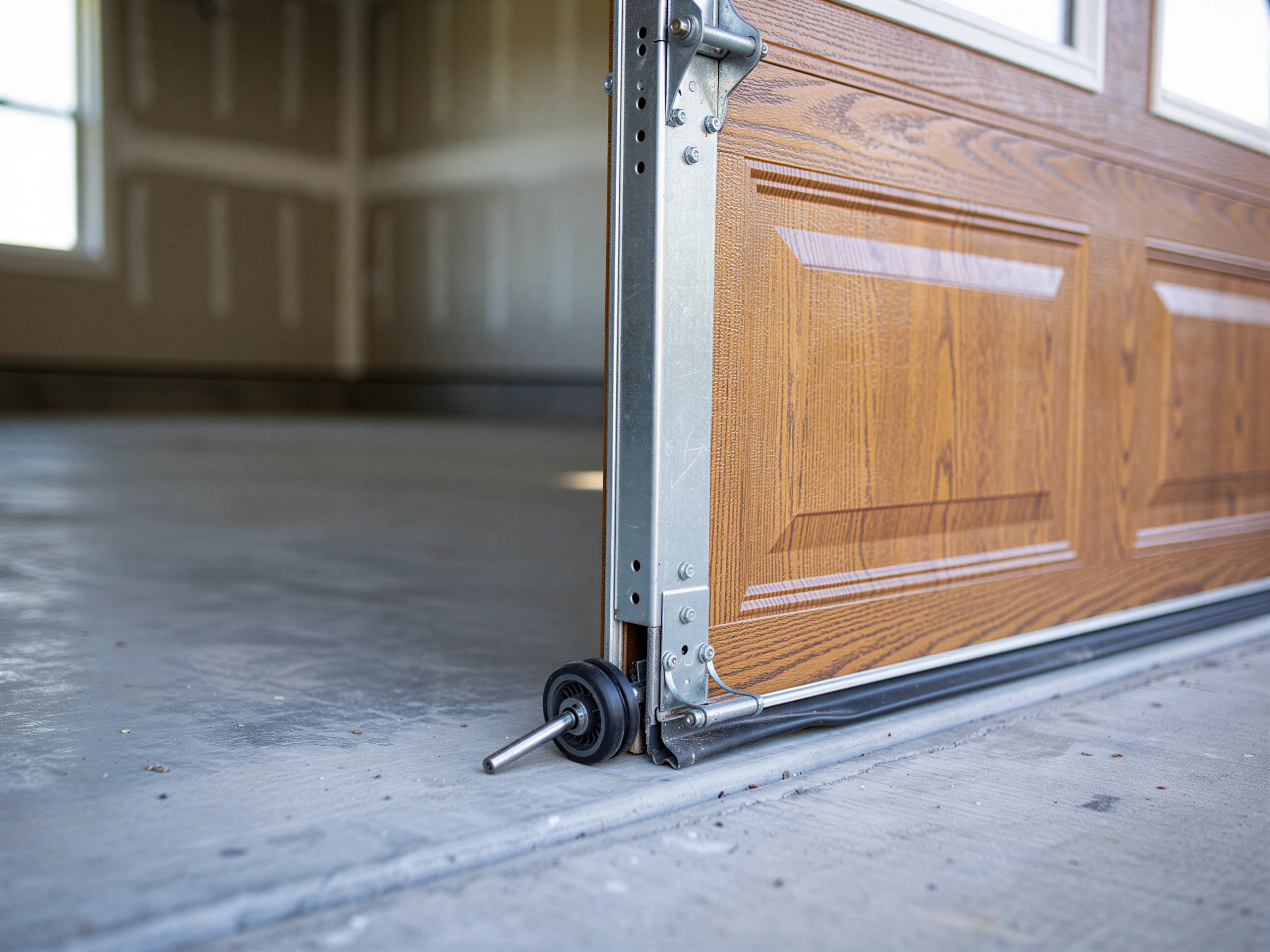
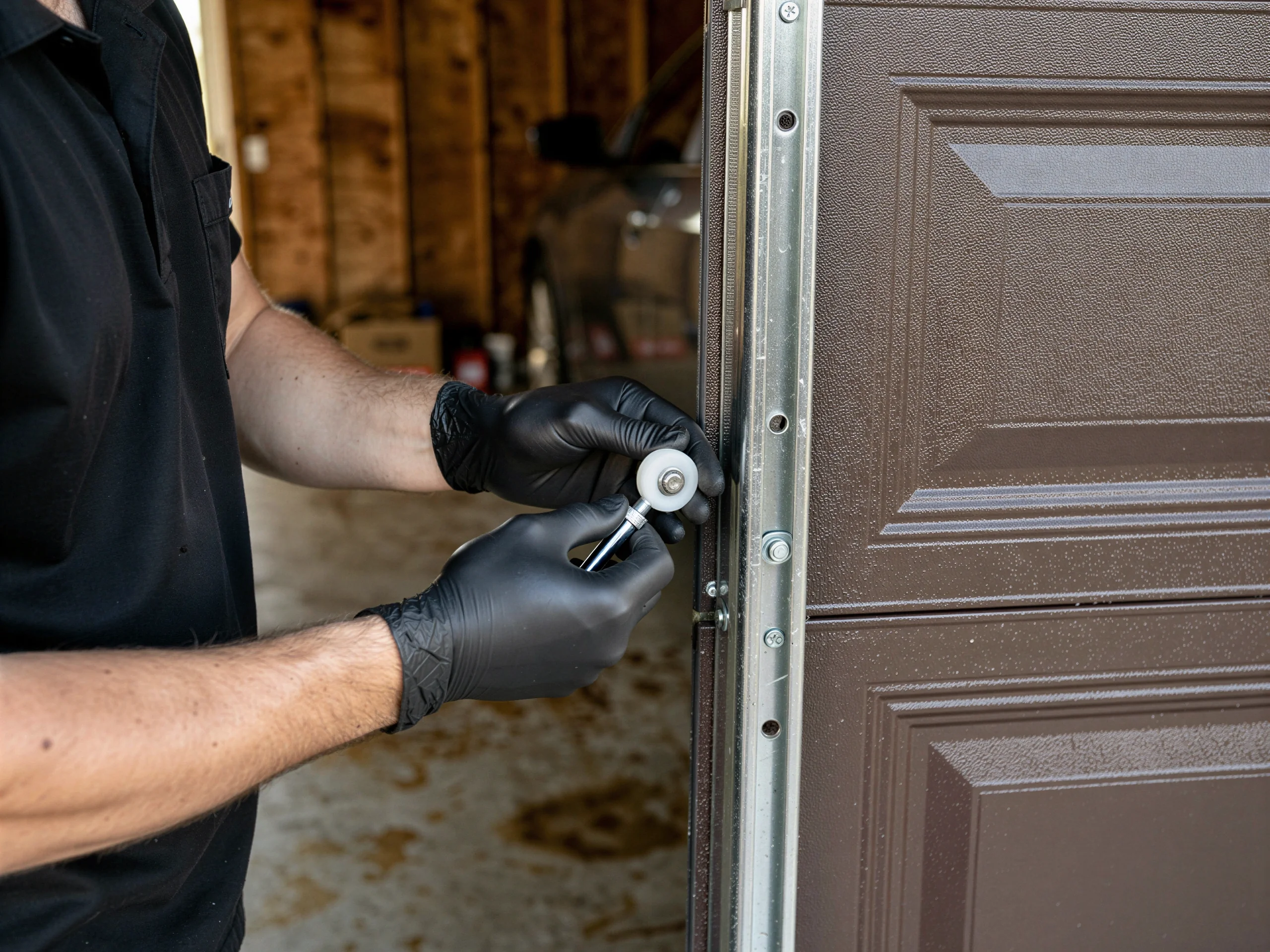
The mild temperate climate here means we're not fighting the freeze-thaw cracking or the heavy snow-load failures that cause trouble elsewhere. Instead the failures tend to be plain fatigue: springs that have cycled tens of thousands of times over five decades, rollers worn oval, cables starting to fray at the drum.
Patch or replace door
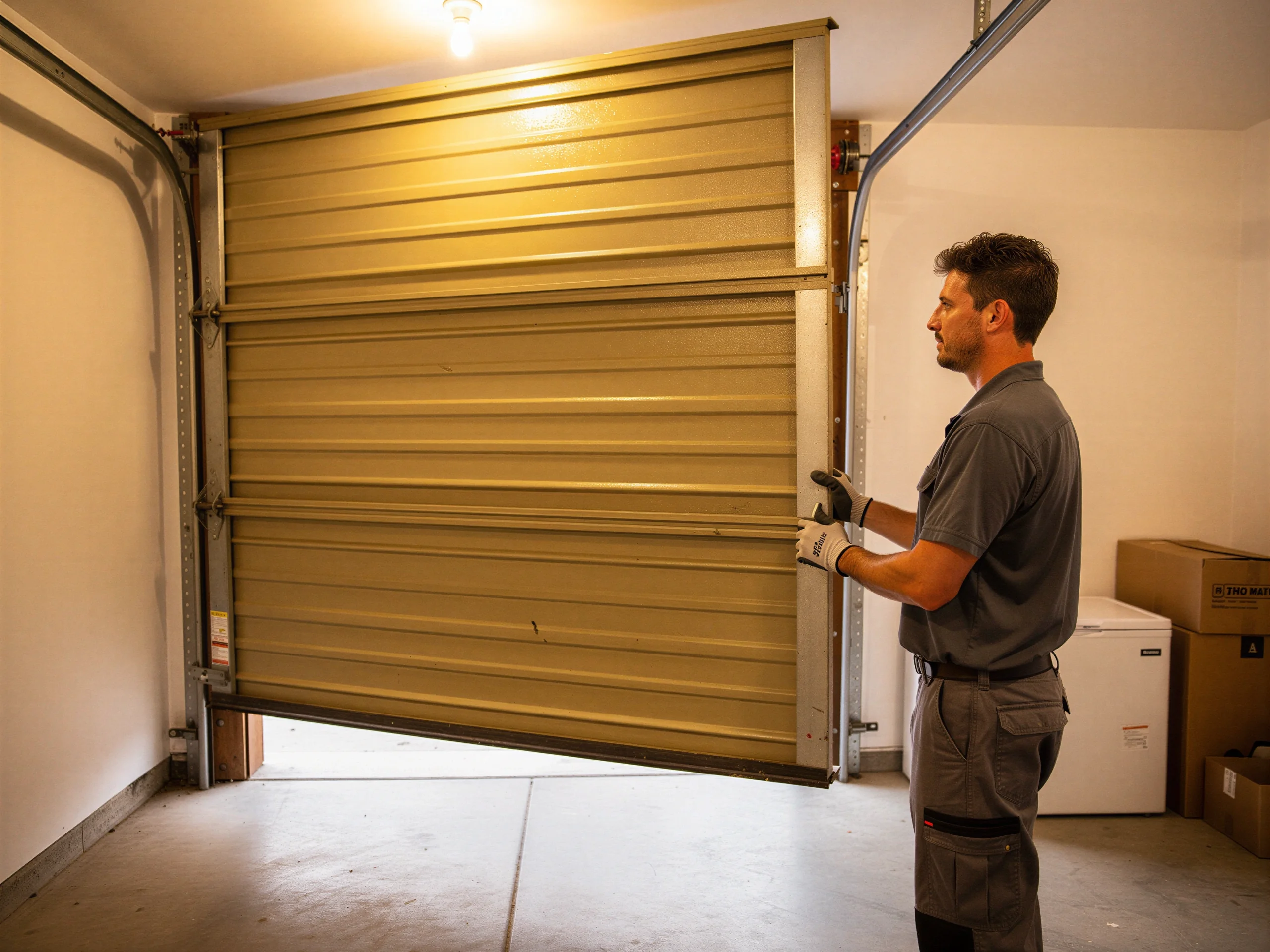
None of that is dramatic. It's just time. One honest limitation: if a door's track is bent badly enough, or the section panels are cracked through, patching it is sometimes a worse value than replacing the door outright. We'll tell you which situation you're in rather than keep billing for a fix that won't hold.
Time on the Job
Because we're coming from La Mirada, 6 miles out, the time on site matters more than the drive time. A straightforward spring replacement or cable swap is usually a single visit.
Confirm measurements first
What slows a job down in Cypress specifically is parts matching - if your house still has its early-1970s track width or an opener mount from a prior retrofit, we may need to confirm measurements before the part goes on the truck, which is part of why the phone call up front matters.
Prior opener retrofits
Households here report a median income around $124,167, noticeably higher than the roughly $95,385 median across the wider area we cover, and we mention that only because it tends to correlate with homeowners who've already had one or two openers replaced over the years rather than running the original unit into the ground.
Uncommon bracket lengths
That history is useful information on a call - it tells us what generation of hardware we're likely finding behind the panel. We don't carry every possible bracket or rail length on every truck. If your door needs an unusual part, that's a second trip, and we'll say so rather than guess and hope it fits.
The Symptom
The most common call out of Cypress is a door that's gotten noticeably heavier to lift by hand, or an opener that strains and reverses partway up. On a house from the early 1970s, that's almost always a spring that's lost tension - either a single torsion spring sagging after decades of cycles, or on older setups, a pair of extension springs where one has already given out and the other is carrying the whole door.
A second common pattern: the door closes, then pops back open a few inches before the opener gives up. That's usually the down-limit setting drifting on an opener that's been adjusted and readjusted over the years, sometimes stacked on top of a track that's slightly out of alignment from age rather than from any one event.
What it isn't, in most cases: the motor itself. Openers tend to outlast the mechanical wear items around them, so replacing the whole unit when it's really a spring or a limit switch is money spent in the wrong place. We check the cheap, common failure first before we talk about swapping anything big.
Talk to a local pro
Garage door service in La Mirada?
Same-day service with honest, upfront quotes.