What Is on the Truck
Walnut's housing stock centers on 1983, a good two decades newer than much of the rest of the area we cover out of La Mirada.
Raised-panel steel doors
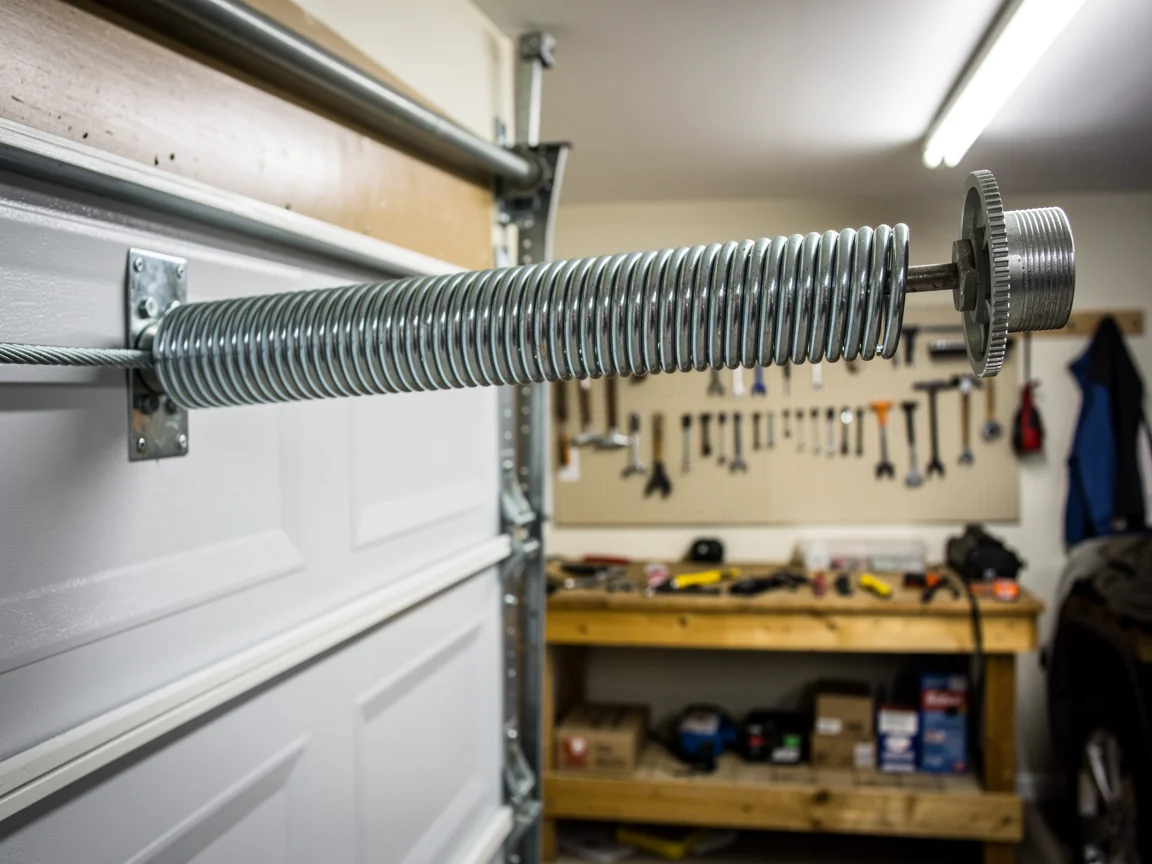
That matters before the truck even leaves the yard. Homes built in the early-to-mid 1980s were more likely to ship with a steel raised-panel door on a standard 7-foot track and an extension spring system rather than the older torsion setups common in 1960s construction.
Era-matched truck contents
So the truck for a Walnut install carries different jamb brackets, different spring cable drums, and opener rail kits sized for ceilings and headroom typical of that era, not the shorter headroom and narrower jambs you'd plan for in older housing stock elsewhere in the service area.
Custom carriage doors excluded
We also bring stock steel sections in standard widths, since custom carriage-style doors aren't something we load without a confirmed order. If your garage was remodeled or the opening was altered after the original build, we verify dimensions on site before cutting anything.
The Cost of This Job
We travel about 13 miles from La Mirada to reach Walnut, which we factor into scheduling rather than the door price itself. What actually drives cost here is more straightforward than in older neighborhoods: a 1983-era opening is usually a standard size, so you're not paying for a custom frame or an odd jamb repair before the new door goes in. Where cost does shift is household income context - at a median of $133,762 locally, we see more requests for insulated steel doors and quieter belt-drive openers compared to baseline builder-grade jobs. We don't quote a number without seeing the opening, the number of panels, and whether the existing track and spring system get reused or replaced. If the old spring and track are sound, reusing them keeps the job cheaper; if they're not, we say so rather than force a reuse that won't hold up.
What the Fix Involves
Installing new in a home from the early 1980s usually means removing a door that's lasted 40 years on its original hardware, which is a compliment to how that era was built but also means everything on it is at the end of its service life at once.
Header rot check
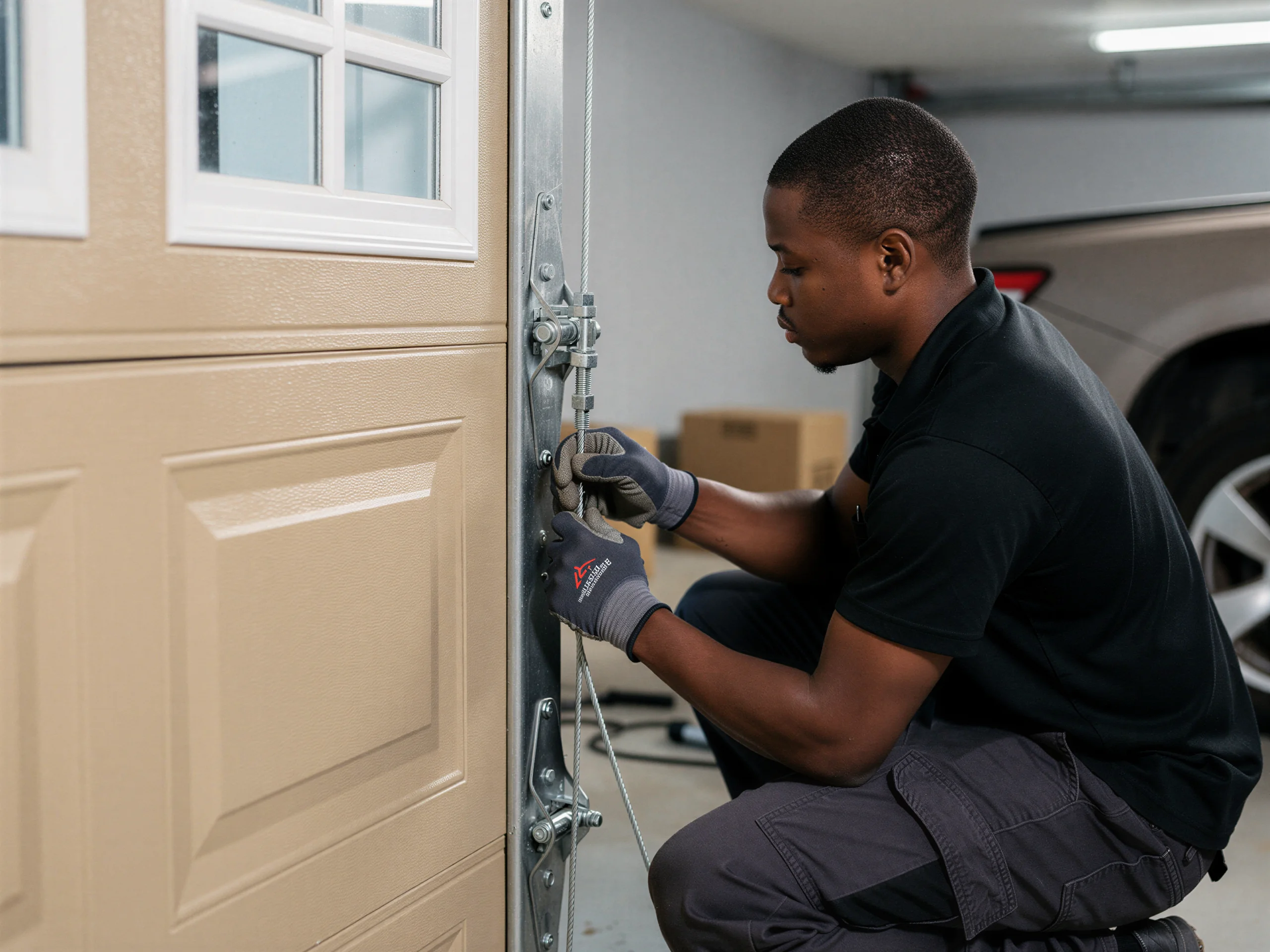
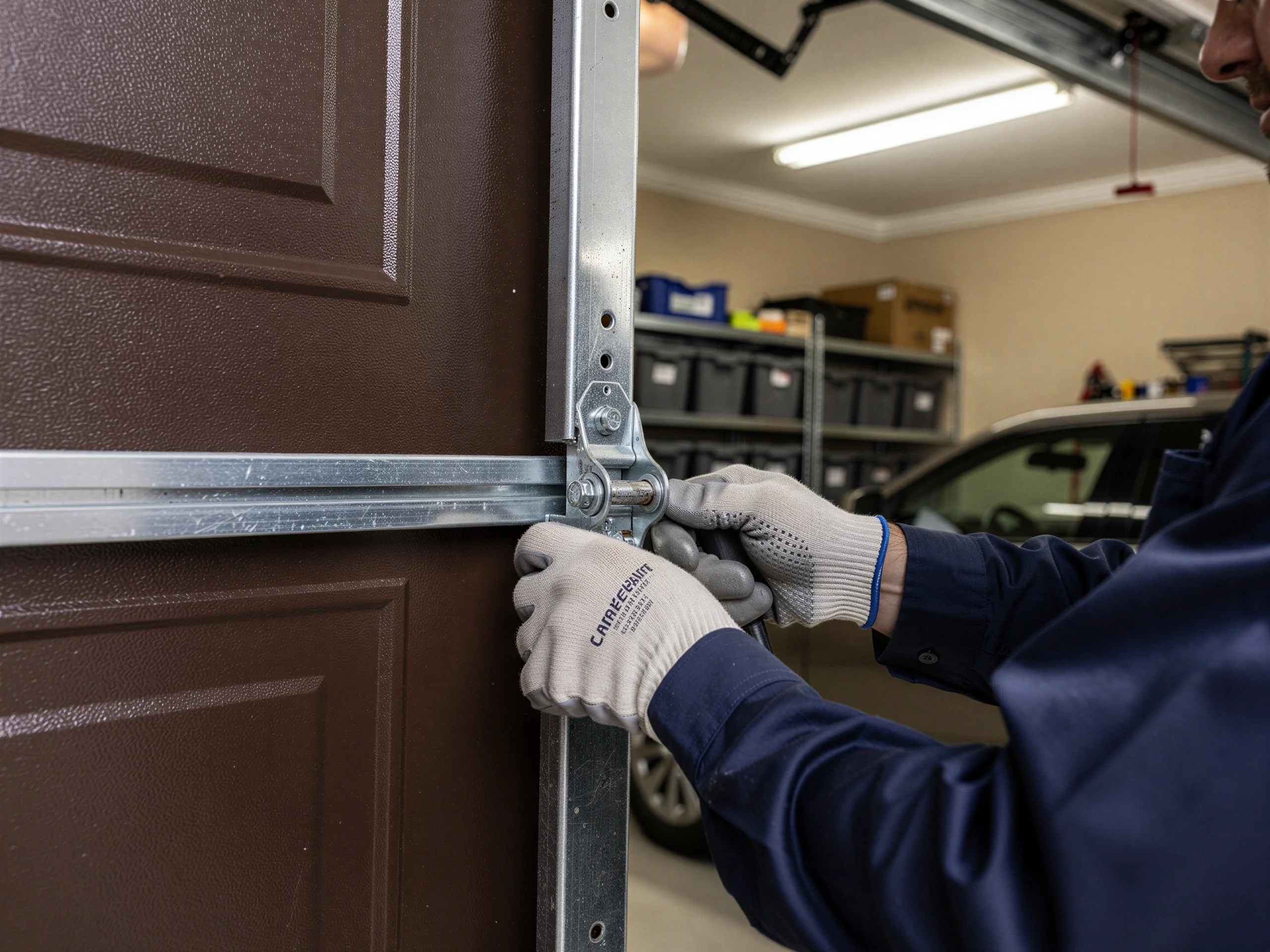
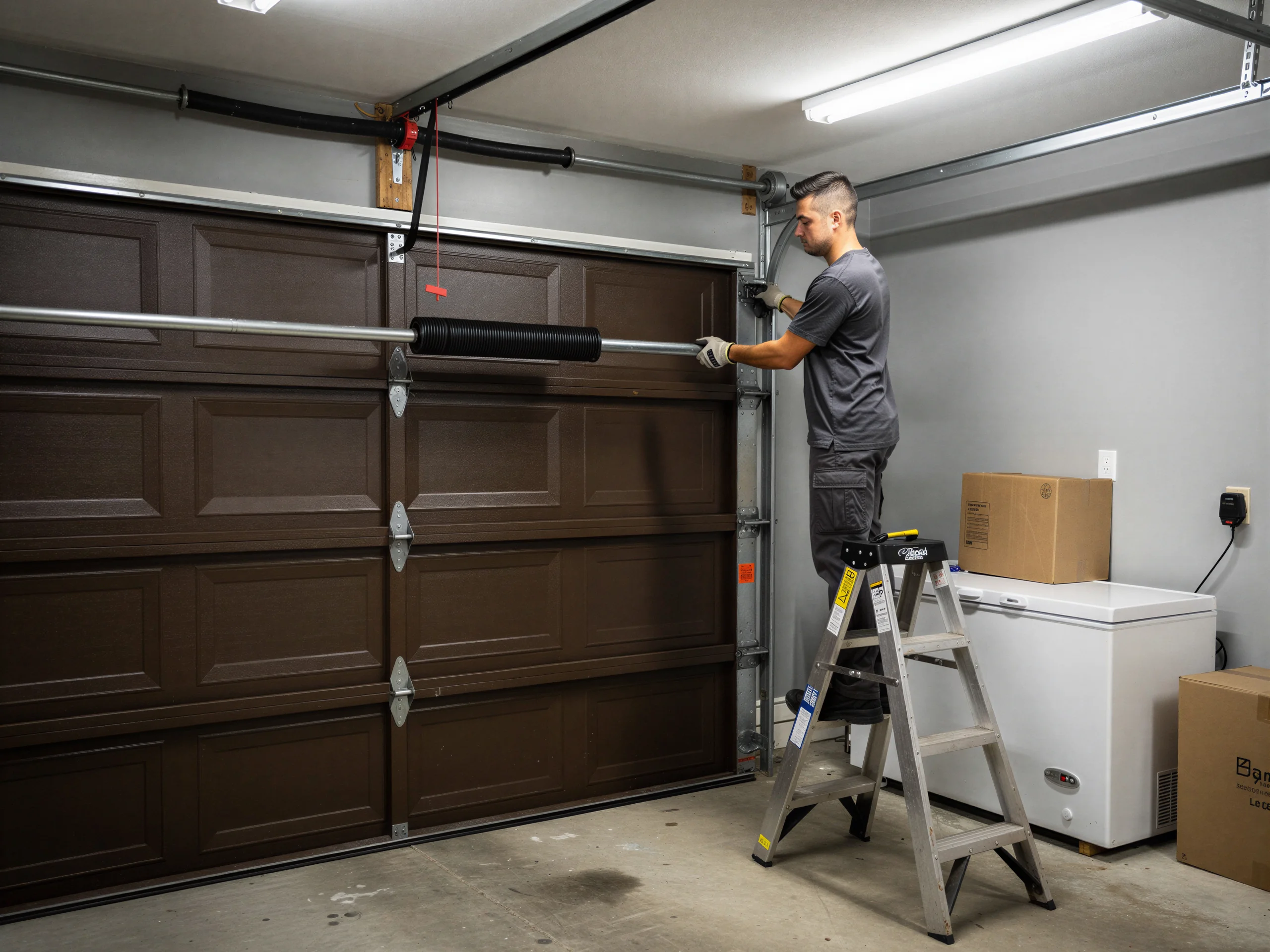
We pull the old panels, strip the track and spring assembly down to the jamb brackets, and check the header for rot or flex before mounting anything new.
Headroom allows jackshaft
Because Walnut's housing dates later than much of the surrounding area, headroom and ceiling clearance tend to run a bit more generous, giving more flexibility on opener rail style - chain, belt, or jackshaft, depending on ceiling obstructions.
Full travel and force test
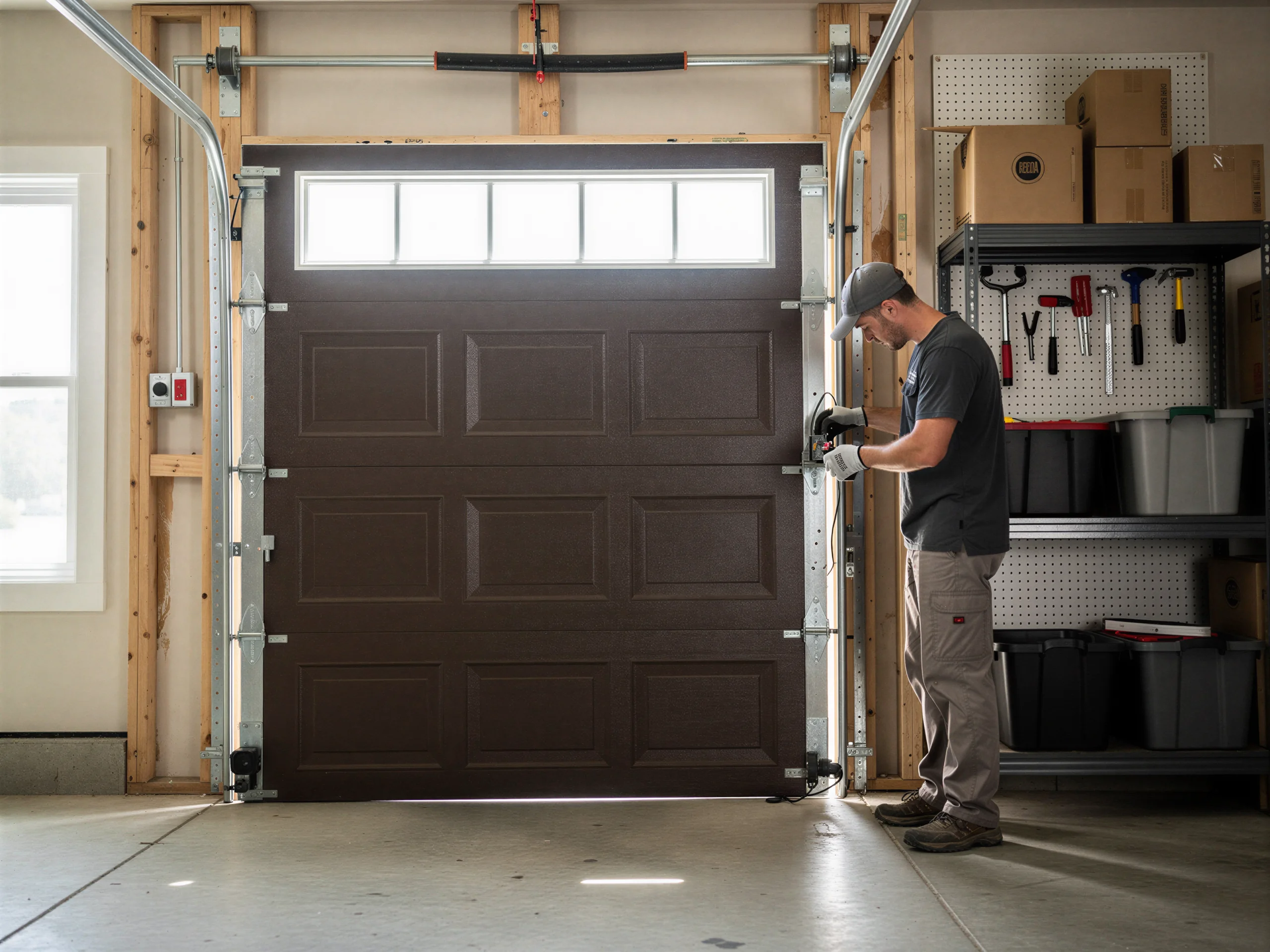
We set the new door, balance the spring tension by hand, and run the opener through a full travel and force test before we call it done. What we don't do is patch a door that's structurally failed just to save the shell; past a certain point, reusing bent track or a cracked panel just moves the next call closer.
The Symptom
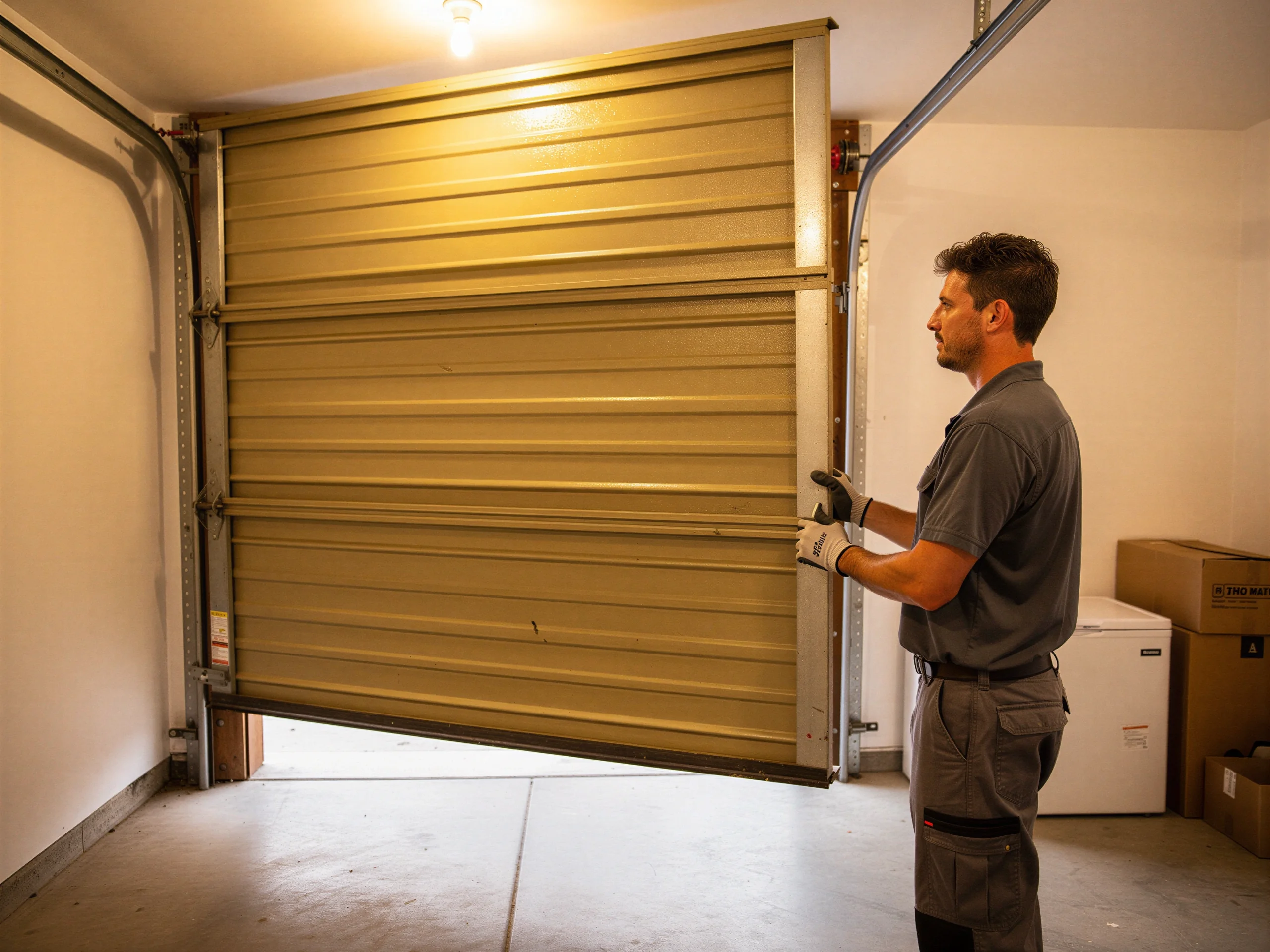
The calls we get from this part of the service area usually start the same way: the door still looks fine, but it's gotten heavy to lift by hand, or the opener strains and reverses partway up. On a door pushing toward the back half of its 1980s-era lifespan, that's often the extension springs losing tension rather than anything wrong with the opener itself. Some owners notice it gradually, over months, and assume the motor is failing when it's really compensating for springs that have lost lift. Others notice a one-sided tilt as the door raises, a sign one spring has already let go while the other is doing the work of both. Either way, a door built to a standard 1980s opening with original hardware isn't necessarily one you fix piecemeal forever, especially once the springs, cables, and rollers are all original and all aging out together.
Why This Fails Locally
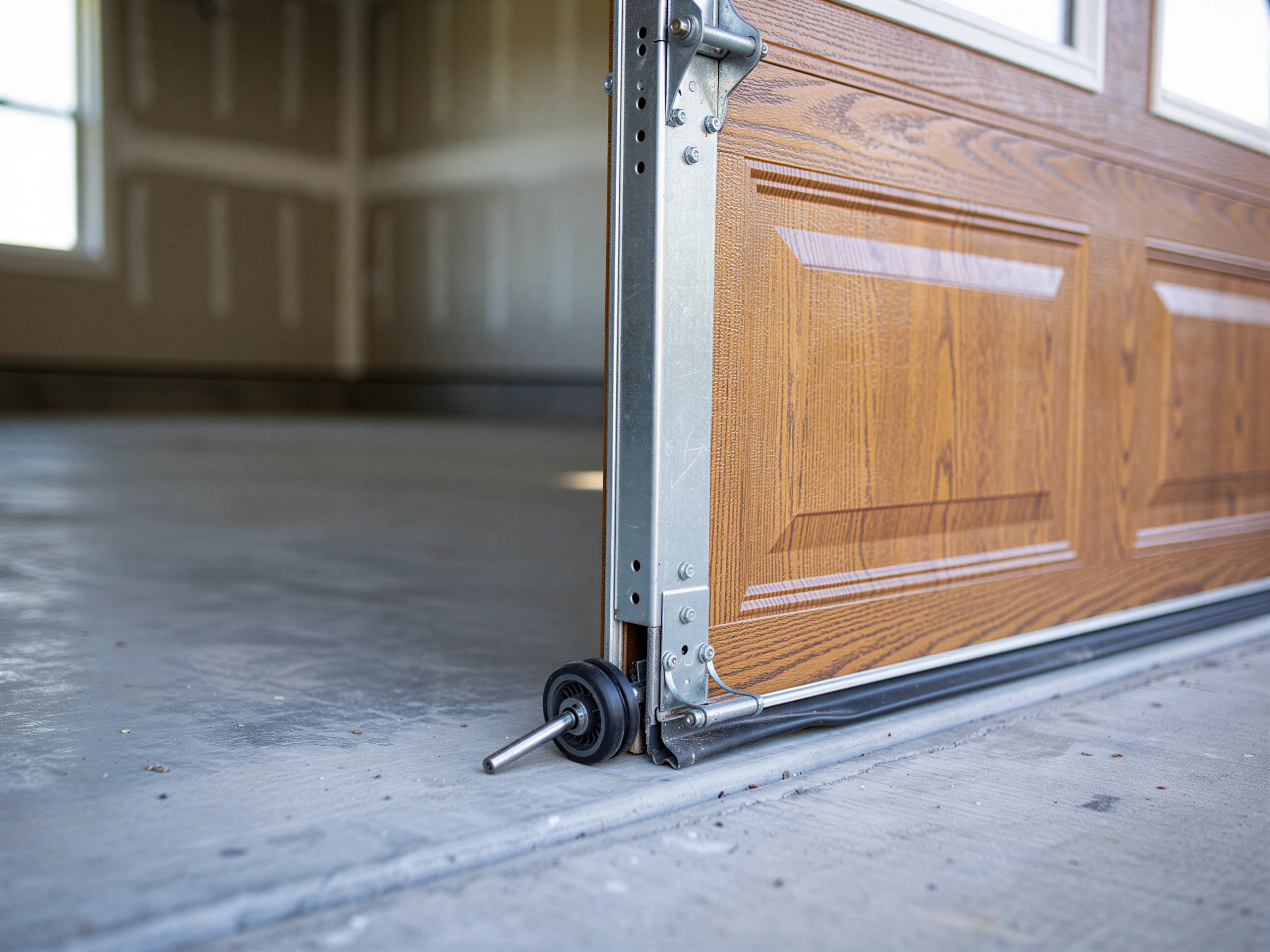
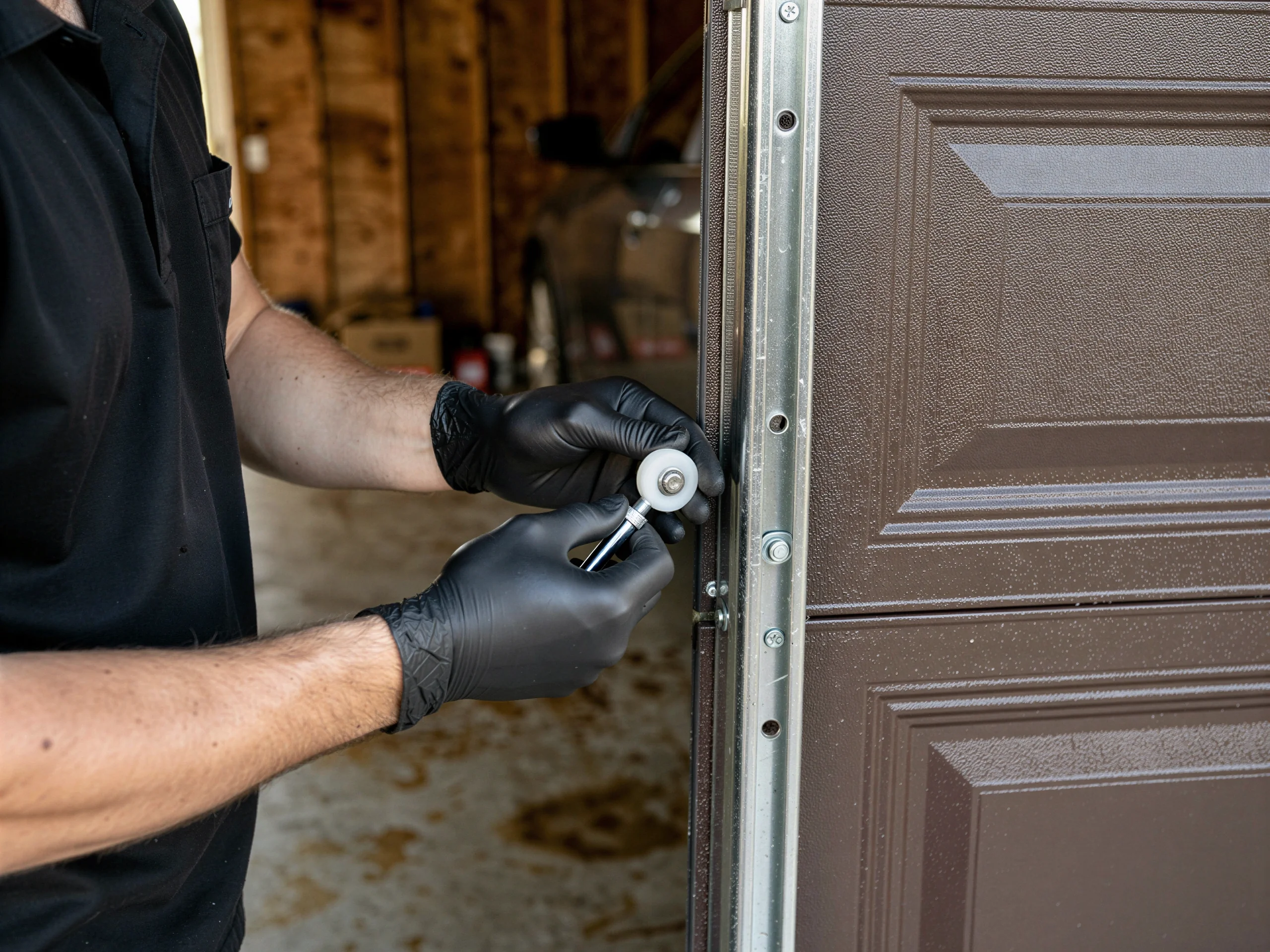
Walnut sits in a mild temperate climate band, so the usual culprits in harsher climates - frozen tracks, cracked panels from freeze-thaw cycling - aren't what we see here. What we see instead is straightforward age wear on original hardware from a 1983-median build year: springs that have cycled tens of thousands of times, rollers worn oval, and cable fraying at the drum. None of that is weather-driven; it's just time on original parts that were never swapped out. A door that's never been touched since the house was built is a door where every component is failing on the same schedule, which is exactly why one symptom - a slow lift, a one-sided tilt - often means it's time to plan a full new install rather than a single-part repair.
Talk to a local pro
Garage door service in La Mirada?
Same-day service with honest, upfront quotes.