What Is on the Truck
Walnut's median home was built around 1983, a good two decades newer than the 1960s-70s stock that makes up most of this service area. That matters for which torsion spring we load before we leave La Mirada. Houses from this era were mostly built with heavier steel sectional doors on standard torsion hardware rather than the older single-piece doors with side-mount springs we see closer to the coast. We carry a working range of torsion spring wire sizes to cover both eras, but a double-wide door from 1983 on 2-inch shaft with a high-cycle spring isn't always a guaranteed match on the first stop - if the drum or shaft spec is unusual we may need a second trip to get the exact part. That's the one honest gap in a same-day promise, and we'd rather tell you now than leave a door half-sprung.
The Cost of This Job
Walnut's median household income runs about $133,762, well above the $95,385 median for the wider area we cover. That gap changes the math on repair versus replace. At this income level, a lot of owners call us ready to just replace the whole door rather than patch a 40-year-old torsion system, and sometimes that's the right call. But a broken spring on a door that's otherwise sound - panels straight, track true, opener working - is almost never worth replacing the whole unit over. The spring itself is a small part of the door's total cost. We'll tell you straight if your door's problems go past the spring, but we won't push a replacement job on a door that just needs a new spring.
What the Fix Involves
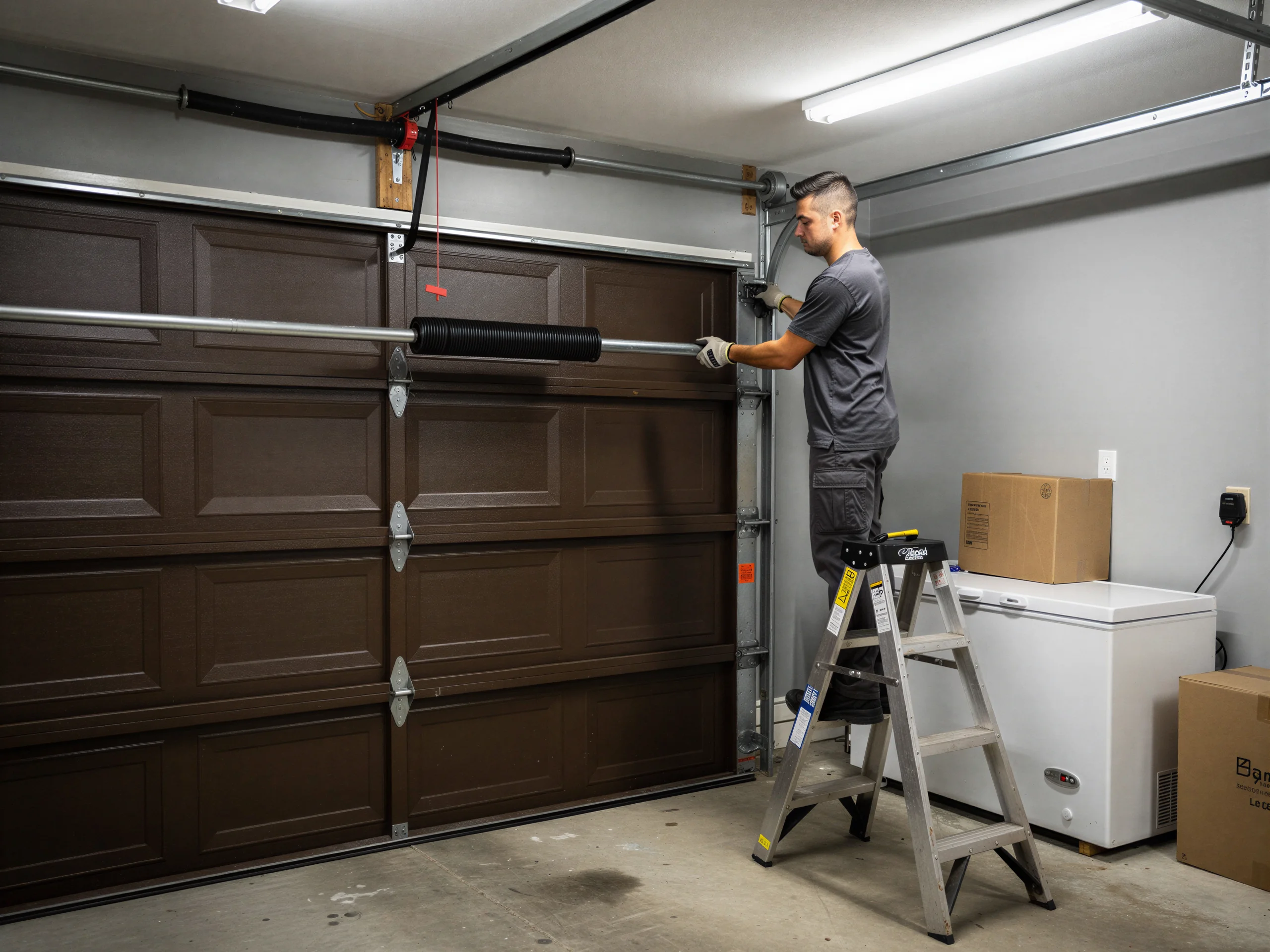
A broken torsion spring means the door won't lift, or it slams down hard when the opener tries.
Measure spring against weight
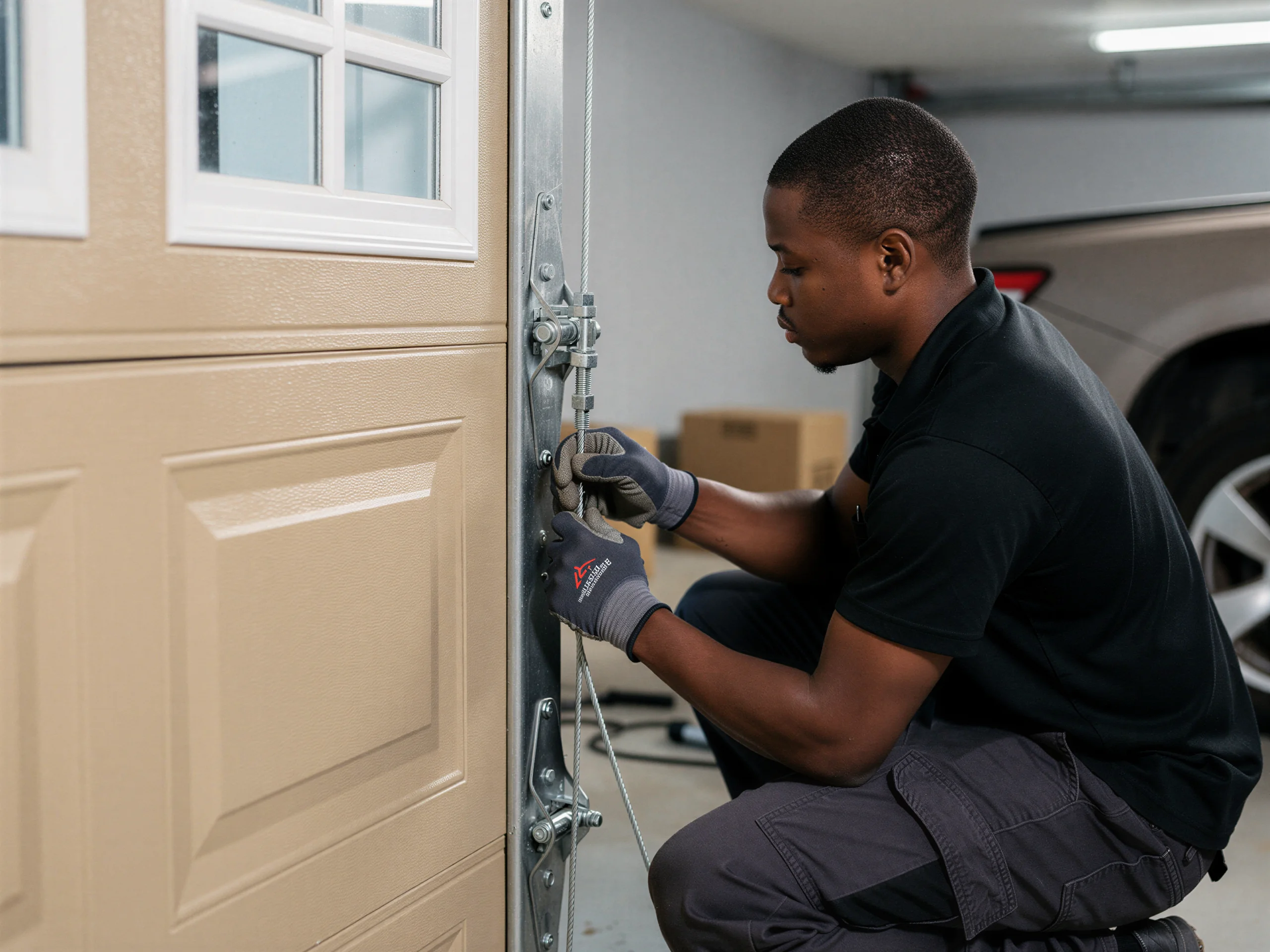
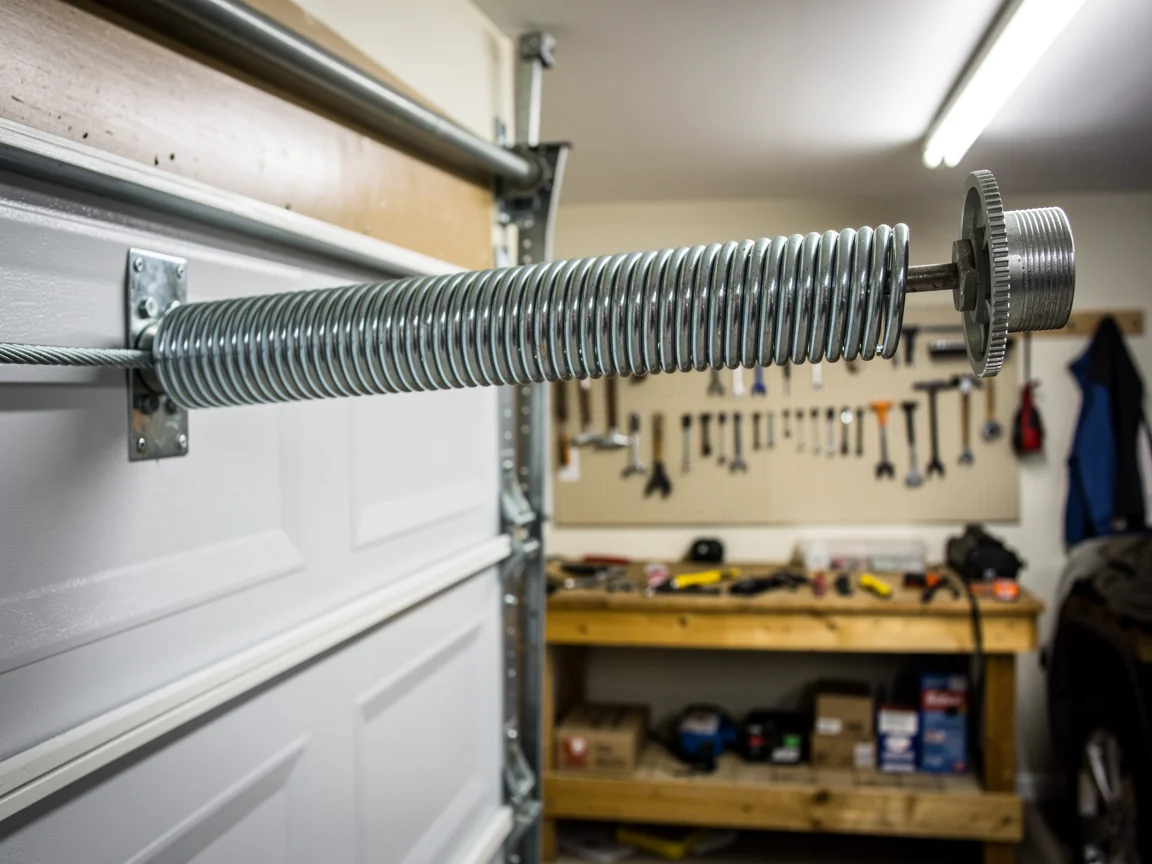
We unwind what's left of the old spring, pull it off the shaft, and measure the wire size, inside diameter, and length against the door's actual weight - not just what the sticker on the old spring says, since springs get swapped wrong more often than people think.
Waist-high balance target
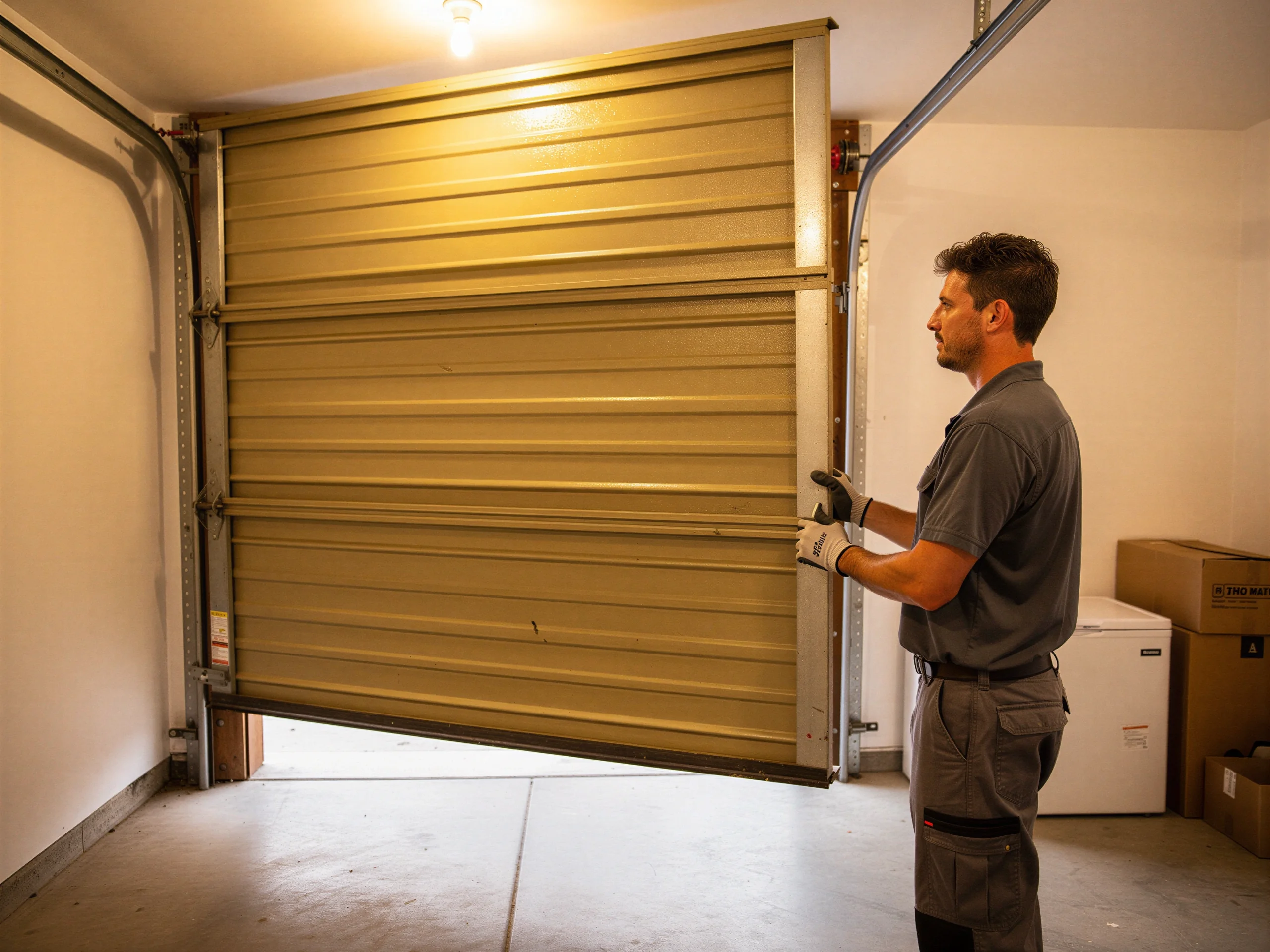
We set the new spring's tension to balance the door so it holds steady about waist-high when disconnected from the opener. On the heavier steel sectional doors common in Walnut's 1983-era houses, that often means a slightly heavier wire spring than what we'd put on an older, lighter door elsewhere in the area.
The Symptom
Most calls start the same way: the door won't budge, or the opener strains and reverses itself without lifting the door at all. Sometimes there's a loud bang from the garage first, which is the spring letting go under tension. On the newer, heavier sectional doors typical of Walnut's housing stock, a broken spring usually means the door won't move even an inch by hand, since these doors carry more weight than the lighter doors in older parts of the service area. If your door moves partway and then sticks, that's often something else - a track issue or a cable off its drum - and worth mentioning when you call, since it changes what we load on the truck.
Why This Fails Locally
Torsion springs are rated for a number of open-close cycles, and the mild temperate climate across this whole region is actually gentler on springs than the hard freeze-thaw swings you'd get further inland or north - so when a spring fails here, it's usually cycle fatigue or age, not weather damage. Given Walnut's housing is newer, built mostly in the early 1980s, the springs failing now are generally original or one replacement in, reaching the end of a normal lifespan rather than failing early from a bad fit. We travel about 13 miles out from La Mirada to reach Walnut, so when you call, tell us the door's size and roughly how old the spring is if you know it - it saves a wasted trip for the wrong part.
Talk to a local pro
Garage door service in La Mirada?
Same-day service with honest, upfront quotes.