What Is on the Truck
Walnut is a smaller town by household count - 8,534 of them - so the roller jobs we see here don't repeat at the volume they do in bigger parts of the service area.
Roller mix on truck
That means we load the truck with a spread of roller types rather than one size we know we'll use twelve times a day. Most Walnut houses were built around 1983, which puts them past the old steel-wheel, no-bearing roller era and into the galvanized 2-inch and 3-inch stem rollers that shipped standard through the 80s and 90s.
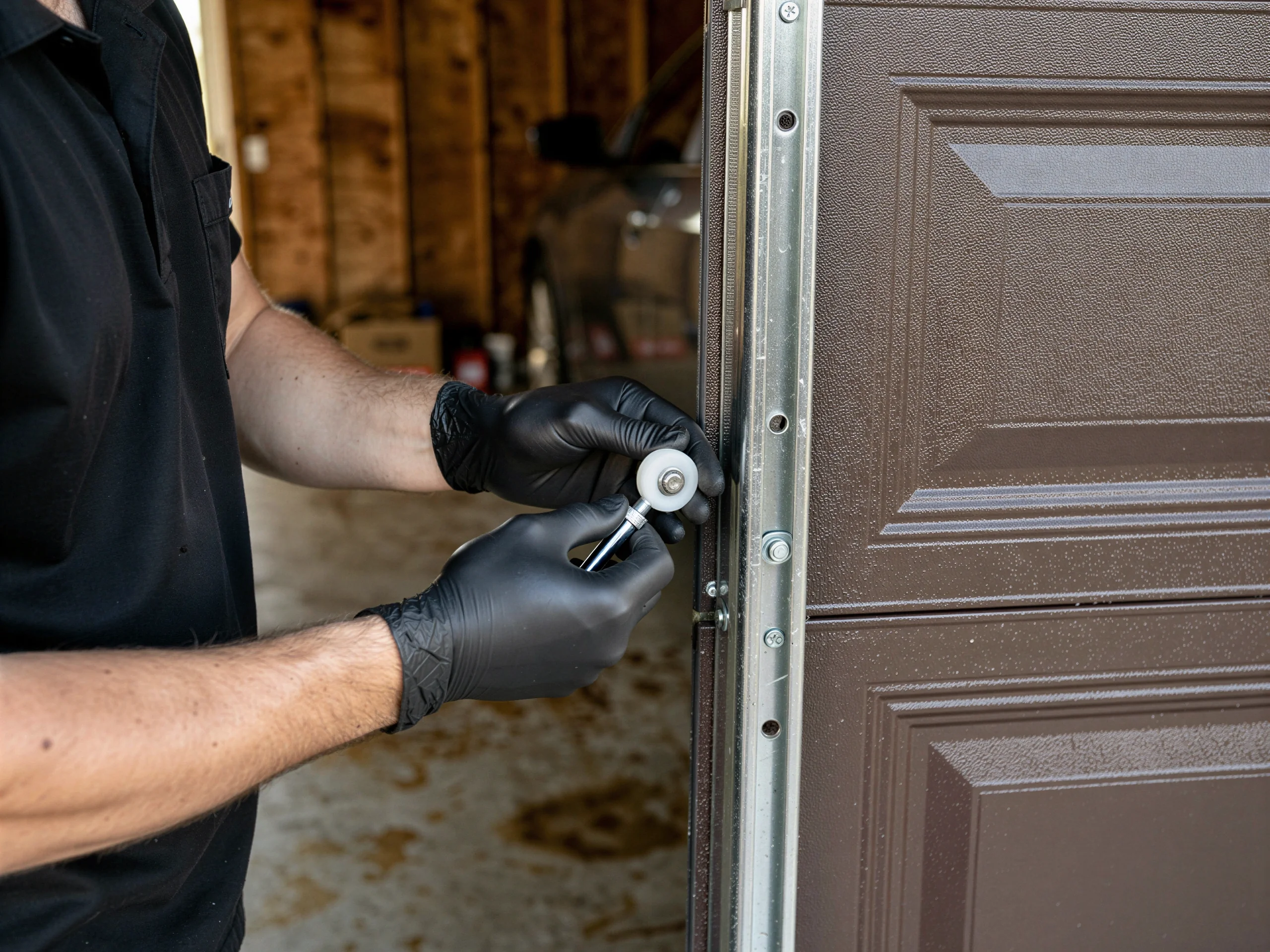
Sealed bearing rollers
We carry both 7-ball bearing steel rollers and sealed nylon rollers in those stem lengths, plus the longer 4-inch stems some of the heavier insulated doors from that period use. We also carry track sections, because a roller that's been grinding against bent track for a year usually takes the track with it when it finally gives out.
No mid-job returns
We come out from La Mirada, 13 miles away, so what's on the truck when we leave is what we have - we don't double back mid-job for a part we guessed wrong on.
The Cost of This Job
We don't have a posted price list for this job, and quoting one here without seeing the door would be a guess, not a fact.
Roller type sets price
What drives the cost in Walnut specifically is the roller type on the door now. A straight swap from worn steel rollers to new steel rollers of the same stem length is the simple end of it.
Nylon costs more, quieter
Upgrading to sealed nylon rollers costs more per roller but runs quieter, which matters more here than it might elsewhere - Walnut's median household income runs well above the wider service area's $95,385, and the nylon upgrade is a request we hear more often from owners who want the door to stop being the loudest thing on the block.
Track bend line item
If the track is bent from rollers that were left to wear too long, that adds a line item. We'll tell you which situation you're in before we touch the door, not after.
What the Fix Involves
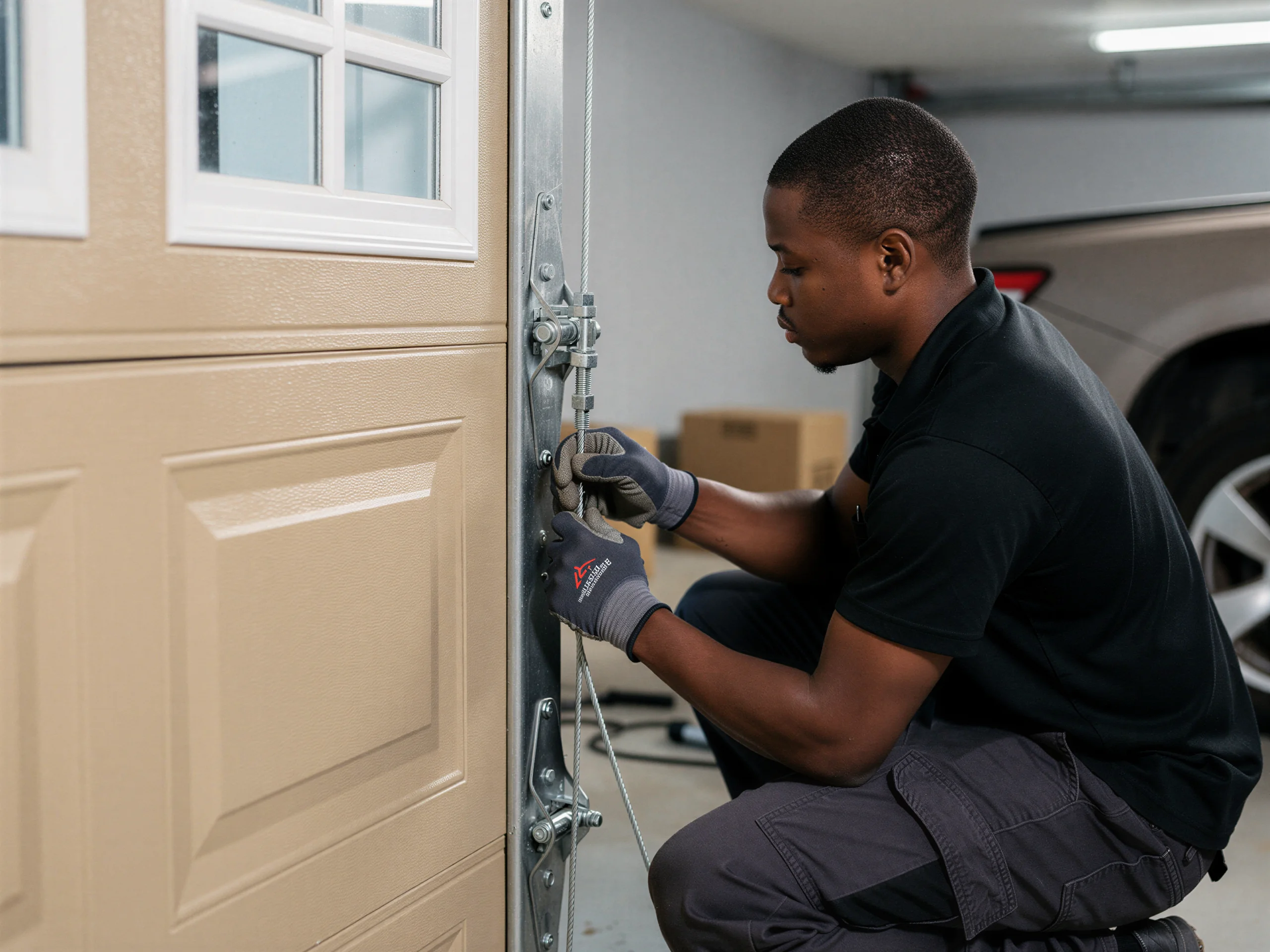
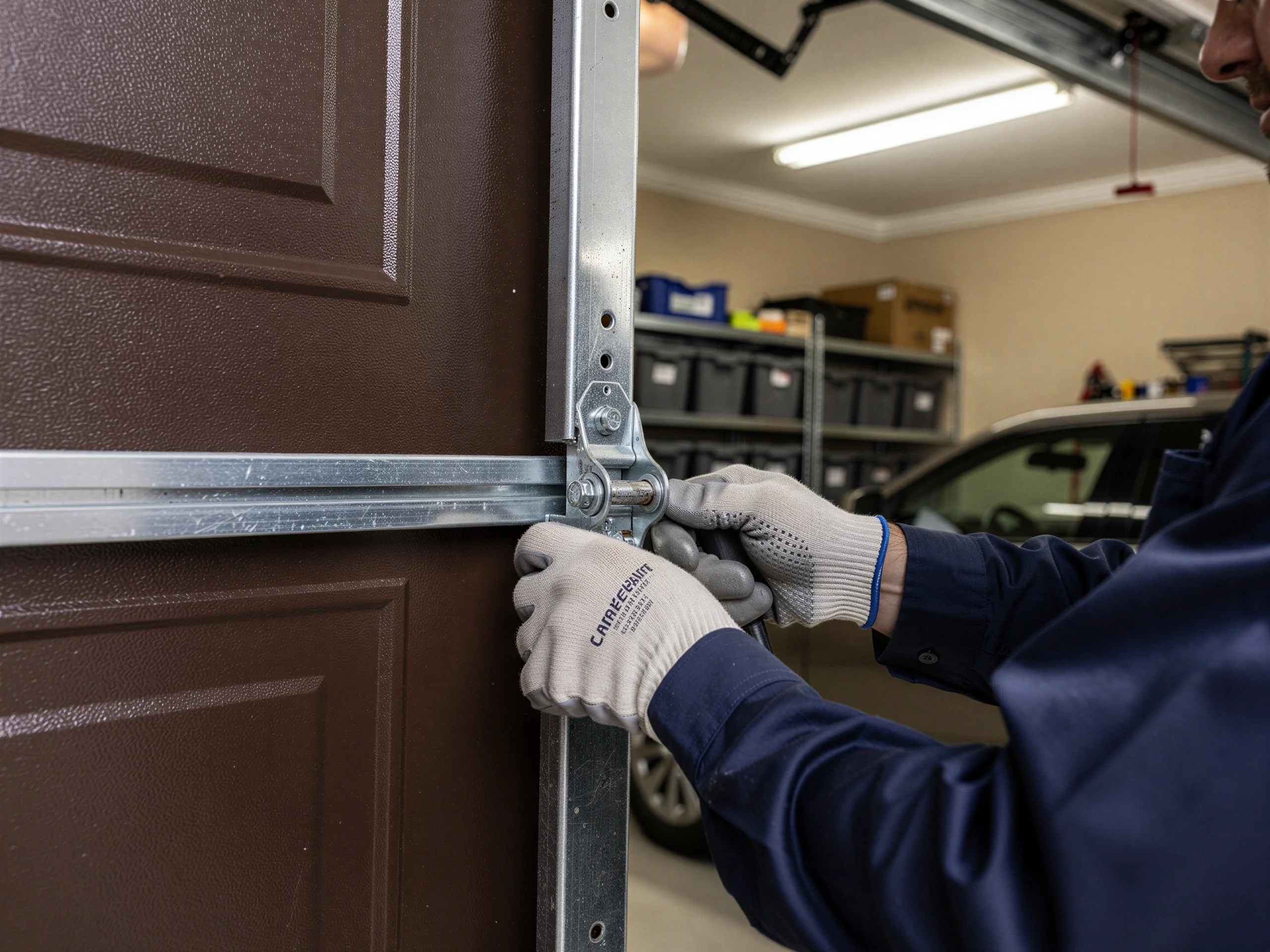
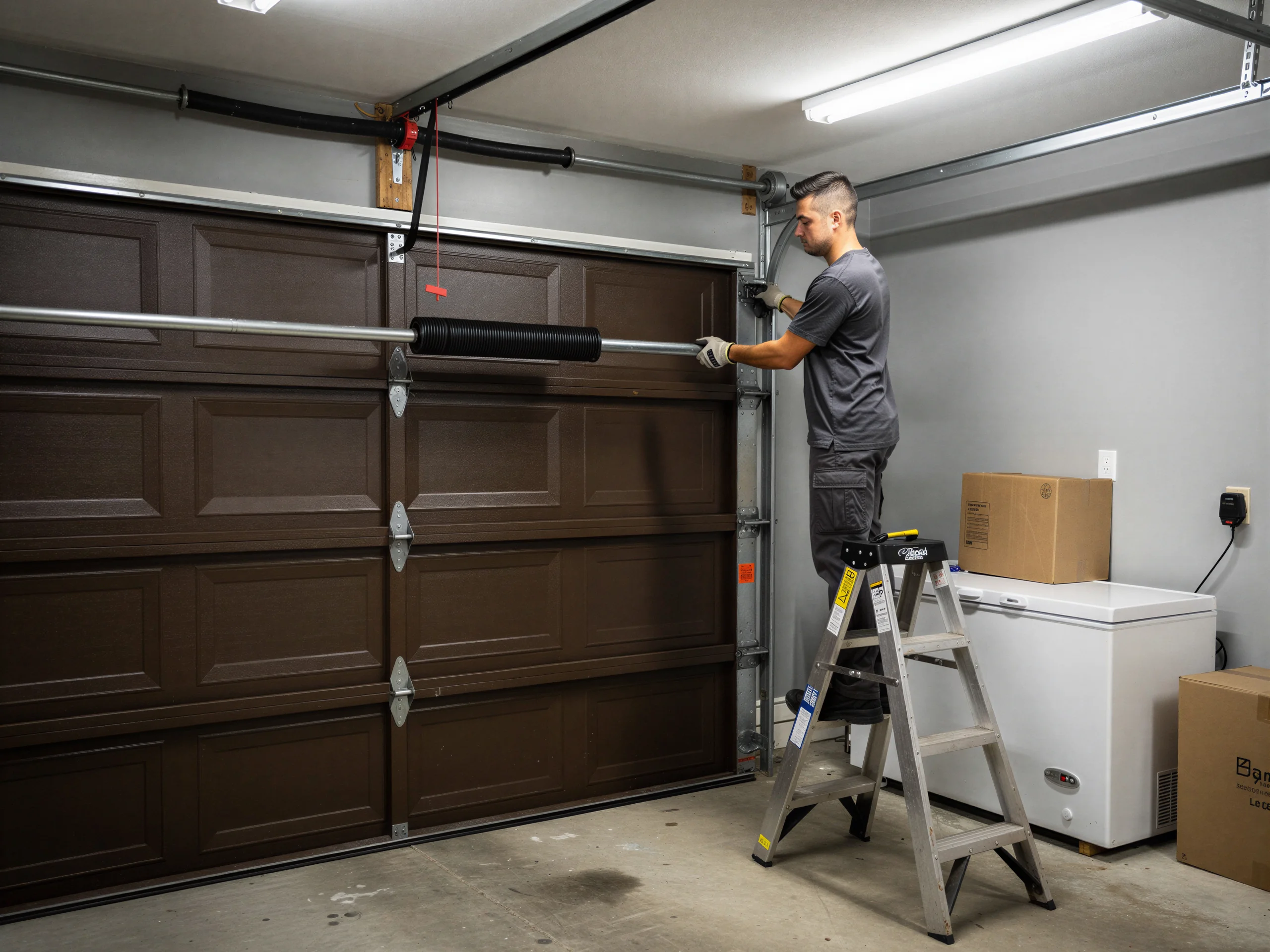
Rollers mount through brackets bolted to the door panel's edge, riding inside steel track on either side. The job starts with the door secured - usually at the bottom of its travel, with the opener disconnected so nothing tries to move while brackets are loose.
Bottom-up bracket order
We pull the bottom roller brackets first, since those carry the most load and wear fastest, then work up the hinge points to the top rollers near the operator arm.
Oval brackets won't hold
Each bracket gets checked for play before the new roller goes in; a bracket worn oval from years of a dragging roller won't hold a new roller straight, and we'll say so rather than bolt a good roller into a bad bracket.
Hanging roller bends track
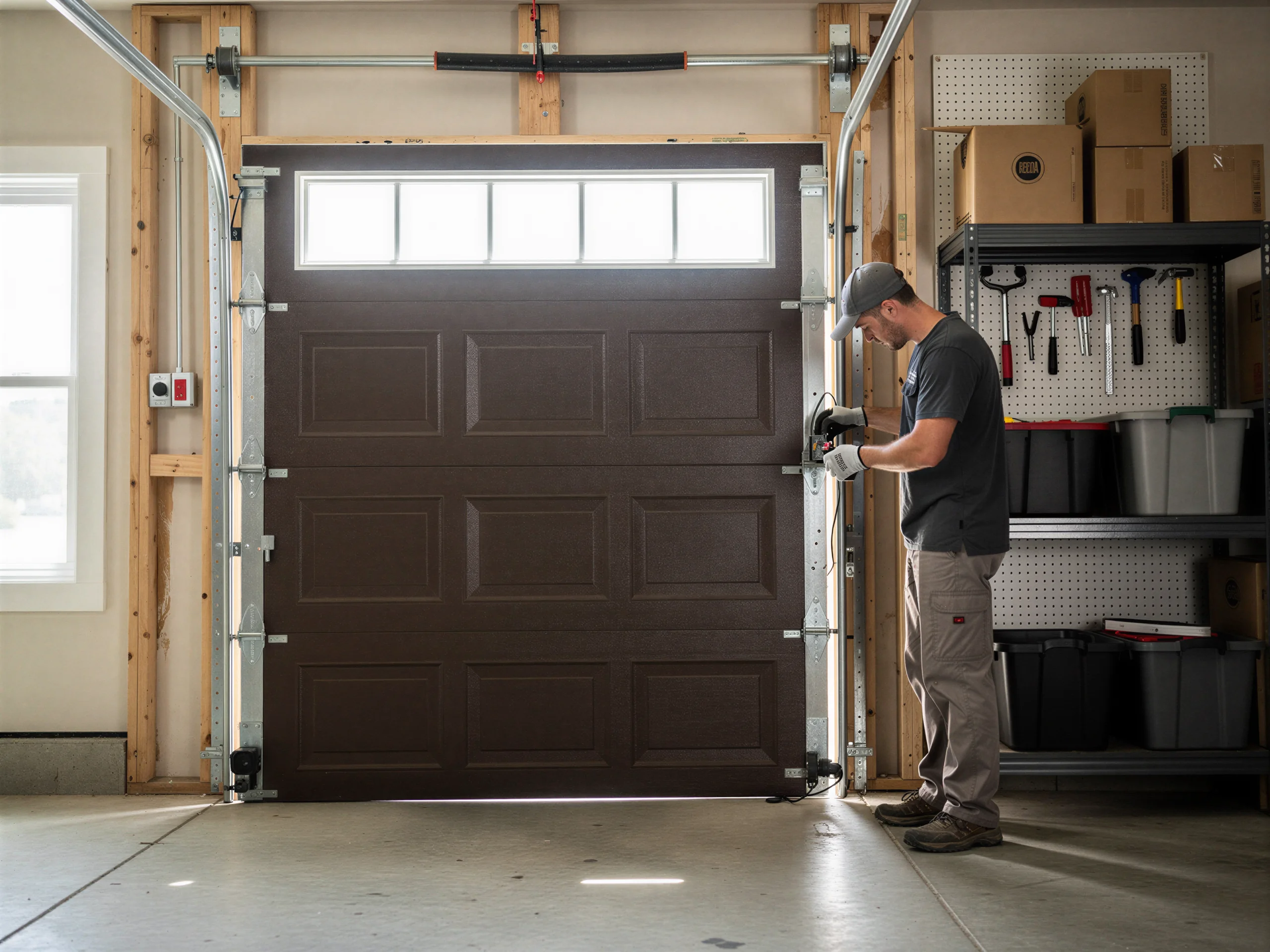
Track gets wiped down and checked for straightness as we go - galvanized track from the 80s doesn't rust out the way older stock does, but it does bend from a roller that's been hanging up instead of rolling. Once the new rollers are seated, we cycle the door by hand before handing it back to the opener, listening for the one roller that's still rubbing.
The Symptom
The usual call starts the same way: a grinding or squealing sound from one side of the door, worse at the top or bottom of the travel, that's been getting louder for weeks.
Flat-spotted, seized roller
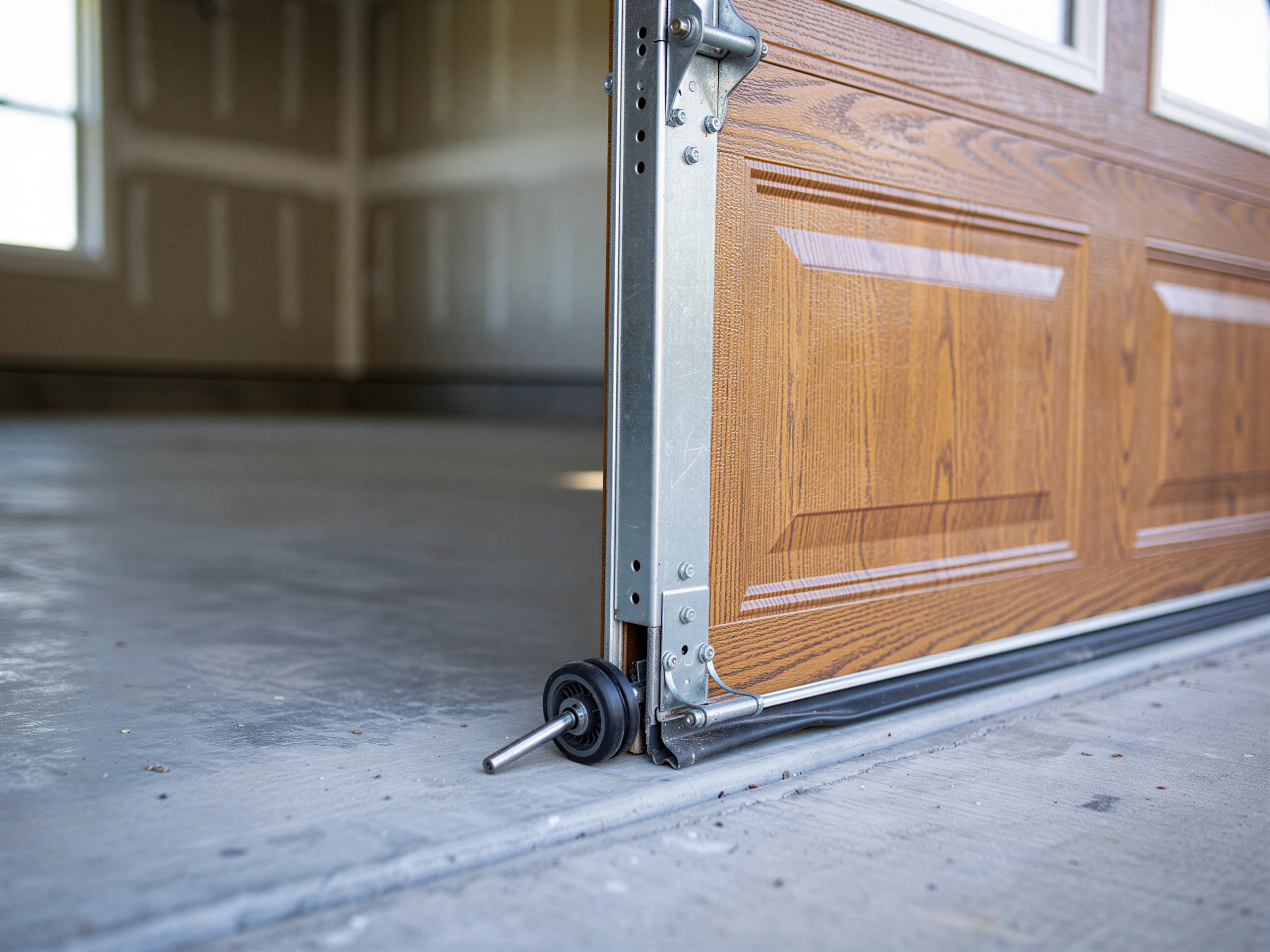
On Walnut's 1980s and newer doors, that's almost always a roller with a cracked or flat-spotted wheel - the stem bearing seizes, the wheel stops spinning freely, and it drags through the track instead of rolling through it.
Catching at one spot
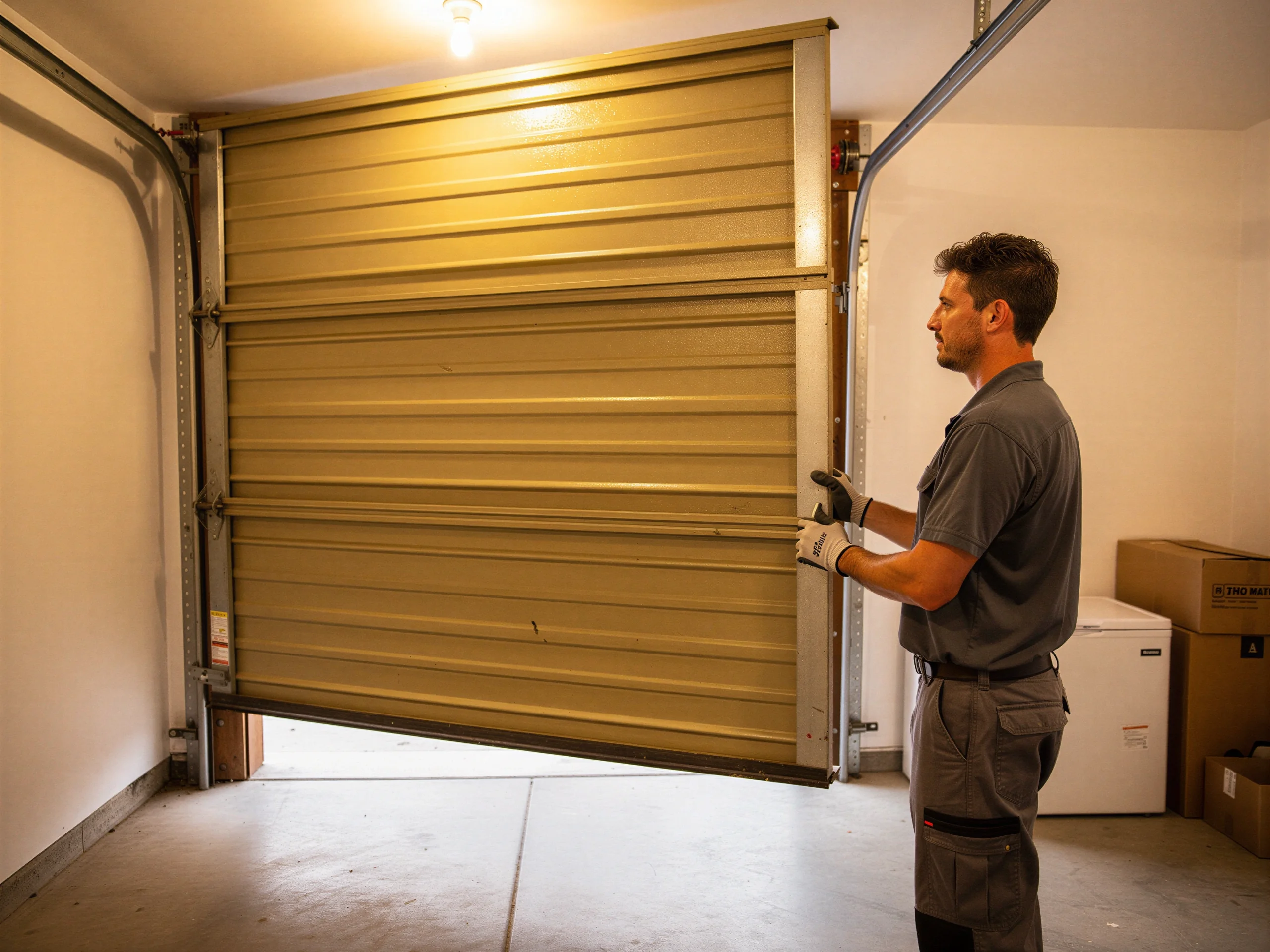
Some owners notice the door catching or jerking at one spot every single cycle, which points to a specific roller rather than general wear. A door that's started sagging slightly on one side, visible as a gap that widens near the bottom corner, usually means a bracket has worked loose along with the roller.
Dragging roller grooves track
None of this is an emergency repair - the door still opens, just louder and rougher - but left alone, a dragging roller wears a groove into galvanized track that costs more to fix than the roller ever did.
Why This Fails Locally
Walnut's housing stock sits later than much of the surrounding area - median year built 1983 against a wider service-area median closer to 1964 - so the failure pattern here skews toward roller wear rather than the spring and cable issues that show up more on older one-piece doors. These are sectional doors on standard torsion hardware, with rollers that were built to a 10-15 year service life and have mostly outlasted that by a decade or two through steady use. The mild climate here doesn't freeze grease or crack vinyl seals the way colder regions do, so when a roller fails in Walnut it's almost always simple fatigue - thousands of cycles on a wheel that was never sealed against dust in the first place. That's the honest limitation worth saying up front: if the bearing seized from age rather than damage, a roller swap fixes it; if the track underneath is already bent from months of a dragging wheel, the roller is only half the job.
Talk to a local pro
Garage door service in La Mirada?
Same-day service with honest, upfront quotes.